NASA will host a virtual news conference on Wednesday, July 29, at 2 p.m. Eastern Daylight Time, to provide an in-depth preview of the highly anticipated Nancy Grace Roman Space Telescope mission. The groundbreaking observatory is scheduled to launch from NASA’s Kennedy Space Center in Florida on Sunday, August 30. This briefing aims to equip media representatives with comprehensive information regarding the mission’s objectives, current status, and the scientific potential it holds for advancing our understanding of the cosmos.
The virtual event will be streamed live across multiple NASA platforms, ensuring accessibility for journalists worldwide. Details on where to watch the broadcast can be found at https://www.nasa.gov/live.
A New Era of Cosmic Exploration
The Nancy Grace Roman Space Telescope, named in honor of NASA’s first chief astronomer, is poised to revolutionize astronomy with its unprecedented capabilities. Equipped with a wide-field instrument and a coronagraph, Roman will offer a panoramic view of the universe, capturing images of celestial objects with a depth and clarity never before achieved. This expansive vision is expected to yield a wealth of new data, enabling scientists to explore some of the universe’s most enduring mysteries.
A primary objective of the Roman Space Telescope is to conduct large-scale astronomical surveys, meticulously mapping vast swathes of the cosmos. These surveys will allow astronomers to identify and study exoplanets, dark energy, dark matter, and the formation of galaxies with unparalleled precision. The telescope’s ability to detect faint objects and observe across a broad spectrum of light will unlock new insights into the evolution of the universe from its earliest stages to the present day.
Unveiling the Unseen: Key Scientific Goals
Roman’s scientific payload is designed to tackle fundamental questions in astrophysics. Its wide-field instrument will enable it to survey large areas of the sky quickly and efficiently, making it ideal for tasks such as:
- The Dark Energy Survey: By observing distant supernovae, Roman will provide crucial data to measure the expansion rate of the universe and investigate the nature of dark energy, the mysterious force driving this acceleration. This survey is expected to refine our understanding of the universe’s fate.
- The Exoplanet Microlensing Survey: Roman will employ microlensing techniques to detect thousands of exoplanets, including potentially Earth-like worlds that orbit their stars at similar distances to Earth’s orbit around the Sun. This method is particularly effective at finding planets that are difficult to detect with other techniques, such as free-floating planets not orbiting any star.
- The Barred Galaxy Survey: This survey will focus on understanding the formation and evolution of barred spiral galaxies, a common type of galaxy that includes our own Milky Way. By studying their structure and stellar populations, scientists aim to unravel the complex processes that shape these galactic behemoths.
Furthermore, Roman will carry a coronagraph instrument, a technological marvel designed to directly image planets around nearby stars. This instrument is a critical component in NASA’s ongoing search for life beyond Earth. By blocking out the overwhelming glare of host stars, the coronagraph will enable Roman to capture faint light reflected from exoplanetary atmospheres, allowing scientists to analyze their composition for biosignatures – chemical indicators of life.
A Monumental Engineering Feat
The development of the Nancy Grace Roman Space Telescope represents a significant undertaking, involving a collaboration of leading institutions and industrial partners. Managed at NASA’s Goddard Space Flight Center in Greenbelt, Maryland, the project benefits from the expertise of:
- Jet Propulsion Laboratory (JPL) in Southern California: JPL plays a vital role in various aspects of the mission, likely contributing to instrument development, spacecraft operations, and data processing.
- Caltech/IPAC in Pasadena, California: The Infrared Processing and Analysis Center (IPAC) at Caltech is expected to be instrumental in processing and analyzing the vast amounts of scientific data that Roman will generate.
- Space Telescope Science Institute (STScI) in Baltimore: STScI, which also operates the Hubble Space Telescope and the James Webb Space Telescope, will be responsible for the scientific operations of Roman, including mission planning and data archiving.
- A diverse team of scientists from various research institutions: This broad scientific community ensures that Roman’s research agenda is comprehensive and addresses a wide range of astrophysical questions.
The primary industrial partners responsible for the telescope’s construction and components include:
- BAE Systems Inc.
- L3Harris Technologies
- Teledyne Scientific & Imaging
International collaboration is also a cornerstone of the Roman mission. Significant contributions are being made by:
- ESA (European Space Agency)
- JAXA (Japan Aerospace Exploration Agency)
- CNES (Centre National d’Études Spatiales), the French space agency
- The Max Planck Institute for Astronomy in Germany
These international partnerships underscore the global scientific community’s commitment to advancing our understanding of the universe and highlight the collaborative spirit inherent in modern space exploration.
Timeline of the Roman Space Telescope Mission
The journey of the Nancy Grace Roman Space Telescope from conception to launch has been a multi-year endeavor, marked by rigorous planning, design, and construction phases. While specific dates for early development are extensive, key milestones leading up to the current preview event include:
- Conceptualization and early design studies: These began in the early 2010s, following recommendations from the U.S. National Academy of Sciences’ Decadal Survey, which identified a large, wide-field infrared telescope as a top priority for future space astronomy.
- Program approval and preliminary design review: Formal approval of the mission and subsequent critical design reviews ensured the telescope’s feasibility and technical readiness.
- Instrument development and testing: The development and rigorous testing of Roman’s wide-field instrument and coronagraph have been ongoing for several years, involving complex engineering and scientific validation.
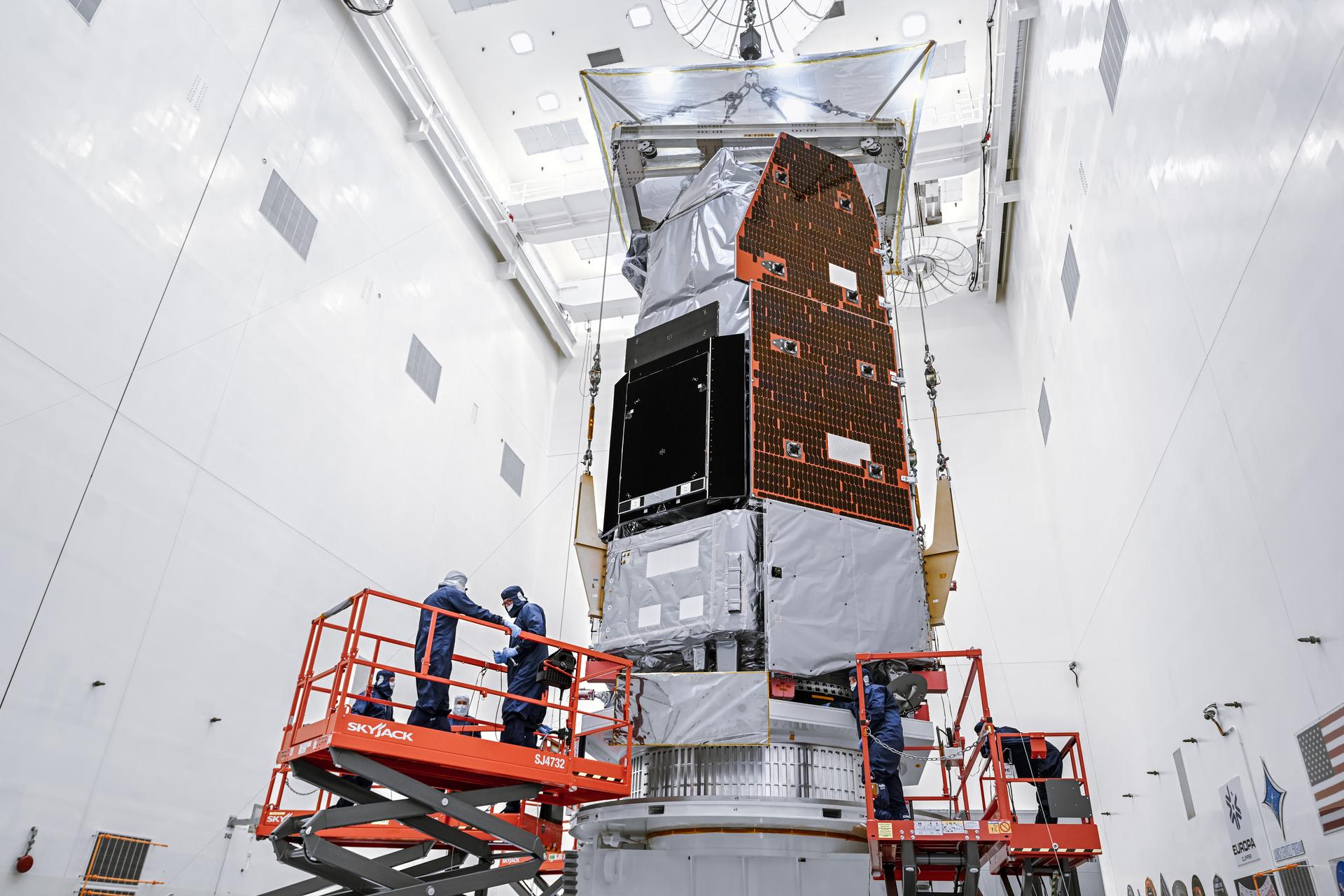
- Spacecraft bus construction and integration: The main structure of the spacecraft, known as the bus, has been assembled and integrated with its scientific instruments.
- Launch vehicle integration and testing: The telescope has undergone integration with its launch vehicle, and extensive testing has been performed to ensure its readiness for the rigors of spaceflight.
- Pre-launch preparations: In the weeks and months leading up to the August 30 launch, the telescope and its launch vehicle undergo final checks, fueling, and encapsulation.
- Virtual News Conference (July 29, 2026): This event serves as a critical communication bridge, providing the public and media with the latest information directly from the mission team.
- Launch (August 30, 2026): The culmination of years of work, the launch from Kennedy Space Center marks the beginning of Roman’s journey to its operational orbit.
- In-orbit commissioning and calibration: Following launch, the telescope will undergo a period of commissioning and calibration to ensure all instruments and systems are functioning optimally. This phase is crucial for the scientific data to be accurate and reliable.
- Beginnings of scientific operations: Once commissioning is complete, Roman will commence its primary scientific surveys and observations, ushering in a new era of astronomical discovery.
Media Participation and Accreditation
Media representatives interested in participating in the virtual news conference via telephone must submit an RSVP no later than two hours prior to the briefing’s commencement. This should be directed to Rob Garner at [email protected]. NASA’s comprehensive media accreditation policy is available online, outlining the procedures for journalists seeking to cover agency events.
Broader Implications for Scientific Discovery and Societal Impact
The Nancy Grace Roman Space Telescope is more than just a scientific instrument; it is a testament to human curiosity and our relentless pursuit of knowledge. The data it will provide has the potential to reshape our understanding of the universe’s origins, evolution, and composition.
- Understanding the Universe’s Fate: By providing more precise measurements of dark energy, Roman could help determine whether the universe will continue to expand indefinitely, eventually leading to a "Big Freeze," or if other cosmic forces might intervene.
- The Search for Extraterrestrial Life: The direct imaging of exoplanets, particularly those in habitable zones, is a significant step forward in the search for life beyond Earth. Detecting potential biosignatures in exoplanetary atmospheres could be one of the most profound scientific discoveries in human history.
- Inspiring Future Generations: Like its predecessors, the Hubble and James Webb Space Telescopes, Roman’s stunning images and groundbreaking discoveries are expected to capture the public’s imagination, inspiring a new generation of scientists, engineers, and explorers. The awe-inspiring visuals of distant galaxies, nebulae, and planetary systems can ignite a passion for STEM education and careers.
- Technological Advancement: The development of cutting-edge technologies required for Roman, such as its advanced coronagraph and sophisticated data processing algorithms, often have spin-off applications that benefit other scientific fields and industries on Earth.
The successful launch and operation of the Nancy Grace Roman Space Telescope will represent a monumental achievement for NASA and its international partners, promising to unlock some of the universe’s most profound secrets and expand the frontiers of human knowledge for decades to come.
For more comprehensive information about NASA’s Roman telescope, please visit:
https://nasa.gov/roman
Media Contacts:
Alise Fisher
Headquarters, Washington
202-358-2546
[email protected]
Claire Andreoli / Rob Garner
Goddard Space Flight Center, Greenbelt, Md.
301-286-1940 / 301-286-5687
[email protected] / [email protected]