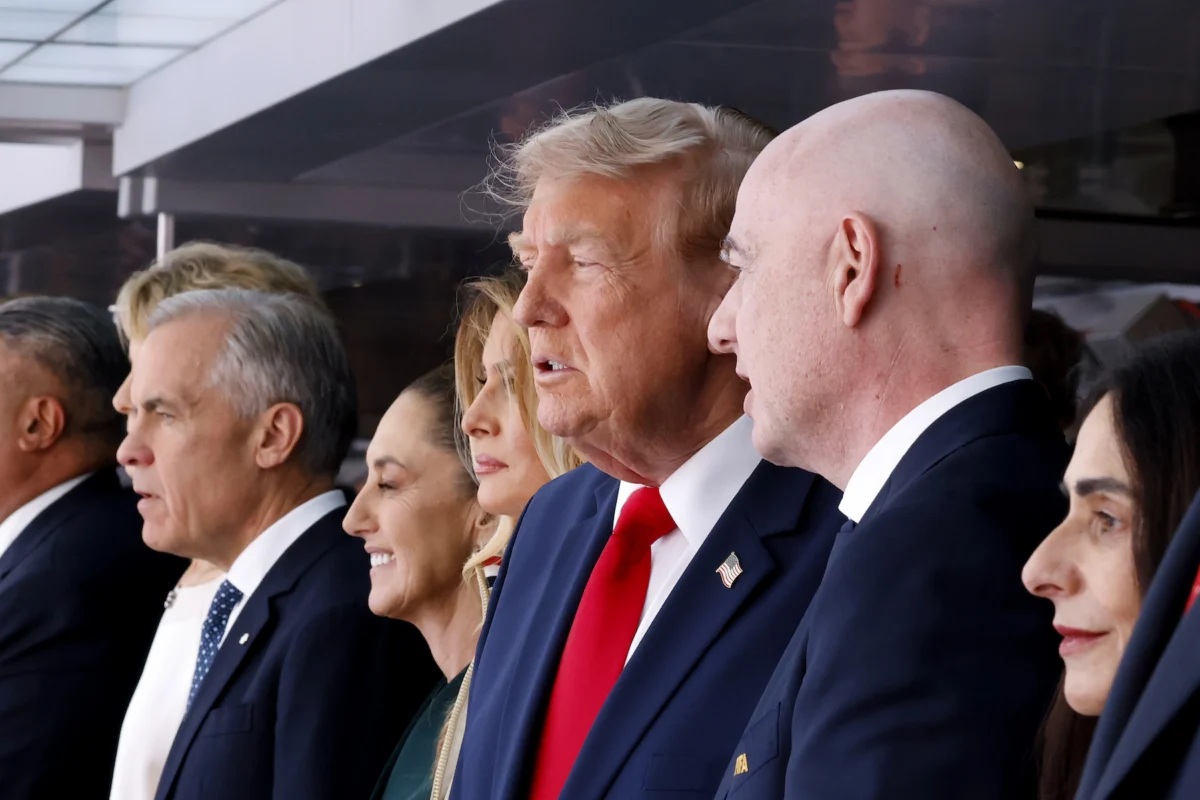
The 2026 FIFA World Cup reached its dramatic conclusion at MetLife Stadium in East Rutherford, New Jersey, where Spain secured a historic victory over Argentina to claim the most prestigious trophy in global sports. However, the athletic achievements on the pitch were frequently overshadowed by the presence and recent actions of United States President Donald Trump. As the stadium’s jumbotrons panned to the presidential suite following a stirring rendition of the national anthem by Jennifer Hudson, the capacity crowd of over 82,000 spectators—comprised largely of Argentinian and Spanish supporters alongside domestic fans—erupted into a thunderous chorus of boos. The vocal disapproval marked a significant moment of tension in a tournament that has been defined as much by political maneuvering as by the expansion of the field to 48 teams.
President Trump, accompanied by First Lady Melania Trump, remained in his box throughout the match, appearing on the stadium screens several more times during the broadcast. While the President is traditionally expected to maintain a ceremonial role during such international gatherings, his involvement in the 2026 tournament has been characterized by unprecedented interventions into the sporting aspects of the competition. These actions, combined with a long-standing history of polarized receptions at major American sporting venues, created a volatile atmosphere during what was intended to be a celebration of "the beautiful game."
The USMNT Controversy and the Belgium Intervention
The friction between the President and the soccer community intensified significantly during the knockout stages of the tournament. The United States Men’s National Team (USMNT) had shown early promise, advancing through the group stages with a sense of momentum that many hoped would carry them to the quarter-finals. However, a crisis emerged during the round of 16 match against Belgium when star striker Folarin Balogun was issued a controversial red card. The decision, handed down by the officiating crew for a perceived high-boot challenge, threatened to sideline the team’s primary offensive threat for the remainder of the game and subsequent matches.
In a move that stunned FIFA officials and international observers alike, President Trump personally intervened in the disciplinary process. Reports confirmed that the President placed a direct phone call to FIFA President Gianni Infantino to express his dissatisfaction with the ruling. Following this high-level communication, FIFA took the extraordinary step of overturning Balogun’s red card, allowing him to return to the pitch. While the administration framed the move as a defense of American interests against unfair officiating, the intervention sparked immediate backlash within the sporting world.
The tactical and psychological impact on the USMNT was devastating. Analysts noted a palpable "vibe shift" within the locker room, as players and coaching staff grappled with the implications of political interference in a game governed by strict international standards. The resulting performance against Belgium was widely described as the team’s poorest showing of the tournament. Devoid of their previous cohesion, the U.S. squad was systematically dismantled by the Belgian side, ultimately suffering a 4-1 defeat that ended their World Cup ambitions on home soil. Fans and commentators were quick to draw parallels between this outcome and the President’s appearance at Game 4 of the NBA Finals, where the New York Knicks suffered a loss under similar circumstances of high-profile political presence.
A History of Polarized Sporting Appearances
The reception at MetLife Stadium is part of a documented pattern of hostile interactions between President Trump and audiences at major sporting events. While the President has found warm welcomes at Ultimate Fighting Championship (UFC) events and various stops on the PGA Tour—environments that traditionally lean toward his political base—mainstream professional sports have often proven to be "hostile territory."
In 2019, the President was famously met with chants of "Lock him up" during Game 5 of the World Series between the Washington Nationals and the Houston Astros. Similar reactions have occurred at the US Open and during various professional basketball and football games. The 2026 World Cup Final provided a global stage for this domestic polarization, as the international nature of the crowd added a layer of geopolitical critique to the local political dissent. The presence of fans from Spain and Argentina, countries with their own complex relationships with U.S. foreign policy, ensured that the booing was not merely a domestic phenomenon but a global expression of sentiment.
The Diplomacy of the Trophy Presentation
Despite the audible dissatisfaction from the stands, the President proceeded with his scheduled role in the post-match ceremony. As the host nation’s leader, Trump was tasked with presenting the FIFA World Cup Trophy to the winning Spanish side. This ceremonial duty has historically been a moment of unity, yet the 2026 presentation was fraught with diplomatic subtext.
The political alignment between the United States and the finalists could not have been more divergent. Argentina’s President Javier Milei has positioned himself as a staunch ideological ally of the Trump administration. Milei has made high-profile appearances at U.S. political conferences and has been a guest at the President’s Mar-a-Lago resort, signaling a "new era" of right-wing populism in the Americas. Had Argentina won, the trophy presentation would likely have served as a triumphant photo opportunity for two leaders who share a similar political brand.
Conversely, the Spanish government, led by a center-left coalition, has maintained a more cautious and often critical distance from the Trump administration’s policies. The image of the Spanish captain lifting the trophy alongside the U.S. President provided a stark visual of the intersection between sport and statecraft. For the Spanish players, the moment was about athletic immortality; for the President, it was an opportunity to project authority on a broadcast estimated to reach over one billion viewers worldwide.
Lessons from the Club World Cup
This was not the President’s first foray into soccer trophy presentations. In the summer of 2025, during the expanded FIFA Club World Cup held in the United States, Trump presented the trophy to London’s Chelsea FC. That event was marked by a viral moment involving Chelsea star Cole Palmer, who appeared visibly confused and uncomfortable during the exchange with the President.
The "Palmer incident" highlighted a growing disconnect between the ceremonial expectations of heads of state and the personal convictions of modern athletes. Unlike the Club World Cup, where players represent private entities, the World Cup involves national identities, making the presence of a polarizing political figure even more contentious. The 2026 final reinforced the notion that while FIFA officials may welcome the patronage and logistical support of the U.S. executive branch, the players and the fans remain a more unpredictable element of the spectacle.
Impact on the Future of Major Events in the U.S.
The 2026 World Cup was designed to be a showcase of North American infrastructure and hospitality, with games spread across the United States, Canada, and Mexico. The tournament’s success is undeniable in terms of ticket sales, television ratings, and economic impact. However, the controversies surrounding executive interference in match officiating and the vocal protests against the President raise questions about the future of the "sports-politics" nexus.
FIFA, an organization that has long claimed to be "neutral" and "apolitical," found itself in a difficult position following the Balogun intervention. Experts in sports law suggest that the overturning of a red card via presidential influence sets a dangerous precedent that could undermine the authority of the FIFA Disciplinary Committee. Moving forward, international sporting bodies may seek more stringent guarantees of autonomy from host governments to prevent the perception of political meddling in the field of play.
Conclusion: The Final Whistle
As the lights dimmed at MetLife Stadium and the Spanish team began their celebrations through the streets of Madrid, the 2026 World Cup left behind a complex legacy. It was a tournament of incredible goals, tactical brilliance, and the coronation of a new generation of Spanish stars. Yet, it will also be remembered as the "Intervention World Cup," where the boundaries between the oval office and the penalty box became blurred.
The booing of President Trump at the final serves as a reminder that major sporting events are no longer insulated from the political divisions of the era. For the President, the event was a display of American hosting prowess and personal influence. For the fans, it was an opportunity to voice their dissent on the world’s loudest stage. As the United States looks toward hosting future events, including the 2028 Summer Olympics in Los Angeles, the lessons of the 2026 World Cup will likely inform how organizers balance the requirements of state protocol with the passionate, and often contrary, sentiments of the global sporting public.