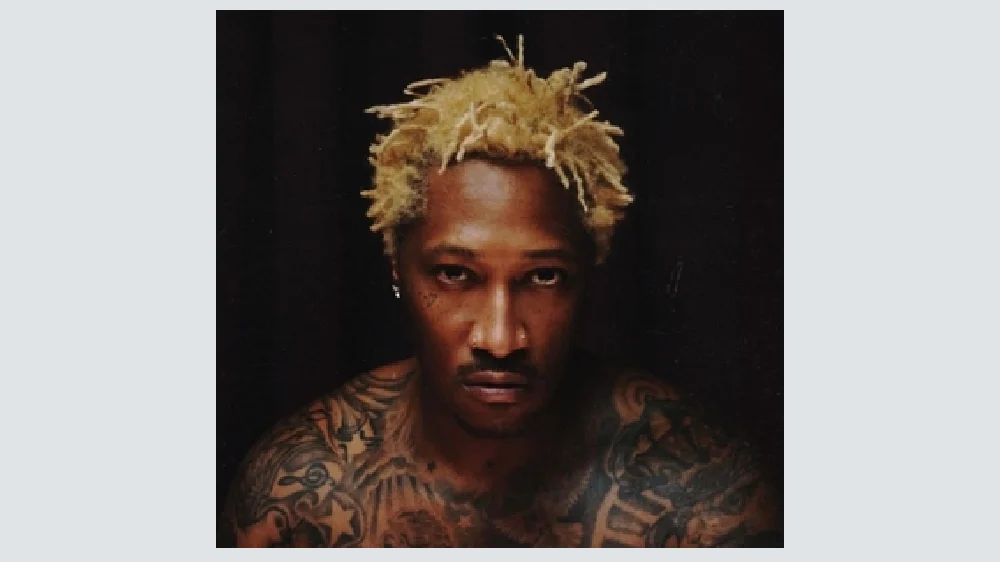
The landscape of the American music charts has undergone a significant shift this week as the Atlanta-bred rapper Future has officially ascended to a new echelon of commercial success. With the debut of his latest studio effort, The Real Me, the artist has secured his 12th number-one album on the Billboard 200, a milestone that reshapes the all-time rankings of the most successful artists in the history of the chart. By landing at the summit, Future has broken a long-standing tie with Detroit legend Eminem, moving into sole possession of fifth place for the most number-one albums ever recorded by an individual or group.
The Real Me arrived with a commanding 131,000 equivalent album units earned in the United States for the week ending July 18, according to data compiled by Luminate. This performance was more than enough to unseat the previous week’s leaders and provide a comfortable cushion over the sophomore effort from pop sensation Olivia Rodrigo. Rodrigo’s latest project, You Look Pretty Sad for a Girl So in Love, maintained a strong presence in its fifth week of release, moving 96,000 units to hold steady at the No. 2 position. However, the week undeniably belonged to Future, whose prolific output over the last decade has made him one of the most consistent forces in modern music.
A New Hierarchy in Music History
Future’s ascent to the 12th spot on the all-time list is a testament to his relentless work ethic and his ability to adapt to the evolving tastes of the hip-hop audience. Previously, the rapper was tied with Eminem, both holding 11 number-one albums. With the release of The Real Me, Future now stands alone in fifth place, trailing only a handful of the most influential names in the history of recorded sound.
The leaderboard ahead of him remains a formidable gauntlet of musical icons. At the very top sit the Beatles, who maintain a historic lead with 19 number-one albums. Following the legendary British quartet is a tie for second place between Jay-Z, Drake, and Taylor Swift, all of whom have notched 15 chart-topping projects. Jay-Z’s tally has remained steady in recent years, while Drake and Taylor Swift continue to actively add to their totals with frequent releases and re-recordings. Future’s 12th victory puts him within striking distance of these contemporary peers, signaling a potential shift in the top five should his current release schedule persist.
Industry analysts note that Future’s achievement is particularly impressive given the era in which he operates. Unlike the Beatles, who relied on physical sales, Future has mastered the streaming-first economy, leveraging high-volume tracklists and viral social media moments to maintain a constant presence at the top of the charts.
The Anatomy of a Modern Chart-Topper
The success of The Real Me provides a clear case study of the current mechanics governing the Billboard 200. The total of 131,000 equivalent album units is comprised of several different metrics, including traditional album sales, track equivalent albums (TEA), and streaming equivalent albums (SEA).
For Future, the vast majority of his success continues to stem from the streaming sector. The Real Me generated 120.29 million on-demand official streams for its tracks, which translated into 118,000 SEA units. In contrast, traditional album sales accounted for only 13,000 copies. This disparity—where streaming outweighs physical or digital sales by a ratio of nearly ten to one—is a hallmark of the hip-hop genre in the 2020s. The genre’s younger demographic leans heavily toward platforms like Spotify, Apple Music, and Tidal, where repetitive listening across a 15-to-20-track album can quickly accumulate massive unit counts.
The 131,000-unit debut represents a solid performance for Future, though it falls slightly short of some of his career highs. Nevertheless, in a market where many veteran artists struggle to maintain relevance past their first decade, Future’s ability to consistently debut above the 100,000-unit mark remains an anomaly that speaks to his enduring brand loyalty.
Legacy Acts and the Power of Physical Media
While Future dominated the top of the chart through digital dominance, the lower half of the top 10 showcased a very different path to success. The Rolling Stones made a notable entrance at No. 7 with their new project, Foreign Tongues. The legendary rock band moved 53,000 equivalent album units, a figure that highlights the stark generational divide in music consumption.
Unlike Future, the Rolling Stones saw their numbers driven almost entirely by traditional sales. Of their 53,000 units, 48,500 were attributed to actual album purchases, including significant numbers from vinyl and CD sales. Their streaming numbers were comparatively modest, with only 4.48 million on-demand streams resulting in 4,000 SEA units. This performance mirrors a recent trend among heritage acts; for example, Paul McCartney’s latest release debuted with 63,000 units in June, driven by a similar reliance on a dedicated fanbase that values physical ownership over digital access.
The Stones’ ability to crack the top 10 in their seventh decade of activity underscores the continued viability of the physical market, particularly for artists whose core audience grew up in the pre-streaming era. It also highlights the Billboard 200’s role as a unifying chart that measures both the "viral" success of modern rappers and the "prestige" success of rock royalty.
The TV Soundtrack Resurgence
One of the more surprising entries in this week’s top 10 is the soundtrack for the television series Heated Rivalry. Debuting at No. 9 with 41,000 units, the album marks a significant moment for television music. According to Billboard, this is the first time a TV soundtrack has debuted in the top 10 in nearly a decade, with the last notable instance being the soundtrack for the hit series Empire in 2015.
The journey of the Heated Rivalry soundtrack to the top 10 is a curious one. The score and companion music were actually released digitally in January, but they failed to make a significant impact on the charts at that time due to a lack of concentrated streaming activity. However, the July release of physical editions—specifically high-quality vinyl and CD versions—sparked a surge in interest. All 41,000 units recorded this week came from physical sales, with zero units attributed to new streaming activity for the chart period. This suggests a highly engaged niche audience or a "collector" culture surrounding the show that prioritized physical memorabilia over digital convenience.
Volatility at the Top: The Case of Madonna
While new entries celebrated their arrival, last week’s champion experienced a sharp decline. Madonna’s Confessions II, which debuted at No. 1 in the previous cycle, has completely dropped out of the top 10 in its second week. While her exact position will not be confirmed until the full Billboard 200 list is released on Monday, the exit from the top 10 after only seven days suggests a "front-loaded" performance.
Front-loading is a common phenomenon for major pop stars with large, dedicated fanbases. These fans often rush to buy or stream the album in its first week to ensure a high debut, but without broader "crossover" appeal or a hit single to sustain momentum, the album can see a significant drop-off in subsequent weeks. Madonna’s departure paved the way for more "sticky" albums to remain in the top 10, such as Morgan Wallen’s I’m the Problem, which took the No. 3 spot, and Noah Kahan’s Stick Season, which held firm at No. 5.
Rounding Out the Top 10
The remainder of the top 10 features a mix of rising stars and perennial catalog favorites. Ella Langley secured the No. 4 spot, continuing her steady rise in the country-pop crossover space. Drake, despite not having a brand-new solo project this week, remains a fixture at No. 6, further cementing his status as one of the most-streamed artists in history.
Perhaps most notably, Michael Jackson’s Thriller returned to the top 10 at No. 8. The resurgence of the 1982 masterpiece is often tied to seasonal trends or special anniversary promotions, but its presence alongside modern stars like Future and Olivia Rodrigo serves as a reminder of the "long tail" of legendary albums in the streaming era. Finally, Morgan Wallen’s previous blockbuster, One Thing at a Time, rounded out the list at No. 10, proving that the country star remains one of the most dominant commercial forces in the industry today.
Implications for the Music Industry
Future’s record-breaking week serves as a microcosm of the current state of the music industry. The dominance of hip-hop on the charts is no longer a trend but a sustained reality, driven by a high-frequency release model that favors streaming platforms. However, the success of the Rolling Stones and the Heated Rivalry soundtrack proves that there is still a lucrative, albeit different, market for physical media and legacy acts.
As Future continues his career, the question now becomes whether he can catch the "Big Four" ahead of him. With 12 number-one albums, he is only two behind Jay-Z and three behind Drake and Taylor Swift. Given Future’s history of releasing multiple projects within a single calendar year, it is entirely possible that he could climb even higher in the rankings before the decade is out.
For now, The Real Me stands as a victory lap for an artist who has defined the sound of a generation. As the charts continue to evolve, Future’s blend of atmospheric production and prolific output remains the gold standard for commercial success in the digital age. The industry will be watching closely to see if his sophomore week can sustain the momentum or if, like Madonna, he will face the challenges of a rapidly cycling news and music cycle.