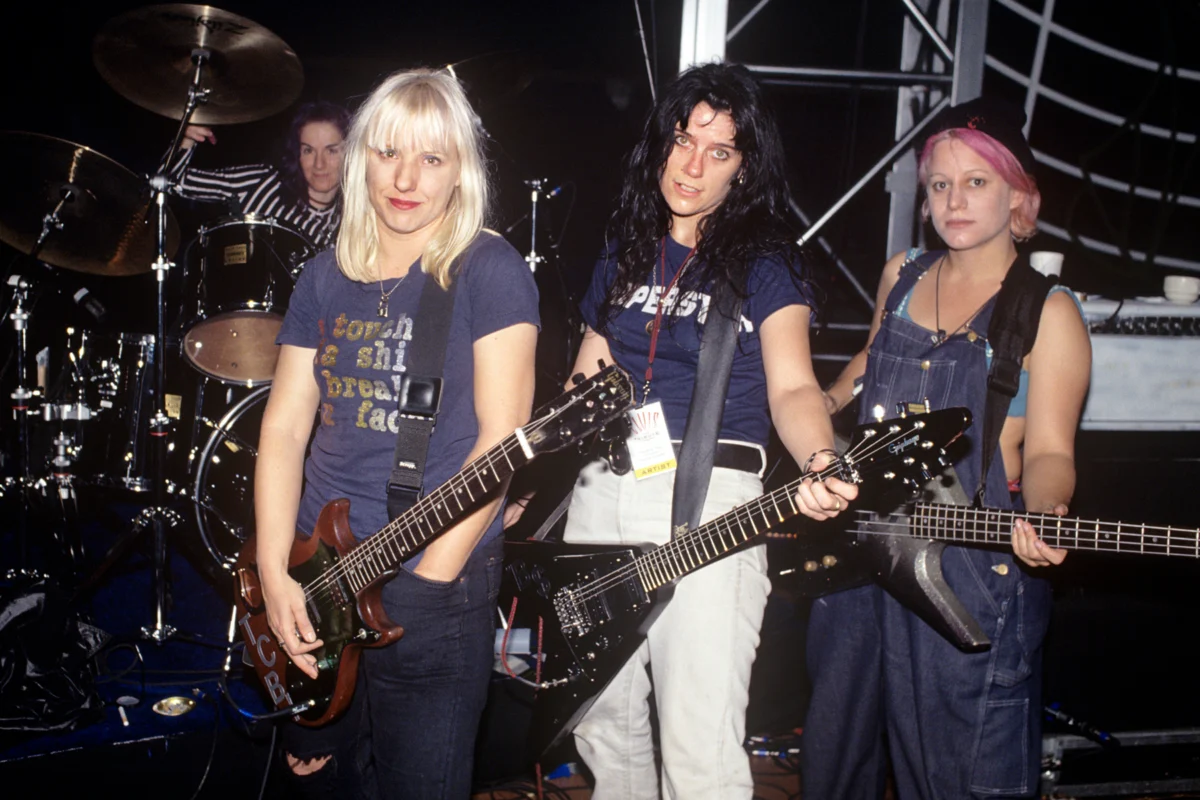
In the mid-summer of 1994, the cultural landscape of the United States was firmly entrenched in the alternative rock explosion. At the forefront of this movement stood L7, a four-woman powerhouse that defied the stereotypical "girl group" labels often imposed by the music industry. As the band prepared for a high-profile stint on the Lollapalooza tour and celebrated the release of their fourth studio album, Hungry for Stink, they remained tethered to the gritty, uncompromising punk roots that defined their early years in the Los Angeles underground. Meeting at Gladstone’s on the Santa Monica beachfront, the band members—vocalist/guitarist Donita Sparks, bassist Jennifer Finch, guitarist Suzi Gardner, and drummer Dee Plakas—presented a united front of defiance and dark humor, embodying a "D.I.Y. fuck-you spirit" that had become their hallmark.
The band’s ascent from the fringes of the 1980s punk scene to major-label prominence is a study in perseverance and stylistic consistency. Since signing with Slash/Reprise, a subsidiary of Warner Bros. Records, L7 has utilized their newfound resources to maintain their creative autonomy while demanding the perks of their industry status. This transition is perhaps best illustrated by their penchant for "lobster meetings," a ritual where the band insists on high-end seafood dinners at the expense of record executives. For L7, these moments are not merely about indulgence but serve as a subversive reclamation of space in a male-dominated industry.
The Evolution of L7: From Underground Rehearsals to Global Recognition
The trajectory of L7 began in 1985, long before the term "grunge" became a household name. The band’s formative years were spent navigating the eclectic and often dangerous Los Angeles punk circuit. A significant portion of their early development took place at the home of Maxine Nazworthy, the Max Factor heiress who served as a patroness to several seminal L.A. punk acts, including Redd Kross and the Chemical People. Rehearsing in Beverly Hills while living the life of struggling musicians provided the band with an early lesson in the ironies of the entertainment industry.
The band’s discography reflects a steady growth in both sonic complexity and commercial reach. Their self-titled debut was released by Epitaph Records in 1988, followed by the 1990 EP Smell the Magic on the influential Seattle-based label Sub Pop. However, it was 1992’s Bricks Are Heavy, produced by Butch Vig, that catapulted L7 into the mainstream. Driven by the success of the single "Pretend We’re Dead," the album moved over 250,000 units, a substantial figure for an alternative act of that era. This success set the stage for Hungry for Stink, an album that seeks to balance the band’s raw energy with a more polished, though no less aggressive, production style.
Sonic Identity and the Rejection of Gendered Genres
One of the most persistent challenges L7 has faced is the media’s tendency to categorize them based on gender rather than musicality. Terms like "foxcore" and "riot grrrl" have frequently been applied to the group, much to the frustration of the band members. Jennifer Finch has been particularly vocal about this issue, arguing that creating genres based on gender is a disservice to the music itself. The band views their work through the lens of traditional punk influences—The Ramones, the Sex Pistols, and X—rather than through a gender-specific niche.
The music on Hungry for Stink reinforces this stance. The track "Shirley" serves as a tribute to Shirley Muldowney, the first woman to receive a license from the National Hot Rod Association to drive a Top Fuel dragster. By sampling the film Heart Like a Wheel, specifically Muldowney’s defiant response of "Winning" to a reporter’s questioning of her presence in a "man’s world," L7 draws a direct parallel between the drag racer’s struggle and their own. The album’s lead single, "Andres," showcases Donita Sparks’ unique vocal ability to shift between melodic singing and guttural growls, a technique that has drawn comparisons to avant-garde artists like Björk.
Political Activism and Rock for Choice
Beyond their music, L7 has established themselves as a formidable political force. In 1991, the band founded Rock for Choice, a pro-choice organization designed to raise funds and awareness for reproductive rights. This initiative was born out of a specific political climate, characterized by the Bush administration’s stance on women’s rights and an increasing trend of violence against reproductive health clinics.
Rock for Choice has since evolved into a grassroots powerhouse. The organization’s efforts have funded surveillance equipment and bulletproof vests for clinic workers, items that cost approximately $2,500 each. While the organization has seen significant success, including high-profile benefit concerts with acts like Pearl Jam, it has also faced systemic resistance. A benefit show in Pensacola, Florida, for example, saw its proceeds significantly diminished due to high security costs imposed by local law enforcement in what the band described as "good-old-boy territory." Despite these hurdles, L7 remains committed to the cause, ensuring that the organization has a presence at major festivals like Lollapalooza.
Cultural Impact and Public Persona
L7’s public image is defined by a refusal to conform to traditional expectations of femininity. Whether it is Dee Plakas’ green hair or Suzi Gardner’s vintage leather jackets, the band’s aesthetic is intentionally confrontational. This defiance reached a fever pitch at the 1992 Reading Festival in England, where Donita Sparks famously removed her tampon on stage and threw it into the crowd—an act that remains one of the most talked-about moments in rock history.
The band’s influence has also extended into the realm of cinema. They recently appeared as the fictional band "The Camel Lips" in John Waters’ satirical film Serial Mom. This collaboration was a natural fit for the band, who have long identified with Waters’ "trash-culture" aesthetic. Their involvement in the film, which they secured after Babes in Toyland were unable to participate, further cemented their status as icons of the alternative subculture.
The Reality of the Touring Life
Despite their rising fame and "star status" in international markets like Brazil and Japan, the day-to-day reality for the members of L7 remains surprisingly grounded. Financial success in the alternative rock world of 1994 does not always translate to immediate personal wealth. Band members still drive older vehicles and rely on family support, with Jennifer Finch’s father often acting as the "band dad" by providing transportation to the airport.
The experience of touring abroad offers a glimpse into the extremes of their fame. In Japan, fans are known for their polite persistence, often waiting for hours outside hotels for a simple smile of acknowledgment. Conversely, in Brazil, the band encountered a level of aggression that bordered on physical danger, with fans attempting to pull hair or chasing the tour bus for cigarette butts. This dichotomy highlights the global reach of the grunge movement and the intense emotional connection fans feel toward L7’s brand of visceral rock.
Broader Implications and Legacy
As L7 moves forward with the Lollapalooza tour and the promotion of Hungry for Stink, their impact on the music industry continues to be felt. They have successfully navigated the transition from D.I.Y. punk to major-label artists without sacrificing their core values or their political convictions. By refusing to be pigeonholed by their gender, they have cleared a path for future generations of female musicians to be judged solely on their technical skill and creative output.
The success of Hungry for Stink—an album that demands attention through its stripped-down energy and lyrical defiance—is a testament to the band’s enduring relevance. In a decade defined by rapid commercialization and the often-fickle nature of music trends, L7 stands as a symbol of authenticity. Their primary focus remains the music and the message, a stance that ensures their legacy will extend far beyond the summer of 1994. Whether they are battling "good old boys" in the South or challenging the conventions of the Santa Monica beachfront, L7 continues to prove that in the world of rock and roll, the most powerful weapon is a refusal to be silenced.