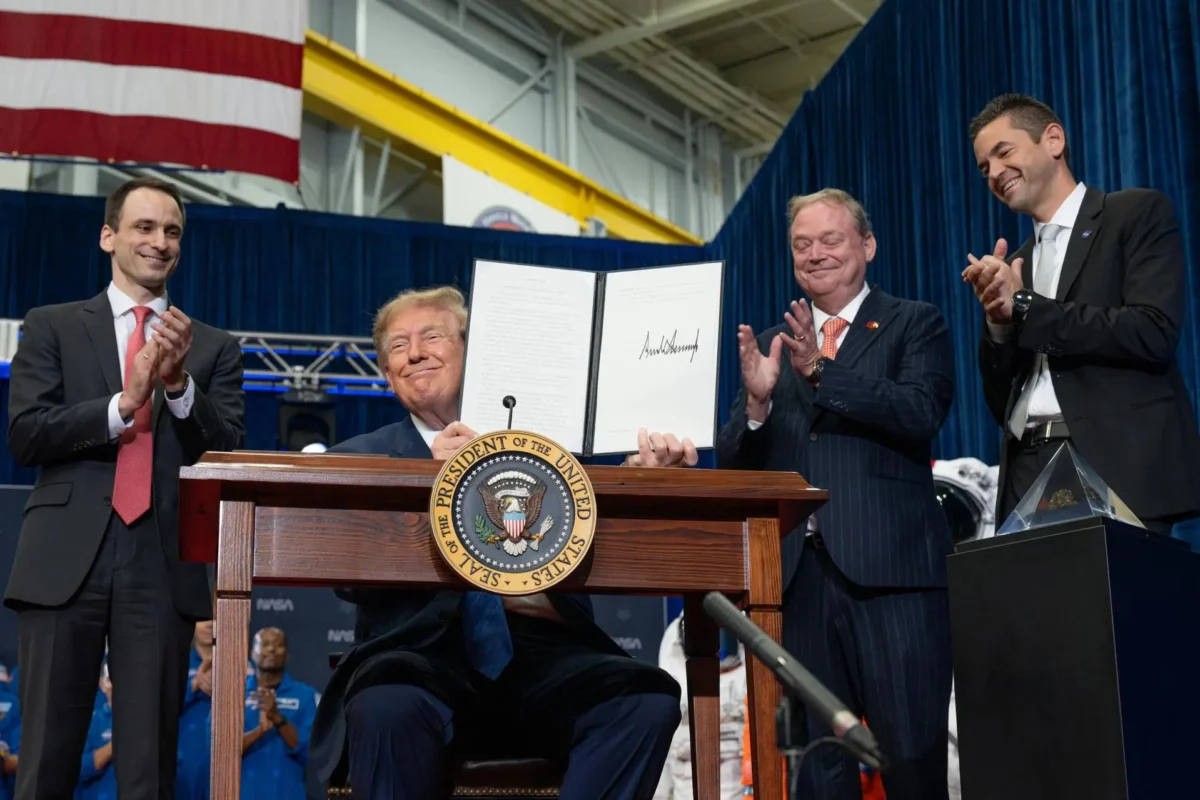
Less than two weeks after the formal signing of an Executive Order mandating the creation of the inaugural United States Space Academy, the mission to cultivate the next generation of aerospace leadership has entered a high-velocity implementation phase. NASA-led efforts are currently in full swing, moving rapidly from policy framework to logistical execution to establish a premier institution designed to secure American dominance in the extraterrestrial domain.
On September 9, NASA Administrator Jared Isaacman presided over the inaugural meeting of the Presidential Commission on the United States Space Academy at NASA Headquarters in Washington, D.C. This gathering marked the formal commencement of a 120-day intensive planning period, aimed at delivering a comprehensive roadmap to President Trump for the structure, governance, and operational requirements of the academy. Following the conclusion of this high-level strategy session, NASA issued a formal Request for Information (RFI) on Thursday, inviting state governors and their designated representatives to submit proposals for hosting and sponsoring what is envisioned to be a legacy institution of international significance.
A Strategic Vision for Aerospace Supremacy
The establishment of the U.S. Space Academy serves as a cornerstone of the administration’s long-term objective to maintain a robust and sustainable presence in space. As the commercial space sector expands and military competition in orbit intensifies, the necessity for a dedicated talent pipeline has become increasingly clear. The Academy is intended to serve as a specialized, elite training ground for the aerospace workforce, bridging the gap between traditional STEM education and the complex, multidisciplinary requirements of 21st-century space exploration and defense.
Administrator Isaacman, speaking after the commission’s first session, emphasized the urgency and the national importance of the project. “Our first Commission meeting made clear how much talent and commitment we have behind President Trump’s vision for the U.S. Space Academy,” Isaacman stated. “I’m grateful to our partners across government for getting right to work. Now, with the RFI underway, states across the country have an opportunity to help us shape a legacy institution built for America’s future in space.”
The commission meeting featured an interagency lineup reflecting the multidisciplinary nature of the project. Alongside Deputy Administrator Matt Anderson, the commission included U.S. Secretary of War Pete Hegseth, Director of the National Economic Council Kevin Hassett, Secretary of the United States Air Force Troy Meink, and U.S. Chief Technology Officer Ethan Klein. Their collective involvement signals a whole-of-government approach that integrates national security, economic growth, technological innovation, and academic rigor.
The RFI Process and Site Selection Criteria
The RFI process is designed to elicit high-quality, competitive bids that align with the academy’s mission. The document explicitly asks governors to demonstrate a commitment to providing the necessary infrastructure, community support, and public-private partnerships required to sustain an institution of this magnitude.
"The location of the U.S. Space Academy is foundational to its success," said Deputy Administrator Matt Anderson. "We’re asking states to bring their strongest vision—the infrastructure, the partnerships, and the community that can compete with the elite options this caliber of student will have and match the boundless ambition of our future space leaders."
States are restricted to a single submission, which must be filed by the governor’s designee. The deadline for these submissions is 6:00 p.m. EDT on Monday, October 26. The commission is looking for proposals that address not only the physical campus and real estate assets but also the integration of local research universities, proximity to existing aerospace industry clusters, and the long-term viability of the regional talent pool.
Ambitious Chronology for Operational Readiness
The timeline for the project is notably aggressive, reflecting the administration’s desire to see tangible progress within the current executive term. The roadmap established by the commission includes several critical milestones:
- August 28: President Trump signs the Executive Order, initiating the 120-day commission mandate.
- September 9: Inaugural commission meeting held at NASA Headquarters.
- October 26: Deadline for states to submit RFI responses.
- Late 2026/Early 2027: Anticipated selection of the host state and final site location.
- 2027: Groundbreaking for the permanent facility.
- 2028: Temporary operations begin, with an inaugural class of 300 students.
- 2031: Full operational status for the permanent U.S. Space Academy campus.
This schedule demands immediate coordination between state governments and the federal commission to ensure that site preparation, environmental reviews, and funding structures are addressed well in advance of the 2027 groundbreaking.
Broader Implications and Economic Impact
The creation of the U.S. Space Academy is expected to have a profound impact on the American economy, particularly in the regions vying for the site selection. Similar to the economic development seen around major research universities and military installations, the Academy is projected to become a magnet for private-sector aerospace companies, venture capital, and specialized supply chain providers.
Furthermore, the Academy addresses a growing labor market challenge. According to recent data from the Bureau of Labor Statistics and independent aerospace industry reports, the demand for high-skilled engineers, orbital mechanics, and space-policy experts is expected to grow by 15% over the next decade. By centralizing training, the Academy aims to standardize high-level certifications, ensuring that graduates are immediately ready to contribute to both civil exploration missions and critical national security initiatives.
From a geopolitical perspective, the institution signals to global competitors that the United States is investing in the human capital necessary to lead in the "new space race." As nations increase their capabilities in satellite deployment, lunar exploration, and potential deep-space logistics, the Academy will serve as the primary think-tank and training ground for American space doctrine.
Commission Mandate and Future Governance
The 120-day mandate given to the commission is the engine driving this rapid progress. Beyond site selection, the commission is tasked with drafting the core curriculum and governance structure. This includes determining the balance between civilian oversight and military partnership, as well as the nature of service commitments for students—modeled similarly to the United States Military Academy at West Point or the United States Air Force Academy in Colorado Springs.
Key areas of focus for the commission during the coming months include:
- Curriculum Development: Integrating advanced propulsion physics, space law, orbital logistics, and human life-support systems.
- Service Commitments: Establishing the parameters for post-graduation service in government, military, or approved private-sector aerospace roles.
- Partnership Frameworks: Defining how the academy will interact with existing institutions like the Artemis program, the U.S. Space Force, and private commercial spaceflight partners.
As the October 26 deadline for RFI submissions approaches, the political and economic landscape of the country is already shifting. Governors from states with strong aerospace heritages—such as Florida, Texas, Alabama, and Colorado—are reportedly already mobilizing task forces to draft proposals that emphasize their existing research ecosystems and workforce readiness.
The establishment of the United States Space Academy represents one of the most significant shifts in American educational and technological policy in decades. As the Commission continues its work, the eyes of both the aerospace industry and state governments remain fixed on Washington, waiting for the next phase of a project that is poised to redefine the future of American leadership in the final frontier.
For further information regarding the commission’s objectives and the ongoing search for a host site, the White House has made a detailed fact sheet available to the public. For media inquiries or administrative correspondence, NASA has designated George Alderman and Cheryl Warner as the primary points of contact for all press-related matters.