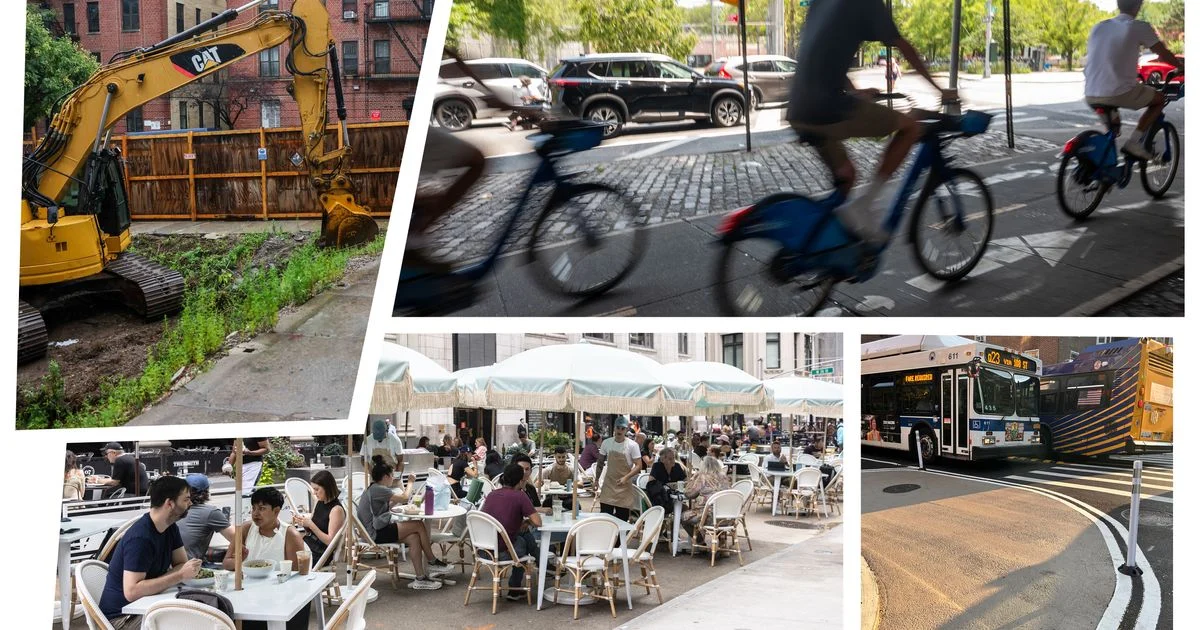
New York City’s municipal landscape shifted significantly following a decisive election night in which voters overwhelmingly approved all five ballot measures put forward by the independent Commission on Government Efficiency (COGE). Spearheaded under the broader policy framework of Mayor Zohran Mamdani, the sweeping referendum package focused heavily on modernizing municipal operations to alleviate the city’s persistent housing and cost-of-living crises. With approval margins exceeding 61 percent across the board—and reaching over 72 percent for a measure establishing clear rainy-day fund contribution targets—the election results signal a powerful mandate for administrative reform.
Proponents of the "abundance movement," a progressive school of thought favoring supply-side economic reforms to expand housing and infrastructure, celebrated the outcome as a major victory. By streamlining bureaucratic processes, the newly minted charter amendments and statutory changes aim to drastically reduce the time and red tape required to execute public and private projects. However, the sweeping nature of these reforms has also reignited longstanding debates regarding the balance between government efficiency and local community oversight.
Chronology and Legislative Origins
The road to the November ballot began earlier in the legislative cycle with the establishment of the Commission on Government Efficiency, an independent body tasked with auditing municipal workflows, permitting structures, and inter-agency delays. Mayor Mamdani’s administration framed the commission’s recommendations around a central thesis: that municipal red tape acts as an invisible tax on everyday residents, inflating the costs of housing, small business operations, and public transit initiatives.
Throughout the late spring and summer, city planners and policy advisers refined the commission’s findings into five distinct ballot questions. As the November midterms approached, a coalition of labor unions, real estate developers, safe-streets advocates, and hospitality associations mobilized substantial resources to support the slate. Opponents, including historic preservationists and local civic associations, raised alarms over compressed timelines and diminished avenues for public commentary, setting the stage for a polarized debate leading up to election day.
Direct Beneficiaries: Dining, Transit, and Construction
The structural overhauls approved by voters deliver immediate, tangible benefits to three key sectors of New York City’s economy: hospitality, urban mobility, and real estate development.
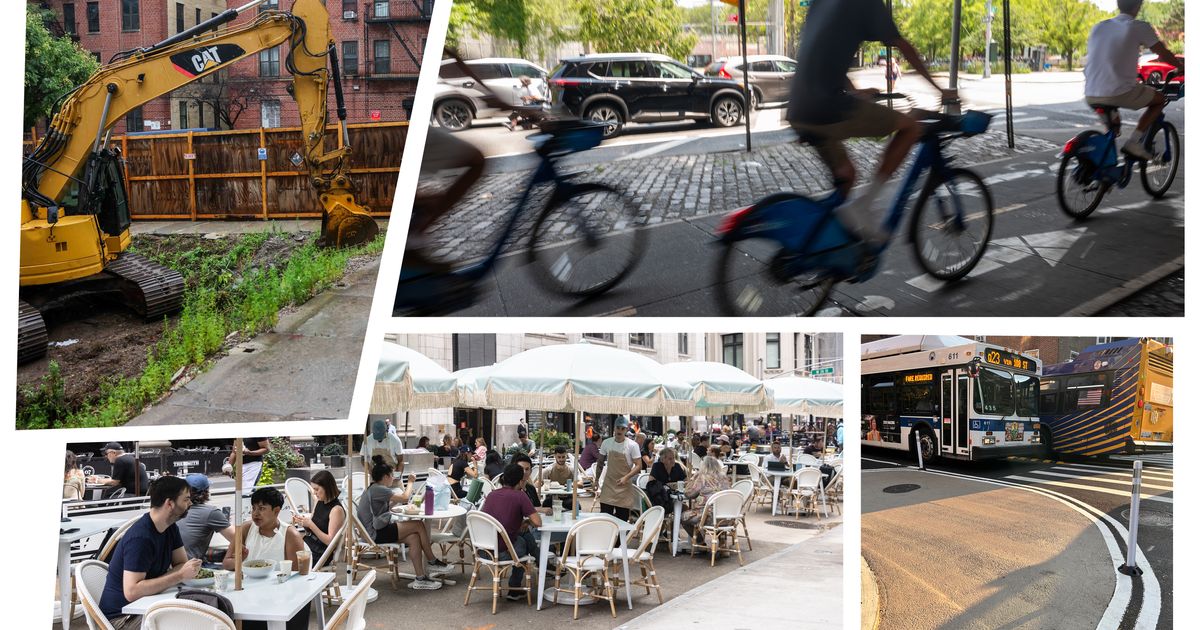
Under Proposition 1, the city’s dining and hospitality sector emerged as a primary beneficiary. The measure institutes accelerated, permanent permitting pathways for outdoor dining installations and streeteries. Since the COVID-19 pandemic, these structures have served as an essential revenue lifeline for thousands of independent eateries. Restaurant owners have long complained that bureaucratic renewal processes and fragmented agency oversight threatened the viability of outdoor seating; the new framework replaces temporary emergency rules with a streamlined, predictable administrative process.
For transit advocates and cyclists, Proposition 3 represents a monumental breakthrough. The measure simplifies the regulatory hurdles required for the Department of Transportation (DOT) to initiate and construct dedicated bike- and bus-lane networks. Historically, these street-safety projects faced protracted delays due to overlapping jurisdictional reviews and protracted legal challenges from local opponents. Safe-streets organizations celebrated the outcome, noting that the city can now deploy transit infrastructure at a scale matching metropolitan demand without getting bogged down in endless procedural bottlenecks.
Meanwhile, the building and construction industry rallied strongly behind Proposition 4, which mandates the creation of a centralized digital hub for construction-permit applications. Carlo Scissura, president and CEO of the New York Building Congress, emphasized the transformative potential of this reform. By providing developers with a single, transparent portal to submit and track approvals, the city eliminates repetitive paperwork and provides clear accountability when projects stall. Over the long term, industry leaders contend that these adjustments will reduce administrative overhead, mitigate financing delays, and accelerate the delivery of desperately needed housing stock and public infrastructure.
The Abundance Movement and the Shift in Local Power
The decisive passage of all five proposals underscores a broader ideological realignment within urban politics. Catherine Vaughan, co-founder of Abundance New York, noted that the election results reflect a growing public appetite for growth and modernization over status-quo stagnation.
"You’re seeing the tides shifting," Vaughan observed, pointing to a diverse coalition that aligns with the mayor’s vision for a more adaptable city. According to proponents of supply-side progressivism, this coalition has successfully counterbalanced the outsized influence of hyper-local community boards and neighborhood groups—often labeled as NIMBYs (Not In My Back Yard)—whose localized opposition has frequently stymied citywide housing and transit initiatives. By streamlining approval processes, the ballot measures reflect a growing consensus that regional affordability and infrastructure needs must supersede localized obstructionism.
Pushback from Preservationists and Good-Government Skeptics
Despite the widespread popularity of the ballot initiatives among voters, critics have raised significant concerns regarding the erosion of public input and democratic accountability.

Peg Breen, the departing president of the New York Landmarks Conservancy, voiced sharp reservations regarding aspects of Proposition 3, which grants the city greater flexibility to rapidly sell unused development rights from publicly owned landmarked properties. Breen questioned how these high-stakes real estate transactions will integrate into existing neighborhoods, noting potential conflicts with contextual zoning and neighborhood character.
"Where are they going in the neighborhood, and what will that development be like? Is it contextual?" Breen asked, asserting that local communities retain a fundamental right to shape their built environment. She further criticized the broader trend of framing community participation as a mere bureaucratic hurdle. "Community input is getting a bad rap, and I think people deserve a chance to weigh in on what happens in their neighborhood."
In contrast, supporters of the ballot measures argue that existing avenues for public input have frequently been weaponized to obstruct necessary civic improvements. Ben Furnas, executive director of Transportation Alternatives, contended that the reforms are essential to "prevent a small minority of people from being able to sue and block and delay in an undemocratic process," particularly when it comes to vital safety and transit infrastructure.
Meanwhile, good-government watchdogs have urged a measured approach to evaluating the aftermath of the vote. Rachael Fauss, senior policy adviser at Reinvent Albany, expressed cautious optimism regarding the administrative overhaul. Because the Commission on Government Efficiency relied heavily on quantitative metrics to justify the proposals, Fauss emphasized that their ultimate success must be measured by empirical data proving that municipal agencies are demonstrably accelerating service delivery. "From there," Fauss noted, "are there other things that can be done?"
Implications for the Future of New York City Governance
As the Mamdani administration transitions from campaigning on structural reform to implementing these voter-approved mandates, the city faces a complex operational challenge. The integration of centralized digital permit hubs, the rapid deployment of protected transit lanes, and the expansion of permanent commercial outdoor spaces will require unprecedented inter-agency coordination between the Department of Transportation, the Department of Buildings, and various municipal boards.
If successful, the 2026 ballot measures could serve as a national blueprint for municipal reform, demonstrating that progressive administrative efficiency can successfully tackle urban affordability. However, if the implementation phase bogs down in technical glitches or alienates neighborhood stakeholders further, the administration risks deepening the very divisions that characterized the contentious legislative debate. For now, the victors of election night—builders, restaurateurs, and transit advocates—are poised to test the limits of a faster, more streamlined New York City government.