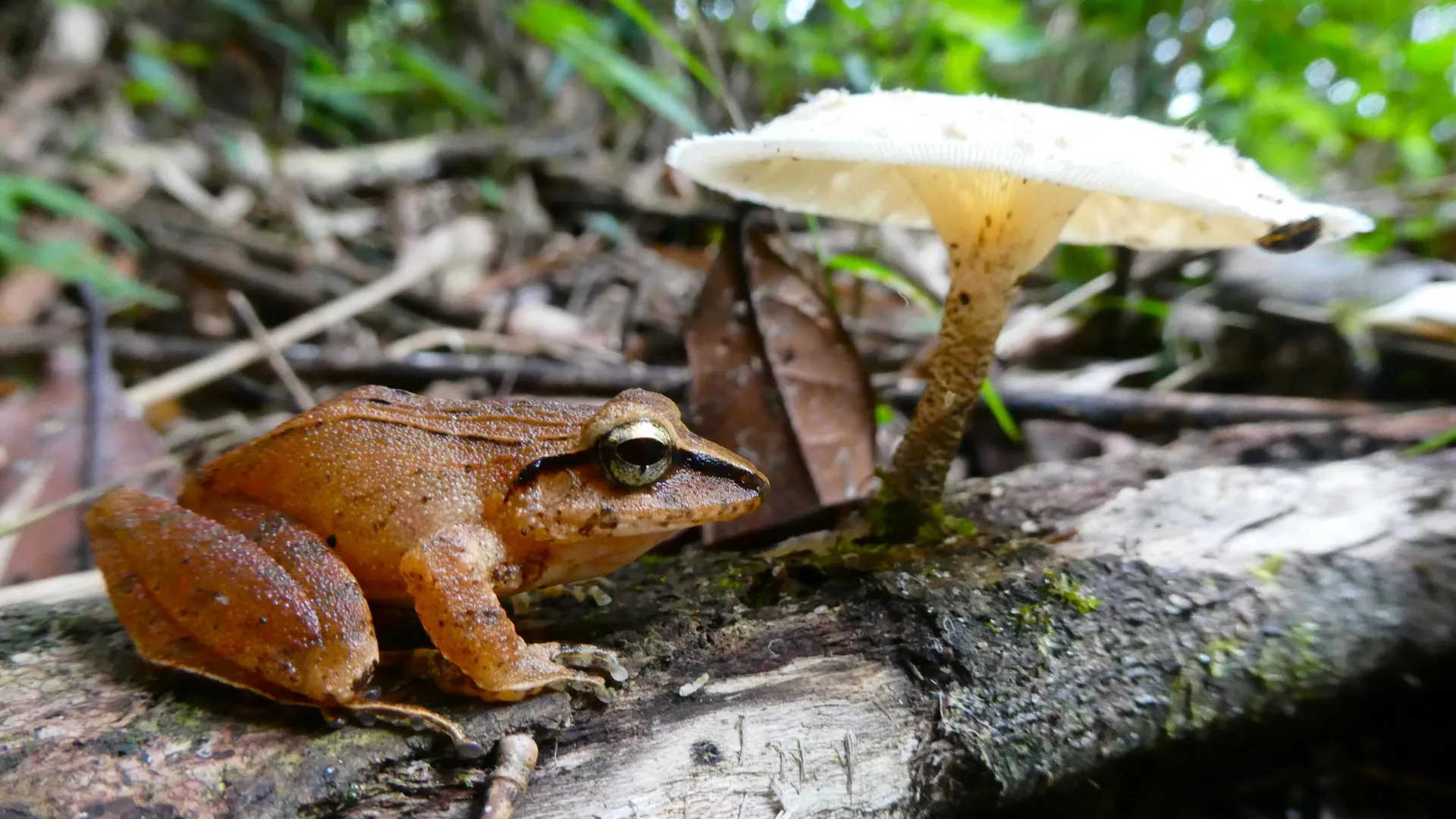
For nearly half a century, the mysterious disappearance of frog populations in Brazil’s Atlantic Forest has remained one of the most persistent enigmas in the field of wildlife epidemiology. Since the 1970s, researchers observed catastrophic declines in amphibian diversity within this critical biodiversity hotspot, yet the definitive cause of these localized extinctions remained elusive. A landmark study published in the journal Molecular Ecology has now provided long-sought evidence, linking these historic die-offs to the emergence and rapid spread of the chytrid fungus, Batrachochytrium dendrobatidis. Conducted by a team from the Center for Conservation Genomics at the Smithsonian’s National Zoo and Conservation Biology Institute (NZCBI) and Pennsylvania State University (PSU), the research offers a definitive resolution to a decades-old scientific mystery.
The Emergence of Chytridiomycosis
Chytridiomycosis, the disease caused by the Batrachochytrium dendrobatidis (Bd) fungus, is characterized by the pathogen infecting the skin of amphibians, which is vital for respiration, hydration, and electrolyte balance. The fungus, which is believed to have originated in Asia before proliferating globally during the 1970s and 1980s, was not formally identified by the scientific community until 1999. By the time of its formal classification, the pathogen had already decimated amphibian populations across several continents, driving hundreds of species toward the brink of extinction.
Because the pathogen emerged and spread before it was recognized by biologists, researchers have faced significant hurdles in establishing a causal link between the fungus and specific historical population collapses. Jack Boyette, an NZCBI graduate fellow and doctoral candidate at PSU who led the investigation, characterizes these events as "some of the most enduring cold cases in wildlife epidemiology." For years, the scientific community debated whether environmental stressors, such as climate-driven weather volatility or habitat loss, were the primary catalysts for the declines at the Boracéia Biological Station in Brazil, where populations plummeted between 1979 and 1982.
Methodology: Reconstructing the Timeline through Museum Archives
To investigate the validity of the fungal hypothesis, the research team employed a unique methodological approach: the analysis of "time-capsule" specimens housed within the Smithsonian’s National Museum of Natural History. The collection was curated by William Ronald Heyer, a former curator of amphibians and reptiles, who conducted five separate expeditions to the Boracéia Biological Station. Crucially, Heyer’s collection included specimens gathered both before and after the population collapse, providing a rare biological timeline of the ecosystem’s health.
The team analyzed samples from over 370 preserved amphibians, representing 17 distinct species. By employing molecular screening techniques on these decades-old specimens, the researchers were able to track the presence and prevalence of the fungus across the specific period of the decline. The results were stark: samples collected prior to 1979 were universally negative for Batrachochytrium dendrobatidis. In contrast, more than 50% of the specimens collected during the 1980s tested positive for the fungus, providing clear evidence that the pathogen’s arrival at the site coincided precisely with the onset of the population collapses.
The Paradox of Tolerance and Mortality
The investigation revealed a counterintuitive pattern: species that suffered the most severe population declines often showed no detectable signs of infection in the historical record, whereas those that remained stable were frequently identified as carriers. This phenomenon offers a significant insight into the host-pathogen dynamics of chytridiomycosis.
The research team posits that species showing no infection in museum specimens were likely so highly susceptible that they succumbed to the disease too rapidly to be captured and preserved. Conversely, the stable species likely possessed a natural or adaptive tolerance to the pathogen, allowing them to harbor the fungus without suffering immediate mortality. This distinction between infection and mortality is a crucial takeaway for future conservation efforts. It suggests that the absence of a pathogen in a specific population does not necessarily indicate a lack of impact, and conversely, the presence of a pathogen does not always equate to a population-wide death sentence.
The Broader Implications for Global Conservation
The success of this study underscores the immense, often overlooked, scientific value of natural history collections. Michael Campana, a genomicist at the NZCBI and co-author of the study, notes that the collectors of the 1970s could not have anticipated that their specimens would one day be used to identify a microscopic pathogen that was then unknown to science. This "retrospective epidemiology" allows modern scientists to map the trajectory of outbreaks and understand how species respond to emerging threats.
This methodology is increasingly relevant as the global scientific community faces the threat of Batrachochytrium salamandrivorans (Bsal), a related fungal pathogen currently decimating salamander populations in Europe. There is significant concern that Bsal could reach North America, where the highest diversity of salamanders in the world resides. By reconstructing the history of the original chytrid outbreak, researchers hope to develop predictive models that can identify which species are most vulnerable, thereby allowing for preemptive intervention.
Current Status and Signs of Recovery
In an effort to assess the long-term impacts of the outbreak, the researchers, in collaboration with the University of São Paulo, conducted follow-up surveys at the Boracéia Biological Station between 2022 and 2024. Of the 17 species originally documented by Heyer, 12 were successfully located. While the absence of five species remains a point of concern, the findings suggest a significant level of recovery for the majority of the community.
The fungus remains endemic to the region; however, the data suggests that surviving populations have adapted over successive generations, demonstrating an increased tolerance that has prevented further mass mortality events. This ecological resilience provides a degree of optimism for conservationists, suggesting that while the initial impact of a pathogen can be catastrophic, ecosystems can sometimes stabilize as host-pathogen interactions reach a new, more sustainable equilibrium.
Future Research Directions
The investigation into the Atlantic Forest’s amphibian collapse is far from over. The research team is currently utilizing advanced genomic analysis on the DNA extracted from the museum specimens to determine if specific genetic markers provided certain species with a higher level of resistance to the fungus. Furthermore, the use of environmental DNA (eDNA)—collecting genetic material from water and soil—is being explored as a method to fill in the gaps where physical specimens are missing.
As scientists continue to untangle the history of this "cold case," the lessons learned are proving vital. By combining historical museum records with cutting-edge genomic technologies, researchers are not only solving the mysteries of the past but are also building a robust framework for managing the emerging diseases of the future. The findings confirm that while human-driven environmental changes are complex, the legacy of biological collections remains one of our most potent tools in preserving the Earth’s fragile biodiversity. The work at Boracéia stands as a testament to the importance of institutional memory and the ongoing necessity of scientific surveillance in an era of global ecological change.