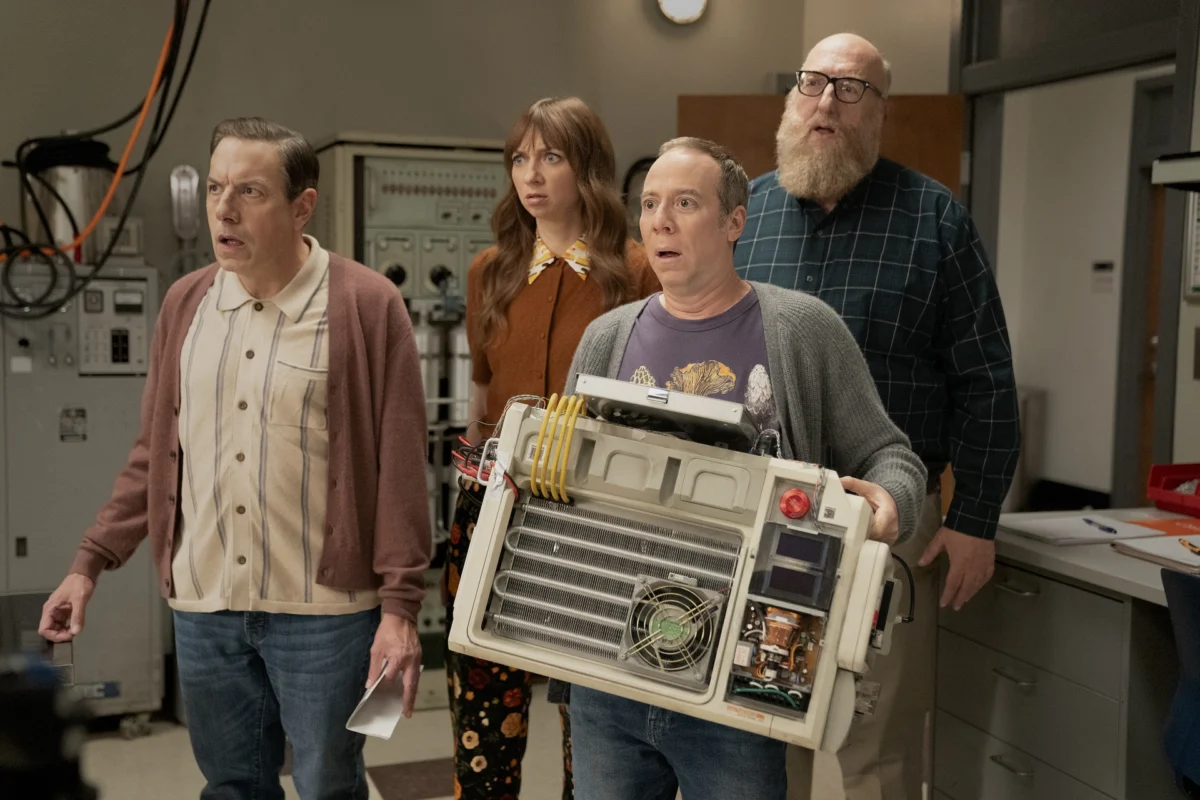
The long-anticipated expansion of the "Big Bang Theory" universe reached a significant milestone at San Diego Comic-Con, where fans were treated to an exclusive first look at the upcoming HBO Max spinoff, Stuart Fails to Save the Universe. While the character of Stuart Bloom, the perennially down-on-his-luck comic book store owner, may struggle with the weight of cosmic responsibility in the series, his presence at the convention was a resounding success, effectively anchoring the franchise’s return to one of the world’s most prominent pop-culture stages. The panel, held in a packed hall, served as a bridge between the classic multi-camera sitcom format that defined a decade of television and a new, more cinematic approach to the beloved intellectual property.
A Star-Studded Return to San Diego Comic-Con
The presentation was moderated by actress and geek-culture icon Felicia Day, who guided a panel featuring the primary cast and creative team. Leading the group was Kevin Sussman, reprising his role as Stuart Bloom, a character who evolved from a minor recurring player in the early seasons of The Big Bang Theory to a central figure in the show’s later years. Joining Sussman were Lauren Lapkus, who returns as Stuart’s girlfriend and fellow comic enthusiast Denise; John Ross Bowie, reprising his role as the lisping, competitive physicist Barry Kripke; and Brian Posehn, who returns as the soft-spoken geologist Bert Kibbler.
Behind the scenes, the creative firepower was equally notable. The panel included co-creators and executive producers Chuck Lorre and Bill Prady, the architects of the original series, alongside Zak Penn. Penn’s involvement marks a significant shift in the show’s DNA; known for his work on high-stakes superhero and science fiction projects like Ready Player One and various Marvel properties, his presence signals the spinoff’s more adventurous, genre-bending direction.
The event marked the first major San Diego Comic-Con appearance for the franchise since the original series concluded its historic 12-season run in 2019. For years, The Big Bang Theory was a staple of the convention, often filling Hall H with thousands of fans. The debut of Stuart Fails to Save the Universe suggests that Warner Bros. Discovery is keen to maintain that fan connection while evolving the brand for a modern streaming audience.
Shifting Formats: From Sitcom to Cinema
One of the most discussed aspects of the new series is the departure from the traditional four-camera, live-audience sitcom format that defined The Big Bang Theory and its predecessors. Stuart Fails to Save the Universe utilizes a single-camera setup, a move that Chuck Lorre explained was necessary to achieve the show’s ambitious narrative scope. During the panel, Lorre emphasized the limitations of the traditional format when dealing with high-concept storytelling. He noted that the four-camera model is akin to putting on a weekly play, where the action is largely confined to static sets and dialogue-heavy scenes on a couch.
"As you just saw, I wanted to do a lot," Lorre told the audience after the screening of the first episode. "The simple solution to that was to shoot it like a movie." This shift allows for more dynamic cinematography, location shooting, and the visual effects required for a story involving a "multiverse Armageddon." By adopting the single-camera format, the show aligns itself more closely with modern prestige comedies and dramedies found on streaming platforms, moving away from the "laugh track" era and toward a more immersive viewing experience.
The Plot: A Multiverse of Nerd Mistakes
The logline for the series sets the stage for a narrative that is both grand in scale and grounded in the established quirks of its characters. The story begins when Stuart Bloom accidentally breaks a complex device originally constructed by Sheldon Cooper and Leonard Hofstadter. In typical fashion for the franchise, the device is not merely a piece of laboratory equipment but a catalyst for a reality-shattering event. The resulting malfunction triggers a multiverse Armageddon, forcing Stuart to step out of his comfort zone in the comic book shop and into the role of an unlikely savior.
Tasked with restoring the fabric of reality, Stuart is not alone. He is joined by Denise (Lapkus), whose pragmatism often balances Stuart’s neuroses; Bert (Posehn), whose geological expertise takes on unexpected relevance; and Barry Kripke (Bowie), who remains a "pain in the ass" even when the world is ending. The quest involves the group encountering alternate-universe versions of characters from the original series, providing ample opportunity for fan-service cameos and "what if" scenarios. However, as the title implies, the team’s efforts are frequently thwarted by their own incompetence and the sheer scale of the crisis, leading to a comedic exploration of failure on a cosmic level.
Surprises and Cameos: Honoring the Legacy
Bill Prady confirmed during the panel that the first episode features several surprise appearances from the original Big Bang Theory cast members. While the producers were careful not to spoil all the secrets of the upcoming season, Prady teased that fans can expect a steady stream of returning faces. This includes not just the core cast but also fan-favorite minor characters who appeared throughout the original show’s 279 episodes.
This strategy serves two purposes: it rewards long-term viewers of the franchise while helping to establish the spinoff’s place within the broader continuity. The use of the multiverse as a plot device allows for these cameos to occur without necessarily disrupting the settled endings of the original characters’ arcs. It provides a creative "loophole" to revisit beloved dynamics while keeping the focus on Stuart and his new ensemble.
Strategic Expansion of the Big Bang Universe
Stuart Fails to Save the Universe is the fourth series in the expanding "Lorre-verse" centered on the world of Caltech scientists and their social circles. The original Big Bang Theory (2007–2019) was a ratings juggernaut for CBS, frequently ranking as the number one comedy on television and garnering 55 Emmy nominations. Its first spinoff, the prequel Young Sheldon, followed a similar path of success, running for seven seasons and concluding earlier this year.
The momentum of the franchise continues with George & Mandy’s First Marriage, a spinoff of Young Sheldon that focuses on the characters of Georgie Cooper and Mandy McAllister. Despite being a relatively new addition to the lineup, the show has already shown immense staying power, with reports at the panel indicating it has been renewed for its third season. This rapid expansion highlights Warner Bros. Television’s reliance on established IP to drive subscribers to the Max streaming service.
The Production and Creative Team
The series is a joint production between Chuck Lorre Productions and Warner Bros. Television. Kyle Newacheck, known for his work on Workaholics and What We Do in the Shadows, serves as an executive producer and has directed multiple episodes. Newacheck’s background in high-energy, absurdist comedy is evident in the show’s pacing and visual style, which distinguishes it from the more deliberate pace of the original sitcom.
The collaboration with DC Comics also played a role in the SDCC launch. Jim Lee, the Chief Creative Officer and Publisher of DC, made a guest appearance at the panel to discuss his involvement. Lee created the cover art for an exclusive comic book tied to the series, which was distributed to attendees. This cross-promotion underscores the "meta" nature of the show—a series about a comic book store owner, premiering at a comic book convention, with its own tie-in comic created by a legend in the industry.
Analysis of the Shift to Streaming
The transition of the Big Bang Theory franchise from linear broadcast television (CBS) to a streaming-first model on Max reflects broader trends in the entertainment industry. While Young Sheldon and George & Mandy’s First Marriage maintained a presence on traditional television, Stuart Fails to Save the Universe is positioned as a tentpole title for the Max platform.
By targeting a 6 p.m. PT Thursday release slot, Max is aiming to capture the "appointment viewing" energy that once characterized the Thursday night comedy blocks on network TV. The decision to release episodes weekly rather than as a "binge drop" is a tactical move to sustain social media conversation and keep the show in the cultural zeitgeist for a longer period.
Broader Implications for the Franchise
The success or failure of Stuart Fails to Save the Universe will likely determine the future trajectory of the Big Bang Theory brand. If audiences embrace the single-camera, high-concept format, it opens the door for more experimental spinoffs that deviate from the traditional sitcom structure. It also proves that secondary characters like Stuart Bloom have enough narrative weight to carry their own series, potentially leading to further character-focused projects.
As the television landscape becomes increasingly crowded, the ability to leverage a known brand with a built-in global audience is an invaluable asset. For Warner Bros. Discovery, Stuart Bloom isn’t just a comic book store owner; he is the face of a strategic effort to ensure that one of the most successful sitcoms in history remains relevant in the age of the multiverse.
Stuart Fails to Save the Universe is scheduled to release new episodes weekly on Thursdays at 6 p.m. PT on Max. With its blend of nostalgic cameos, cinematic production values, and the signature wit of Chuck Lorre and Bill Prady, the series is poised to be a significant addition to the fall streaming calendar.