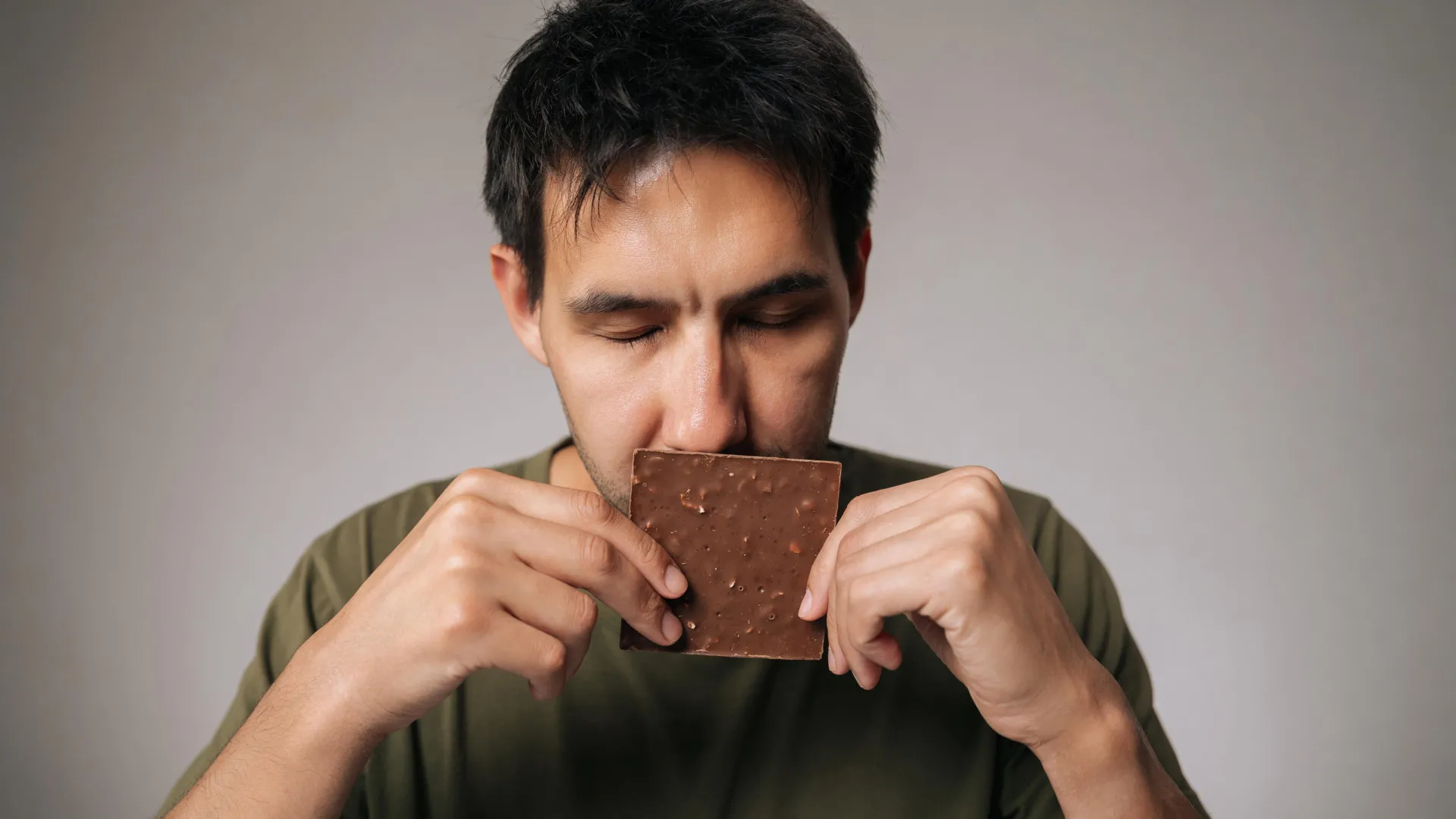
A groundbreaking study published in the journal Frontiers in Physiology suggests that the secret to a more effective leg day may not be found in a pre-workout supplement or a high-intensity playlist, but rather in the olfactory system. Researchers have discovered that exposure to specific chocolate aromas—particularly dark chocolate—before and during resistance exercise can significantly increase training volume without inflating the athlete’s perceived rate of exertion. This finding opens a new frontier in sports science, bridging the gap between sensory perception, psychological conditioning, and physical performance.
The Mechanism of Olfactory Influence
The human olfactory system is intricately linked to the brain’s limbic system, which governs emotions, memory, and appetite. Because of these deep-seated neurological connections, smells often trigger immediate physiological and psychological responses. For decades, researchers have understood that scent can evoke nostalgia or stimulate hunger, but the systematic application of scent as a performance-enhancing tool in the weight room has remained largely unexplored.
Dr. Mohamed Nashrudin bin Naharudin, the senior author of the study and an assistant professor at the University of Malaya’s Faculty of Sports and Exercise Science, spearheaded this investigation to determine if the brain could be "tricked" into a state of readiness or satiety through scent alone. The study focused on 23 healthy, moderately trained men in their early to mid-20s, a demographic often sought for performance studies due to their consistent recovery rates and baseline fitness levels.
Chronology of the Experimental Process
The study was conducted under controlled conditions to isolate the impact of scent from other variables. The protocol was as follows:
- Pre-Study Fasting: Participants were required to fast for at least 10 hours prior to the session to ensure that baseline metabolic states were uniform and that hunger signals were active.
- Baseline Assessment: Before beginning physical activity, participants provided self-reported data on their hunger levels, desire to eat, and intention to consume food.
- The Scent Trial: Participants were divided into three groups and exposed to one of three olfactory stimuli: a 90% cocoa dark chocolate solution, a 60% cocoa milk chocolate solution, or an odorless water control.
- Physical Performance: The exercise chosen for the study was the leg extension, a staple movement for isolating the quadriceps. Participants performed sets while being exposed to their assigned scent.
- Data Collection: Researchers measured performance metrics, including total repetitions, while simultaneously tracking fluctuations in the participants’ perceived appetite after each 30-second interval of scent exposure.
Comparative Effects of Cocoa Profiles
The results highlighted a stark dichotomy between the effects of dark chocolate and milk chocolate. The 90% cocoa dark chocolate scent was highly effective at modulating appetite. Participants exposed to this scent reported a significant decrease in hunger and an increased feeling of fullness. This physiological "deception"—where the brain receives a signal that satiation is imminent—allowed the athletes to push through physical fatigue.
Conversely, the 60% milk chocolate scent did not suppress appetite, but it did significantly enhance training volume compared to the water control. Participants described the milk chocolate aroma as more pleasant and hedonically rewarding. While the dark chocolate scent acted as a metabolic "brake" on hunger, the milk chocolate scent functioned as a psychological "accelerator," creating a more positive sensory environment that allowed participants to complete more repetitions.
Statistically, the differences were notable. Dark chocolate users achieved an average of 18 additional repetitions compared to the control group, while the milk chocolate users managed approximately nine additional repetitions.
Psychological Conditioning and Learned Associations
The underlying theory behind these results is the concept of "learned associations." From childhood, individuals are conditioned to associate the smell of chocolate with the consumption of calories and the subsequent feeling of satisfaction. The brain, acting on these memories, anticipates the arrival of food.
"The dark chocolate scent serves as a learned cue for a rich, bitter, and highly satiating food," Dr. Nashrudin explained. "It essentially tricks the system into an anticipatory state of fullness." This suggests that the body is not merely reacting to the scent in a vacuum; it is responding to a lifetime of conditioning. By bypassing the actual ingestion of calories, the study suggests that the brain can modulate its own energy expenditure and tolerance for physical pain based on these olfactory cues.
Implications for Sports Science and Nutrition
This research carries significant implications for both professional athletes and the general fitness population. If a non-ingestible stimulus can improve training volume, it potentially offers a way to enhance performance without the caloric overhead associated with pre-workout snacks. This is particularly relevant for athletes in weight-sensitive sports or those undergoing strict caloric deficits for body composition goals.
However, the scientific community remains cautious. The study is limited by its small sample size and its focus on a specific demographic. Furthermore, the researchers acknowledge that they did not measure blood hormone levels—such as ghrelin or leptin—or neural activity, leaving the exact biological pathways partially speculative. "We don’t think chocolate is entirely unique," Dr. Nashrudin noted, "but it is a food cue with incredibly strong, universally recognized reward associations."
Future Research Directions
The logical next step for this field is to investigate whether other food scents—or even non-food aromas—could produce similar effects. Could the scent of fresh coffee, peppermint, or even a familiar savory meal trigger the same performance-enhancing response?
Furthermore, the duration of these effects remains a subject of debate. The study tracked performance during a single session; it is unclear whether repeated exposure to the same scent would lead to sensory adaptation, where the brain eventually "learns" that the smell is not followed by actual food, thereby nullifying the performance boost.
Limitations and Methodological Considerations
Critics of the study point to the potential for the placebo effect. Because the control group was exposed to odorless water, it is possible that participants were aware they were in the control condition, which could have subconsciously influenced their performance. Additionally, the intensity of the aromas was not perfectly standardized, meaning the concentration of volatile organic compounds could have varied between the dark and milk chocolate samples.
Despite these limitations, the study provides a compelling case for the role of sensory input in physical performance. It shifts the focus from what we put into our bodies to how we can leverage our environment and our existing neural pathways to optimize our physical output.
Conclusion: A New Tool for the Gym
While it is premature to suggest that gym-goers should replace their supplements with chocolate-scented inhalers, the findings from the University of Malaya offer a fascinating look at the intersection of mind and body. The ability to increase training volume by nearly 20% through a simple, non-invasive olfactory trigger is a development that warrants further investigation. As sports science continues to evolve, the integration of sensory psychology may prove to be just as important as traditional biomechanics and nutrition in the pursuit of peak human performance. Whether this proves to be a passing trend or a foundational element of future training regimens, one thing is clear: the path to a better workout might just be found in the air we breathe.