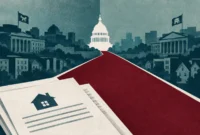
The American housing landscape has long been defined by localized battles between tenants and landlords, but a new wave of democratic socialist leadership is seeking to fundamentally alter that dynamic by taking the fight to Washington. Following her decisive electoral victory on November 3, 2026, when she secured New York’s District 7 House seat by a wide margin against Republican challenger Melvin Rivera, Congresswoman-elect Claire Valdez is positioning federal housing policy at the absolute forefront of the national legislative agenda. Long before her congressional run, Valdez, a 36-year-old assemblymember and Ridgewood tenant, built her political identity on unapologetic tenant advocacy. Now, she is advancing a sweeping, ambitious platform that includes universal rent control, a federal adaptation of New York’s Good Cause Eviction framework, expanded public housing development, and aggressive penalization of negligent landlords.
Valdez’s rise mirrors a broader political realignment within New York City’s progressive and democratic socialist circles. Backed by fellow democratic socialist Zohran Mamdani during a grueling primary against Brooklyn Borough President Antonio Reynoso—who was endorsed by outgoing Representative Nydia Velázquez—Valdez tapped into a deeply frustrated, majority-tenant constituency. In a district where 77 percent of residents rent their homes, Valdez’s focus on tenant power and combatting the outsized influence of the real estate industry resonated deeply. Her newly released housing manifesto outlines a radical reimagining of the federal government’s role in the housing market, sparking intense debate among urban planners, economists, and real estate developers nationwide.
The Historical Precedent and Mechanics of Universal Rent Control
At the core of Valdez’s legislative platform is universal rent control, a policy concept that sounds revolutionary to contemporary ears but actually possesses deep roots in American history. When discussing the mechanics of how a federal rent regulation framework could operate, Valdez frequently points to the 1940s, when the federal Office of Price Administration established nationwide price and rent controls administered by local boards during World War II. Perhaps even more surprising to modern observers is the historical precedent set by President Richard Nixon, who famously froze wages and prices—including rents—in August 1971 to combat inflation.
Valdez argues that these historical examples prove the federal government possesses both the constitutional authority and the moral obligation to intervene in housing markets during periods of severe economic distress. Under her proposed framework, the federal government would provide funding, national standards, and oversight to assist states and municipalities in establishing county-level rent boards. These boards would evaluate hyper-local economic conditions and grant tenants a direct voice in determining allowable rent increases.

Critics of rent control, including major real estate associations and various economic think tanks, argue that price ceilings suppress housing supply, discourage property maintenance, and ultimately exacerbate long-term affordability crises. However, tenant advocates and supporters of Valdez’s plan counter that unregulated private markets have failed to protect low- and middle-income families from predatory pricing and displacement. By modernizing and scaling up rent stabilization nationally—dismantling arbitrary restrictions like New York City’s current rules that limit protections primarily to pre-1974 buildings with six or more units—Valdez believes the federal government can stem the bleeding of urban renters.
Leveraging Federal Power Against Negligent Landlords
Beyond price controls, Valdez’s housing plan takes direct aim at slumlords and institutional real estate investors with documented histories of building neglect and code violations. In recent years, tenant organizing in New York City has frequently clashed with massive portfolio sales, such as the high-profile transfer of 5,000 rent-stabilized units between two major landlords with troubled maintenance records. While local municipal interventions, such as the city’s attempts to halt the Pinnacle portfolio sale, often face legal and financial hurdles that allow transactions to proceed, Valdez envisions a far more muscular federal approach.
The cornerstone of this enforcement strategy involves leveraging government-backed mortgage entities like Fannie Mae and Freddie Mac, which finance approximately half of the nation’s multifamily housing market. Valdez proposes conditioning this federal financing on strict habitability and maintenance standards. Landlords who chronically fail to maintain basic living conditions—such as repairing elevators, eradicating mold and pest infestations, and removing lead paint—would face swift penalties, up to and including federal foreclosure.
Furthermore, Valdez advocates for the aggressive application of eminent domain to seize distressed or neglected residential properties, transitioning them into permanently affordable social housing. This strategy dovetails with progressive federal proposals like Representative Alexandria Ocasio-Cortez’s Homes Act, which seeks to repeal the restrictive Faircloth Act, establish a federal social housing developer, and inject massive funding into public housing infrastructure.
Revitalizing Public Housing and Navigating the NYCHA Crisis

No discussion of federal housing policy in New York is complete without addressing the New York City Housing Authority (NYCHA), which has suffered from decades of chronic federal underfunding, bureaucratic neglect, and crumbling infrastructure. Valdez characterizes the systemic disinvestment in public housing as part of a broader, decades-long right-wing assault on public goods and social safety nets. Bringing NYCHA developments back to acceptable living standards requires an immediate, massive infusion of federal capital to overhaul elevators, remediate environmental hazards, and modernize heating systems.
However, reviving public housing also brings internal ideological friction within the progressive movement. Proposals to utilize the federal Rental Assistance Demonstration (RAD) and PACT programs to fund major renovations through partnerships with private developers have drawn sharp criticism and skepticism from many public housing residents who fear creeping privatization and the erosion of tenant rights. Addressing these concerns, Valdez emphasizes that any utilization of public-private partnership models must be strictly conditional upon a deeply democratic, resident-led decision-making process. She maintains that while private capital or alternative management structures are sometimes viewed by municipal leaders as necessary stopgap measures, the ultimate long-term solution lies in robust, direct public investment and an empowered tenant base.
Political Realities and the Path Forward
Critics of Valdez’s platform frequently point out the obvious political obstacles facing her agenda. In a Washington climate often dominated by conservative lawmakers and real estate lobbyists—and notably under a presidential administration openly hostile to progressive urban policies—comprehensive universal rent control and widespread federal housing expropriation are viewed by many as legislative nonstarters. Moreover, rent control remains legally prohibited by state statute in more than 30 states, meaning federal enabling legislation would face immense judicial and legislative resistance.
When confronted with these political roadblocks, Valdez remains pragmatic about short-term horizons while maintaining an unyielding long-term vision. She views her congressional platform not merely as an immediate checklist of bills destined for swift passage, but as a bully pulpit designed to organize working-class communities, shift the national narrative, and inspire grassroots tenant movements across the country—pointing to nascent rent-regulation campaigns in states like Massachusetts as evidence of a growing national appetite for reform.
In the immediate term, Valdez’s actionable priorities upon taking office will focus on securing federal appropriations for NYCHA, partnering directly with local tenant associations for emergency remediation, and throwing the full weight of her congressional office behind grassroots tenant unions organizing across District 7. By bridging aggressive municipal organizing tactics with federal legislative ambition, Claire Valdez’s housing platform signals a new era of confrontational, unapologetically pro-tenant politics on the national stage.