
iPhone 16 Rumors: The Definitive Guide to Apple’s Next Flagship Device
The iPhone 16 is not yet in stores. As of the current date, Apple has not officially announced or released the iPhone 16. Information circulating about the iPhone 16 is based entirely on rumors, leaks, and analyst predictions. Apple typically unveils its new iPhone models in the fall, usually around September. Therefore, any discussion about the iPhone 16 being in stores is speculative and premature. When the iPhone 16 is officially announced, Apple will provide precise details on availability, including when it will be released to the public and in which regions. Until then, all information should be treated as unsubstantiated.
Rumored Display Enhancements and Sizes for iPhone 16
Anticipation surrounding the iPhone 16’s display centers on potential size increases and underlying technology advancements. Reports suggest a strategic shift in screen dimensions across the lineup. The standard iPhone 16 and iPhone 16 Plus are rumored to adopt slightly larger displays, potentially moving from 6.1 inches and 6.7 inches, respectively, to around 6.3 inches and 6.9 inches. This subtle expansion aims to offer a more immersive viewing experience without drastically altering the device’s overall footprint. The Pro models, iPhone 16 Pro and iPhone 16 Pro Max, are also expected to see screen size bumps. The iPhone 16 Pro might grow from its current 6.1-inch display to approximately 6.3 inches, while the iPhone 16 Pro Max could expand from 6.7 inches to a more significant 6.9 inches. These increases, while seemingly minor, contribute to a more expansive canvas for content consumption, gaming, and productivity. Beyond size, the underlying display technology is expected to continue its evolution. Apple is likely to refine its ProMotion technology, offering even smoother scrolling and responsiveness. The brightness levels are also anticipated to see improvements, ensuring better visibility in direct sunlight and a more vibrant HDR experience. Furthermore, ongoing advancements in OLED panel efficiency could contribute to improved power consumption, a crucial factor for any smartphone. The integration of Dynamic Island, introduced with the iPhone 14 Pro models, is widely expected to remain a standard feature across all iPhone 16 models, further unifying the user interface and offering interactive notifications and activities. The bezel-less design philosophy that Apple has championed is also set to continue, with efforts to further minimize the borders around the display to maximize screen real estate. These display enhancements, if realized, will position the iPhone 16 as a significant step forward in visual fidelity and user interaction.
A18 Bionic Chip: Powering the iPhone 16’s Performance Leap
The heart of any new iPhone generation is its processor, and the iPhone 16 is no exception, with expectations high for the A18 Bionic chip. This next-generation silicon is anticipated to deliver a substantial leap in both raw processing power and AI capabilities. Built on an advanced manufacturing process, potentially a 3nm or even a more refined node, the A18 Bionic is designed to handle increasingly complex tasks with greater efficiency. Core performance improvements are a given, meaning faster app launches, smoother multitasking, and enhanced gaming experiences. However, the true focus of Apple’s silicon development in recent years has been on its Neural Engine. The A18 Bionic’s Neural Engine is expected to be significantly more powerful, enabling more sophisticated on-device AI processing. This translates to faster and more accurate machine learning tasks, from advanced computational photography to more intelligent voice assistant interactions and improved predictive text. Expect enhanced capabilities in areas like real-time image and video analysis, on-device language translation, and more personalized user experiences driven by on-device learning. The increased Neural Engine performance will also be crucial for future iOS features that leverage artificial intelligence, allowing for more complex and intuitive user interactions. Furthermore, the A18 Bionic will likely see architectural improvements in its CPU and GPU, leading to better power efficiency and sustained performance under heavy workloads. This means the iPhone 16 will not only feel faster but will also be able to maintain its peak performance for longer periods, especially during demanding applications like video editing or high-fidelity gaming. Apple’s commitment to integrating its custom silicon across its product ecosystem means the A18 Bionic will be optimized to work seamlessly with iOS and future software updates, ensuring a cohesive and powerful user experience. The A18 Bionic represents a continued dedication to pushing the boundaries of mobile processing, setting a new benchmark for smartphone performance and intelligence.
Camera System Upgrades: Redefining Mobile Photography and Videography
The camera system on the iPhone 16 is poised for significant upgrades, aiming to further solidify its position as a leading mobile photography and videography tool. While specific sensor resolutions and lens configurations remain speculative, industry analysts and leakers point towards several key areas of improvement. A primary focus is expected to be on enhancing low-light performance. This could be achieved through larger image sensors, improved pixel binning technology, or more advanced computational photography algorithms that better manage noise and detail in challenging lighting conditions. The ultra-wide camera is also rumored to receive a notable upgrade. This could involve a higher-resolution sensor or a wider aperture lens, leading to more detailed and brighter shots from this perspective, particularly in less-than-ideal lighting. For the telephoto lens, particularly on the Pro models, a significant enhancement could be the introduction of a periscope-style lens for a more substantial optical zoom capability. This would allow users to capture distant subjects with greater clarity and detail, rivaling dedicated zoom cameras. Alongside hardware improvements, computational photography will continue to play a pivotal role. Expect advancements in features like Smart HDR, Deep Fusion, and Photographic Styles, with the A18 Bionic chip powering more sophisticated processing for richer dynamic range, finer detail, and more natural-looking images. Video recording capabilities are also anticipated to be enhanced. This could include improved cinematic mode features, better stabilization, and potentially support for higher frame rates or resolutions in certain modes. The ability to capture more professional-grade video on a smartphone continues to be a key differentiator for Apple. Furthermore, the integration of Spatial Video recording, introduced with the iPhone 15 Pro, is likely to be expanded or refined, potentially becoming more accessible or producing higher quality results. The front-facing camera, while often overlooked in major upgrades, is also expected to see iterative improvements, ensuring high-quality selfies and video calls. Apple’s meticulous attention to detail in its camera software, coupled with these potential hardware enhancements, suggests the iPhone 16 will offer a compelling upgrade for photography and videography enthusiasts.
Design and Build Materials: Subtle Refinements and Durability
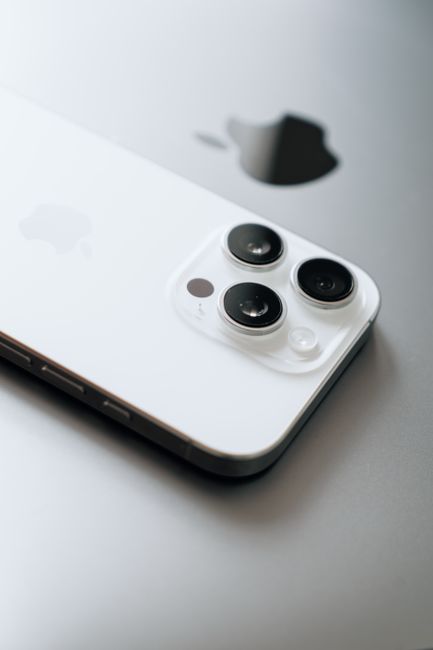
The design of the iPhone 16 is expected to follow Apple’s established aesthetic while incorporating subtle refinements and potential material enhancements. While a radical departure from the iPhone 15 is unlikely, incremental changes will likely contribute to an updated look and feel. The overall form factor is anticipated to remain largely consistent, with a focus on comfortable ergonomics and a premium build. However, the rumored display size increases will inevitably lead to slight adjustments in the device’s dimensions. The transition away from stainless steel for the frame on the Pro models, potentially to titanium, is a strong possibility, continuing the trend seen with the iPhone 15 Pro. Titanium offers a lighter yet incredibly strong alternative, enhancing durability and providing a distinct premium feel. For the standard iPhone 16 models, it’s anticipated they will retain their aluminum frames, though Apple might explore new finishes or anodization techniques to offer a refreshed palette. The glass used for the front and back panels is expected to remain Ceramic Shield, known for its robust drop resistance. However, Apple is continually researching and developing new materials, so minor improvements in scratch resistance or overall durability are always a possibility. The camera bump design is another area where subtle changes might occur. While the triple-lens setup on Pro models is likely to remain, the arrangement or the integration of the lenses within the bump might be reconfigured to accommodate new hardware or to achieve a more streamlined aesthetic. Button placement and design are typically refined with each generation. While the Action Button introduced on the iPhone 15 Pro is expected to be a standard feature across all iPhone 16 models, Apple might explore ergonomic adjustments or material changes for the physical buttons to improve tactile feedback and durability. The charging port is almost certain to remain USB-C, a transition mandated by regulations and embraced by Apple. The internal design of the iPhone 16 will also see significant re-engineering to accommodate new components, improve thermal management, and enhance repairability, although the latter is rarely a primary focus in initial leaks. Ultimately, the iPhone 16’s design will likely be a testament to Apple’s iterative design philosophy, prioritizing user experience, premium materials, and robust construction.
5G Connectivity and Wi-Fi Advancements: Faster, More Reliable Wireless
The iPhone 16 is expected to continue Apple’s commitment to cutting-edge wireless connectivity, with enhancements in both 5G and Wi-Fi technologies. The evolution of 5G continues, and the iPhone 16 will likely feature a more advanced 5G modem, potentially from Qualcomm, offering improved performance, reduced power consumption, and broader network compatibility. This means faster download and upload speeds, lower latency for real-time applications like online gaming and video conferencing, and a more reliable connection in areas with weaker signal strength. The modem could also support the latest 5G standards, ensuring future-proofing for emerging network technologies. Beyond 5G, Wi-Fi connectivity is also poised for an upgrade. The iPhone 16 is strongly rumored to adopt Wi-Fi 7. This next-generation wireless standard offers significant improvements over Wi-Fi 6 and 6E, including higher throughput, lower latency, and enhanced capacity to handle a greater number of connected devices simultaneously. Wi-Fi 7 utilizes a wider range of frequency bands and more advanced modulation techniques, leading to a more robust and efficient wireless experience within the home or office. This will be particularly beneficial for tasks such as streaming high-resolution video, downloading large files, and engaging in bandwidth-intensive applications. The improved Wi-Fi capabilities will also contribute to a smoother and more seamless integration with other Apple devices and smart home ecosystems. Apple’s focus on providing a comprehensive and reliable wireless experience means that the iPhone 16 will be equipped with the latest advancements, ensuring users can stay connected at the fastest possible speeds with the most stable connections available. This focus on connectivity is crucial for a modern smartphone, impacting everything from productivity to entertainment.
Battery Life and Charging: Endurance and Efficiency Improvements
Battery life remains a paramount concern for smartphone users, and the iPhone 16 is expected to bring notable improvements in this area, driven by a combination of hardware and software optimizations. While significant leaps in battery capacity are not always the primary focus, Apple consistently aims to enhance endurance through more power-efficient components and smarter power management. The rumored A18 Bionic chip, with its advanced manufacturing process and refined architecture, is expected to be more power-efficient than its predecessor, contributing to longer usage times on a single charge. Furthermore, advancements in display technology, such as more efficient OLED panels, can also play a role in reducing power consumption. Apple might also implement subtle changes to the battery pack itself, potentially adopting a new stacking technology to increase energy density without significantly altering the device’s physical dimensions. Software optimizations within iOS are also crucial. Expect continued refinements to power-saving features, more intelligent background app management, and improved battery utilization across various usage scenarios. Charging capabilities are also likely to see iterative upgrades. While a dramatic increase in wired charging speeds is not always expected from Apple, improvements to current charging speeds or more efficient power delivery could be implemented. Wireless charging technology will also continue to be refined, potentially offering faster speeds or improved alignment with MagSafe accessories. The integration of new battery health management features within iOS will also empower users to better understand and maintain their battery’s long-term performance. The goal for Apple with the iPhone 16’s battery and charging is to provide a more consistent and reliable user experience, allowing users to go longer between charges and to replenish their device’s power more efficiently when needed.
Potential for New Features and Innovations: The "Action Button" and Beyond
The iPhone 16 is anticipated to introduce new features and innovations, building upon the foundations laid by previous generations. One of the most significant rumored additions is the expansion of the "Action Button" functionality. Introduced on the iPhone 15 Pro, this customizable physical button, which replaces the traditional mute switch, could see its capabilities broadened on the iPhone 16. Leaks suggest that Apple might allow for more complex shortcut integrations or even multi-tap functionality, offering users greater control and personalization over their device’s interactions. Beyond hardware customizations, software-driven innovations are also expected. With the A18 Bionic chip’s enhanced Neural Engine, expect a surge in AI-powered features. This could manifest in more intelligent camera functionalities, such as advanced scene recognition and object tracking for video. On-device language translation, more sophisticated predictive text input, and enhanced accessibility features powered by machine learning are also strong possibilities. Apple’s continued focus on augmented reality could also see the iPhone 16 play a more significant role. Improved AR capabilities, driven by enhanced sensors and processing power, could lead to more immersive AR experiences and the development of new AR-centric applications. The integration of satellite connectivity for emergency services, a feature introduced with the iPhone 14, is likely to be further refined and potentially expanded to include other emergency communication capabilities. The development of new iOS features that leverage the iPhone 16’s hardware and software capabilities will also be a key driver of innovation. Apple typically uses new hardware releases as a platform for introducing groundbreaking software functionalities that showcase the device’s potential. The iPhone 16 is expected to be a canvas for these new ideas, pushing the boundaries of what a smartphone can do.
Conclusion: The iPhone 16 – A Significant Iteration in Apple’s Smartphone Evolution
The iPhone 16, while not yet available, is shaping up to be a significant iteration in Apple’s smartphone evolution. The rumored enhancements across display technology, processing power, camera capabilities, and wireless connectivity point towards a device that will offer a substantial upgrade for many users. The subtle yet impactful design refinements, coupled with potential advancements in battery life and charging, will further solidify its position as a premium and reliable smartphone. The continued investment in on-device AI, powered by the next-generation A18 Bionic chip, suggests a future where the iPhone 16 will offer more intelligent and personalized user experiences. While the exact specifications and features will only be confirmed upon Apple’s official announcement, the current landscape of rumors and predictions paints a clear picture of a device poised to set new benchmarks in the smartphone market. The iPhone 16 represents Apple’s ongoing commitment to innovation, user experience, and pushing the boundaries of mobile technology, ensuring it remains a highly anticipated and sought-after device.
