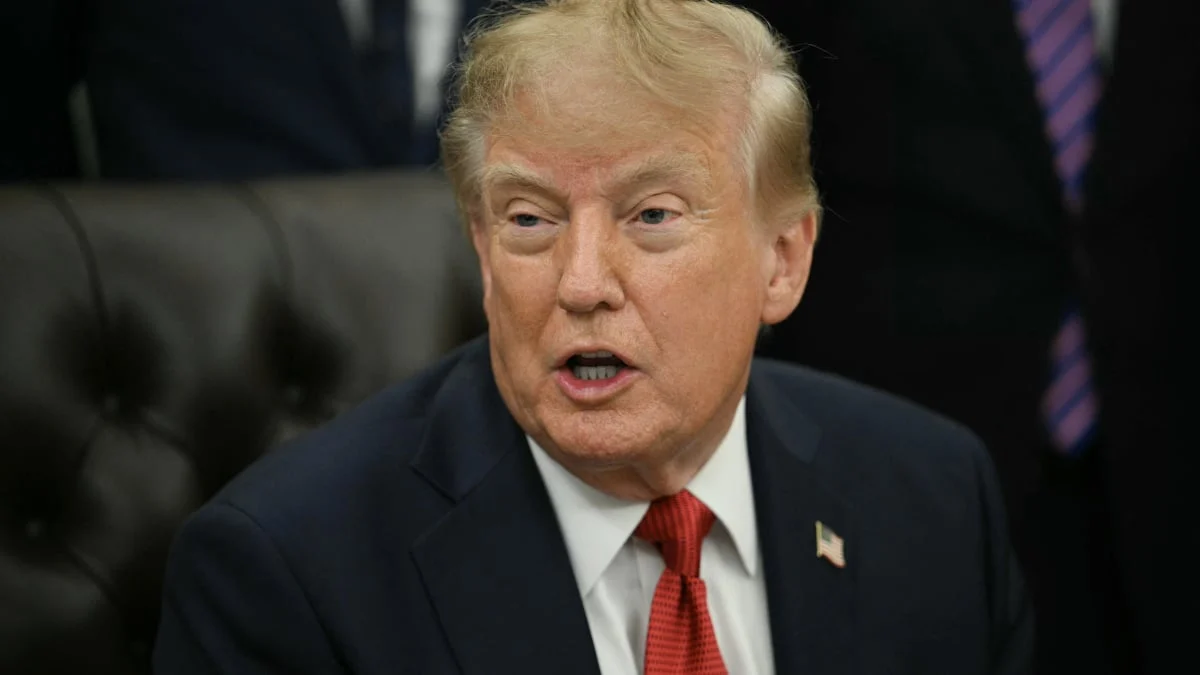
President Donald Trump announced on Saturday the forthcoming establishment of a "US AI Force," a newly minted federal body explicitly modeled after the Space Force branch created during his first presidential term. The initiative, revealed through an extensive statement published on Truth Social, is designed to consolidate the federal government’s sprawling artificial intelligence footprint while introducing a dedicated leadership framework. Alongside the proposed force, the administration plans to appoint a high-level artificial intelligence "czar" tasked with steering national policy, fostering industry growth, and coordinating regulatory oversight.
The sweeping announcement comes at a critical juncture for both commercial technology and military operations. While the domestic artificial intelligence sector experiences unprecedented expansion, federal agencies—particularly the Department of Defense—face intense public scrutiny following a series of high-profile automation errors. By establishing a centralized force and filling a high-level administrative vacancy, the administration aims to balance aggressive technological acceleration with stringent accountability for bad actors, even as lawmakers, military officials, and international observers grapple with the profound risks of integrating machine intelligence into national security apparatuses.
A New Frontier: Structure and Mandate of the Proposed AI Force
According to the president’s social media disclosures, the primary objective of the US AI Force will be to streamline federal and military artificial intelligence programs, unifying disparate research and operational units under a single administrative umbrella. The concept draws direct inspiration from the United States Space Force, established in December 2019 under the National Defense Authorization Act.
When the Space Force was first introduced, it faced initial skepticism and public misunderstanding, with critics occasionally mischaracterizing it as a combat branch intended to deploy armed personnel into orbit. In practice, however, the Space Force operates primarily as a coordinating and consolidating agency. It absorbed pre-existing satellite operations, missile warning networks, and space-based communication systems that were previously fragmented across the Air Force, Army, and Navy.
Analysts suggest that a similarly structured AI Force would not function as an autonomous fighting unit on the battlefield. Instead, it would likely serve as an institutional clearinghouse to centralize the Department of Defense’s myriad artificial intelligence initiatives, standardize procurement, enforce ethical and operational guardrails, and harmonize research efforts between the Pentagon, intelligence agencies, and private-sector contractors.
In his Truth Social announcement, Trump emphasized that the government’s posture toward the burgeoning technology must remain supportive rather than punitive. "We will not in any way hinder or stifle the Growth of this incredible Industry," Trump wrote, vowing that his administration would instead "cherish it, help it, and watch over it, as it grows." Furthermore, the administration intends to utilize the existing legal system to aggressively pursue "BAD" actors within the industry who engage in malicious cyber activities, fraud, or the malicious deployment of synthetic media and deepfakes.
The Search for a New Technology Czar and Linguistic Rebranding
A central component of the administration’s new strategy involves filling a prominent vacancy at the intersection of technology and public policy. The position of artificial intelligence and cryptocurrency czar has remained vacant since March, when venture capitalist David Sacks concluded his tenure as a special government employee. Sacks subsequently transitioned to a specialized advisory role within the White House, leaving a significant void in executive-level technology coordination.
Trump stated that the search for the new AI czar is already underway, specifying that applicants should be exclusively "High I.Q. individuals." This leadership figure will be expected to navigate the delicate balance between promoting commercial innovation and managing national security risks.
In a characteristically unconventional aside within the same public statement, Trump also floated the idea of rebranding the term "artificial intelligence" itself, arguing that the current nomenclature does not accurately capture the profound nature of the technology. He suggested alternative monikers such as "supreme," "superior," or "extreme" intelligence, signaling an intent to reshape the cultural and public perception of machine learning systems through executive signaling and open public polling.
Dismissal of Regulatory Concerns and the Broader Industry Debate
Trump’s latest proclamations arrive amid an escalating national debate over how governments should regulate generative artificial intelligence, machine learning, and autonomous systems. In his post, the president dismissed mounting concerns regarding existential AI risks, algorithmic bias, and systemic safety hazards as the latest iterations of manufactured "hoaxes" designed to slow American technological dominance.
This deregulatory philosophy stands in stark contrast to the approaches favored by international competitors and various domestic regulatory bodies, which have increasingly pushed for rigorous compliance frameworks, safety evaluations, and algorithmic transparency. Industry leaders remain divided; while Silicon Valley executives generally welcome a business-friendly regulatory climate that avoids stifling innovation, civil liberties organizations, ethicists, and national security experts have continuously warned against unchecked technological deployment.
The administration’s promise to support the industry without imposing burdensome regulatory hurdles underscores a philosophy of accelerationism—the belief that the United States must outpace global rivals, particularly China, regardless of the transitional friction. However, recent events within the defense sector have dramatically highlighted the tangible dangers of rushing incomplete or inadequately tested automated systems into high-stakes environments.
Military Automation Failures and the Risk of Algorithmic Warfare
The urgency surrounding effective federal oversight of military artificial intelligence has been underscored by a string of catastrophic technological miscalculations within the Department of Defense. These incidents have brought the vulnerabilities of automated decision-making systems into sharp focus, transforming abstract debates about artificial intelligence ethics into urgent operational crises.
Earlier this year, Pentagon investigators launched a comprehensive inquiry into a devastating February strike that resulted in dozens of casualties at a girls’ school in Iran. Preliminary findings and investigative reports from outlets like Bloomberg have heavily scrutinized whether an "overreliance on AI" targeting systems contributed to the faulty intelligence assessment that authorized the military action. The incident ignited intense internal debate regarding the reliability of algorithmic target verification and the erosion of human-in-the-loop oversight during fast-paced military engagements.
More recently, investigative reporting by CNN revealed a near-miss catastrophe involving faulty military intelligence generated by an artificial intelligence chatbot. According to the reports, a military analyst relied on an AI-generated report that falsely claimed a Chinese vessel was actively transporting nuclear weapons components. Acting on this synthetic intelligence, armed United States service members were reportedly preparing to board the foreign ship in a high-risk maritime interdiction.
The operation was aborted at the absolute eleventh hour after senior officials discovered that the intelligence underpinning the mission originated entirely from an unverified AI chatbot rather than human intelligence sources or verified satellite telemetry. A source familiar with the incident described the false claim to journalists as an error that had "almost started a war" between the United States and China, illustrating the profound geopolitical perils of integrating generative models into national defense workflows without stringent validation protocols.
Chronology of Recent Federal Artificial Intelligence Initiatives
To understand the trajectory of the newly proposed US AI Force, it is necessary to examine the timeline of federal artificial intelligence policy and recent military integration efforts:
- December 2019: The United States Space Force is officially established under the National Defense Authorization Act, setting a precedent for the creation of functionally specialized, consolidated military branches.
- January 2025: Donald Trump assumes the presidency for his second term, inheriting a rapidly expanding federal artificial intelligence landscape and promising broad deregulation.
- Early 2025: Venture capitalist David Sacks is appointed as the administration’s AI and cryptocurrency czar, operating under special government employee guidelines.
- March 2025: Sacks steps down from his formal czar position upon the conclusion of his statutory term, transitioning into an advisory role within the White House and leaving the primary coordination seat vacant.
- February 2026: A military strike on a girls’ school in Iran prompts a Pentagon investigation into potential overreliance on automated targeting and algorithmic intelligence.
- September 2026: CNN reports that a military operation involving armed US service members boarding a Chinese ship was called off at the last minute after it was revealed that the underlying intelligence report—claiming the vessel carried nuclear components—was entirely generated by an AI chatbot.
- Late September 2026: President Trump announces via Truth Social the creation of the US AI Force, the upcoming appointment of a new AI czar, and a series of proposals to rebrand and champion the domestic technology industry while utilizing the legal system against bad actors.
Implications for National Security and the Future of Governance
The announcement of the US AI Force represents a bold, albeit contentious, attempt to reorganize how the federal government interacts with the most disruptive technological wave of the 21st century. By framing the initiative around the structural model of the Space Force, the administration is signaling that artificial intelligence is no longer merely a commercial commodity or an auxiliary research tool, but a foundational domain of national power requiring specialized institutional architecture.
Yet, the success of the proposed force will ultimately depend on its execution, accountability measures, and ability to address the severe systemic vulnerabilities that have recently plagued military AI integration. As investigations into the Iran school strike and the near-miss maritime confrontation with China demonstrate, the margin for error in algorithmic warfare is effectively zero. A centralized authority that focuses solely on streamlining procurement and accelerating deployment without enforcing rigorous epistemological standards and failsafe verification mechanisms risks magnifying the very dangers critics fear most.
As the White House prepares to name its new technology czar and formalize the charter for the US AI Force, lawmakers on Capitol Hill, defense contractors, and international allies will be watching closely. The administration faces the monumental task of proving that a government agency can simultaneously champion an explosive, profit-driven commercial sector while maintaining the ironclad safety controls necessary to prevent machine learning errors from escalating into international geopolitical catastrophes.