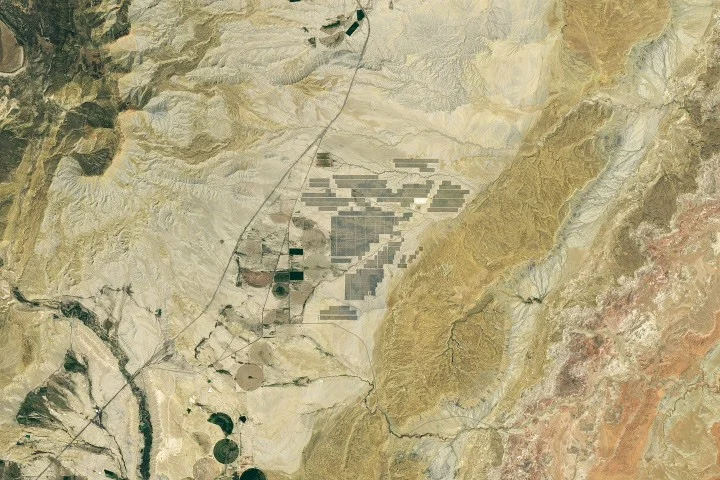
Utah’s new solar power and battery storage facility is among the largest in the region. The state, historically a bastion of coal-fueled energy, is witnessing a significant shift with the coming online of the Green River Energy Center, a monumental renewable energy project situated in the sun-drenched Castle Valley. This facility, which began operations in June 2026, represents a pivotal moment in Utah’s energy landscape, underscoring a national trend towards cleaner energy sources and advanced grid management. The Green River Energy Center is not merely a collection of solar panels and batteries; it is a symbol of Utah’s evolving energy identity, moving from its deep roots in fossil fuels to embrace the future of sustainable power generation.
From Coal Country to a Solar Heartland
For over a century, central Utah’s Castle Valley has been synonymous with coal. The Wasatch Plateau, a majestic mountain range to the west, has been a rich source of coal deposits, with mining operations actively extracting this vital resource since the late 1800s. This long-standing reliance on coal has shaped the region’s economy, infrastructure, and even its cultural identity. However, the 21st century has brought a profound transformation. The arrival of the Green River Energy Center in June 2026 signifies a dramatic pivot, introducing a large-scale solar power and battery storage plant into this historically coal-centric locale. Located approximately 130 miles (210 kilometers) southeast of Salt Lake City, the facility thrives in a valley renowned for its abundant sunshine, a key ingredient for the vast array of solar panels that now dot the landscape. This transition from the dark depths of coal mines to the bright expanse of solar fields represents a significant chapter in the ongoing energy revolution.
The Green River Energy Center, prominently visible in satellite imagery, is a testament to modern engineering and the ambitious scale of contemporary renewable energy projects. The facility boasts nearly one million solar panels, meticulously arranged across several square miles of previously undeveloped land. Complementing this extensive solar array are approximately 500 advanced battery units, designed to store the energy generated during daylight hours. This integrated system provides a formidable 400 megawatts (MW) of solar-generating capacity, further bolstered by an additional 400 MW of battery storage. This impressive capacity positions the Green River Energy Center among the vanguard of utility-scale solar power and battery storage projects expected to connect to the United States’ national grid in 2026, as projected by the U.S. Energy Information Administration (EIA). The EIA’s forecasts consistently highlight the accelerating deployment of such hybrid renewable energy systems, driven by decreasing costs, technological advancements, and supportive policy frameworks.
Powering Communities and Enhancing Grid Stability
The impact of the Green River Energy Center extends far beyond its physical footprint. News reports indicate that the facility is slated to supply electricity to Salt Lake City and other communities across Utah, promising a significant contribution to the state’s energy needs. Project staff estimate that the plant’s output could be sufficient to power more than 100,000 homes, a considerable number that underscores its role in meeting residential and commercial energy demands.
A critical innovation of the Green River Energy Center is its integrated battery storage system. This feature allows the plant to generate and dispatch power around the clock, even during periods when solar generation is not possible, such as at night or on heavily overcast days. This capability is crucial for enhancing grid reliability and stability. Traditional renewable energy sources like solar and wind can be intermittent, meaning their output fluctuates based on environmental conditions. Battery storage acts as a buffer, storing excess energy when production is high and releasing it when demand outstrips immediate generation. This ability to provide consistent power is a game-changer, moving renewable energy closer to parity with the dispatchable power offered by fossil fuel plants.
Furthermore, the Green River Energy Center’s strategic placement allows it to leverage existing energy infrastructure. The facility can utilize transmission lines that were originally constructed to support coal-fired power plants in the region. This pragmatic approach to infrastructure integration minimizes the need for new, costly transmission build-outs, accelerating the adoption of renewable energy and reducing the environmental impact associated with new construction. This efficient use of legacy infrastructure is a key strategy being employed across the country to facilitate the transition to a cleaner energy grid.
Utah’s Shifting Energy Identity: A Statistical Snapshot
Utah has long embraced its identity as a state where coal is its state rock, a symbol of its rich geological heritage and its historical reliance on fossil fuels for energy. For decades, coal has been the bedrock of the state’s electricity generation. However, the numbers reveal a dramatic and accelerating shift. In 2025, coal accounted for approximately half of Utah’s electricity generation, a significant decrease from roughly 75 percent in 2015. This ten-year period marks a substantial move away from coal dependence.
Concurrently, solar energy has experienced meteoric growth within the state. In 2025, solar power accounted for about 14 percent of Utah’s electricity generation, a remarkable surge from nearly zero a decade prior. This trend is not unique to Utah; it reflects a national and global movement towards diversifying energy portfolios with renewable sources. Geothermal energy is also becoming a more significant contributor to Utah’s energy mix, further diversifying its power generation.
The U.S. Energy Information Administration (EIA) provides ongoing data and analysis on these energy transitions, tracking the capacity, generation, and economic factors influencing the adoption of different energy sources. Their reports consistently indicate that the deployment of utility-scale solar and battery storage projects is accelerating. In 2026 alone, the EIA anticipated the addition of significant renewable energy capacity to the U.S. grid, with hybrid solar-plus-storage facilities playing an increasingly prominent role. These projects are crucial for meeting the nation’s climate goals and ensuring energy security by reducing reliance on volatile fossil fuel markets.
The Role of Satellite Data in Energy Transitions
The development and monitoring of large-scale energy projects like the Green River Energy Center are increasingly supported by advanced technologies, including satellite data. NASA’s Landsat program, for instance, provides invaluable Earth observation capabilities. Images captured by satellites like Landsat 8 offer a bird’s-eye view of vast landscapes, allowing planners, policymakers, and researchers to assess the potential for renewable energy deployment. Satellite data can help identify optimal locations for solar farms based on solar irradiance, land use patterns, and environmental considerations.
Beyond initial planning, satellite imagery is crucial for tracking the construction progress and operational performance of these energy facilities. It enables researchers to monitor changes in land cover, assess the environmental impact of development, and even evaluate the efficiency of solar arrays over time. This continuous monitoring is essential for ensuring that renewable energy projects are developed and operated in a sustainable manner. As Utah and other regions navigate their energy transitions, satellite data serves as a vital tool for informed decision-making, resource management, and the transparent reporting of progress.
A Chronology of Utah’s Energy Evolution
The shift in Utah’s energy landscape is not an overnight phenomenon but a process that has unfolded over years, with significant acceleration in recent times.
- Late 1800s: Coal mining operations commence on the slopes of the Wasatch Plateau, establishing central Utah as a coal hub. This marks the beginning of a long era of fossil fuel dominance in the state’s energy production.
- Early 2000s – 2010s: Growing awareness of climate change and advancements in renewable energy technologies begin to influence energy policy and investment. While coal remains dominant, the foundations for a transition are being laid.
- 2015: Coal accounts for approximately 75% of Utah’s electricity generation, highlighting its continued central role. However, this year also marks the starting point for significant growth in other energy sources.
- 2015-2025: A decade of substantial change. Investments in renewable energy infrastructure, particularly solar, begin to increase significantly across Utah. Policy initiatives and market forces start to favor cleaner energy alternatives.
- 2025: Coal’s share of Utah’s electricity generation drops to around 50%. Solar energy emerges as a significant player, accounting for approximately 14% of the state’s electricity generation. This year represents a tipping point where renewable sources are becoming a substantial part of the energy mix.
- June 2026: The Green River Energy Center, a large-scale solar power and battery storage facility, officially comes online. This event signifies a major milestone, representing one of the largest hybrid renewable energy projects in the region and underscoring Utah’s commitment to a diversified and cleaner energy future.
- July 24, 2026: The "Image of the Day" feature highlights the Green River Energy Center, drawing national and international attention to Utah’s progressive energy development. This date marks the public dissemination of information and imagery related to the facility’s operational status.
Official Responses and Expert Analysis
The commissioning of the Green River Energy Center has been met with a mix of enthusiasm and pragmatic assessment from various stakeholders. While official statements from the project developers, R Plus Energies, have emphasized the economic and environmental benefits, energy analysts and policymakers have weighed in on its broader implications.
"The Green River Energy Center is a landmark project that exemplifies the future of energy in Utah and across the nation," a spokesperson for R Plus Energies stated. "We are proud to contribute to a cleaner energy grid, provide reliable power to communities, and create jobs through this significant investment in renewable technology."
State officials, while acknowledging the historical significance of coal, have also voiced support for diversification. A representative from the Utah Governor’s Office of Energy Development, speaking anonymously, indicated that the state is committed to exploring all viable energy sources, including renewables, to ensure a stable and affordable energy supply for its growing population. "Our goal is to balance economic development with environmental stewardship," the representative noted. "Projects like the Green River Energy Center are crucial in achieving that balance."
Energy sector analysts have pointed to the Green River Energy Center as a model for how established energy regions can transition. "This facility demonstrates that even in states with a strong fossil fuel heritage, renewable energy can be deployed at scale and integrated effectively," commented Dr. Emily Carter, a senior energy policy analyst at the Institute for Sustainable Energy. "The inclusion of battery storage is particularly important, addressing the intermittency challenge and making solar power a more dispatchable resource. This hybrid approach is becoming the standard for new large-scale renewable projects."
Broader Impact and Implications for the Energy Future
The Green River Energy Center’s operational debut has far-reaching implications for Utah and the broader Intermountain West.
- Enhanced Grid Reliability: The integrated battery storage system significantly boosts grid resilience. By providing a stable and dispatchable power source, it can help mitigate the impact of grid disruptions caused by extreme weather events or sudden fluctuations in demand. This is particularly important as the grid grapples with an increasing proportion of intermittent renewable energy sources.
- Economic Diversification: While coal mining provided a significant economic base for central Utah, its decline necessitates economic diversification. The construction and operation of large renewable energy facilities create new jobs, attract investment, and can revitalize local economies that may have been dependent on fossil fuel industries.
- Environmental Stewardship: The transition from coal to solar power represents a substantial reduction in greenhouse gas emissions and air pollution. This contributes to improved air quality, public health benefits, and helps Utah meet its climate commitments.
- Technological Advancement and Innovation: Projects of this magnitude drive innovation in battery technology, grid management software, and solar panel efficiency. They also foster a skilled workforce capable of developing, installing, and maintaining these advanced energy systems.
- Energy Independence and Security: By diversifying its energy sources and increasing its reliance on locally generated renewable power, Utah can enhance its energy independence and reduce its vulnerability to global fossil fuel market volatility.
The Green River Energy Center stands as a powerful symbol of Utah’s evolving energy narrative. It illustrates how historical energy legacies can be thoughtfully integrated with forward-looking renewable technologies to create a more sustainable, reliable, and prosperous energy future. As the nation continues its journey toward decarbonization, such large-scale, integrated renewable energy projects will undoubtedly play a pivotal role in shaping the energy landscape for decades to come. The once coal-dominated valleys of central Utah are now basking in the glow of a new energy dawn, powered by the sun and stored for the future.