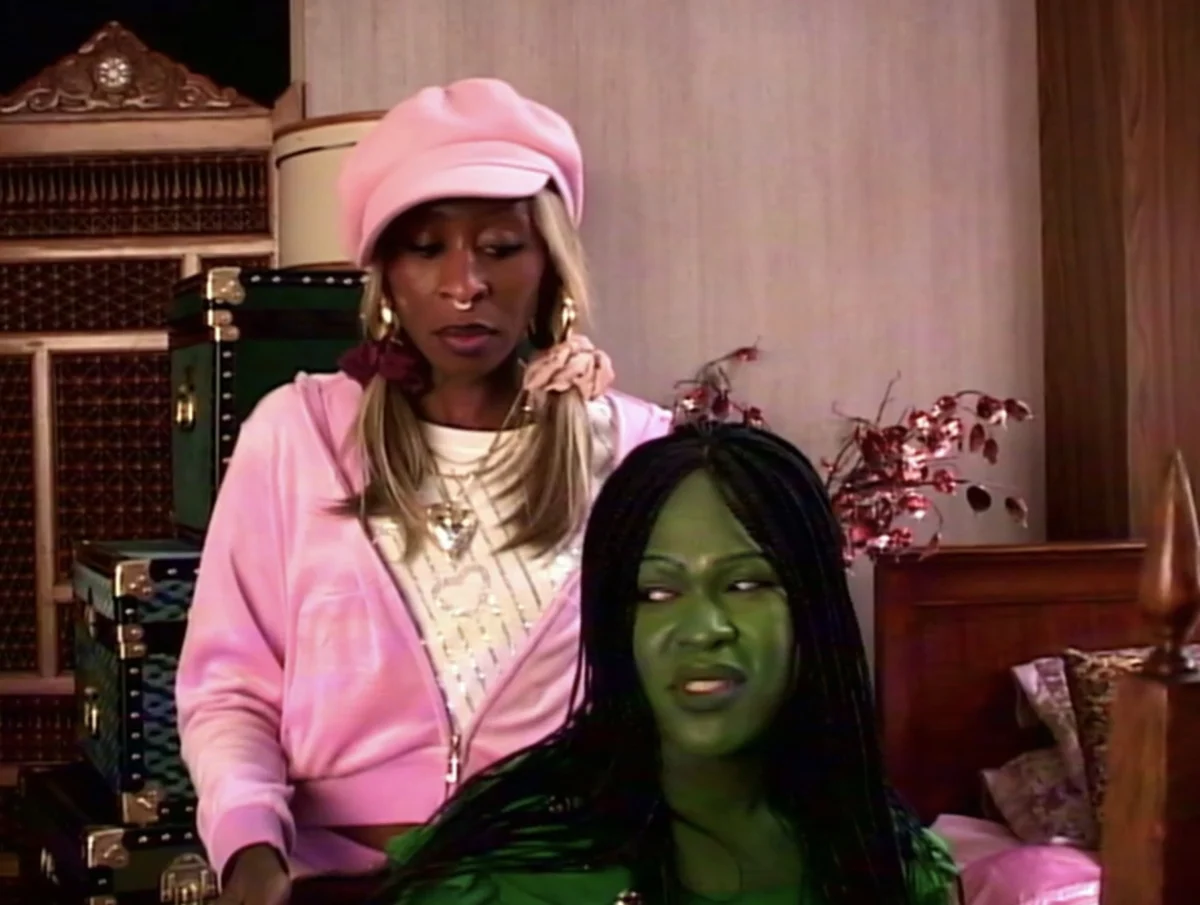
Cynthia Erivo brought her signature dramatic flair and comedic timing to the small screen during her recent guest-hosting stint on Saturday Night Live U.K., treating global audiences to a brilliant, lo-fi parody of her own blockbuster cinematic hit, Wicked. In a segment titled Nigerian Wicked, the Oscar-nominated actress traded her usual role as the green-skinned powerhouse Elphaba to step into the bouncy blonde curls, pink velour tracksuits, and unapologetically haughty persona of Glinda.
The sketch, which quickly went viral across social media platforms following its broadcast, offered a hilarious, culturally specific Nollywood-style spin on the beloved Broadway musical and its recent theatrical adaptation. Joined by comedian Ayoade Bamgboye, who took on the role of Elphaba, Erivo delivered a performance that poked affectionate fun at the melodrama, low-budget aesthetics, and explosive plot twists characteristic of classic Nigerian home video melodramas.
The Genesis of the SNL U.K. Parody and the Phenomenon of Wicked
The timing of the sketch could not have been more precise. Universal Pictures’ feature-film adaptation of Wicked has dominated global box offices, critical conversations, and cultural zeitgeists since its theatrical release. Starring Cynthia Erivo alongside pop superstar Ariana Grande as Glinda, the musical fantasy film has earned widespread acclaim, numerous accolades, and a devoted global fanbase. As the cinematic iteration of Oz cemented its status as a monumental cultural touchstone, it naturally became a prime target for satirical interpretation.
Saturday Night Live U.K., which has quickly carved out its own distinct identity within the broader SNL franchise since its launch, utilized this pop culture saturation to craft a sketch that resonated deeply with both mainstream musical theater fans and the African diaspora. By blending the high-fantasy elements of Oz with the distinctively hyperbolic tropes of Nollywood—the colloquial term for Nigeria’s booming film industry—the writers and performers created a comedic landscape rich with cross-cultural humor.
Scene-by-Scene Breakdown of Nigerian Wicked
From the opening moments, Nigerian Wicked established its lo-fi aesthetic, complete with exaggerated sound effects, melodramatic green-screen backgrounds, and deliberately choppy editing. Rather than engaging in the intricate vocal arrangements and complex choreography of the original musical number "What Is This Feeling"—in which Elphaba and Glinda express their mutual disdain—the Nollywood parody opted for immediate physical comedy.
In this alternate universe, when tensions flare between the two frenemies, Glinda bypasses musical introspection entirely and delivers a sharp, dramatic slap across Elphaba’s face.
"Glinda, you slapped me!" Bamgboye’s Elphaba cries out in utter disbelief.
Erivo’s Glinda responds with chilling, comedic poise: "Yes, because you are very classless."
The parody continued to subvert iconic moments from the original story. During a reimagined makeover sequence, Elphaba voices immediate financial anxiety, stating, "Glinda, I can’t afford this!" To which Glinda reassuringly replies, "When we go to the wizard, it will all pay off." The stakes immediately escalate into absurdity when Elphaba responds, "The wizard? But I’m a virgin!"—a line delivery that drew roaring laughter from the studio audience and immediately set social media forums abuzz.
The quest then shifts toward the destination, described in the sketch as the "emerald, white and emerald city"—a playful nod to the green and white national colors of Nigeria. Upon arrival, the characters’ aspirations take a distinctly modern, consumerist turn. Erivo’s Glinda declares her ambition to have the Wizard procure a luxury Birkin bag for her, while Bamgboye’s Elphaba confesses her desire for a "skinny BBL" (Brazilian Butt Lift).
The Wizard, voiced with booming authority by actor Hammed Animashaun, punctuates the moment by declaring over a loudspeaker: "She wants a BBL that defies gravity!"—a clever lyrical pun on one of Wicked’s most famous musical numbers, "Defying Gravity."
Upon finally gaining an audience with the great and powerful Wizard, the illusion quickly shatters. The almighty ruler of Oz turns out to be entirely financially distressed. Inspecting his wristwatch, Erivo’s Glinda dismisses him with utter contempt, declaring, "That’s a nolex," poking fun at counterfeit luxury goods frequently referenced in Nollywood tropes.
Leaving the audience with a cliffhanger typical of serialized soap operas, Glinda and Erivo’s characters lean in for a passionate romantic kiss, winking heavily at the dedicated community of fans who frequently "ship" the two characters together online. Before the kiss can fully materialize, a dramatic, low-budget explosion effect engulfs the screen, accompanied by Animashaun’s voiceover shouting, "Nigerian Wicked: LGBTQ!"
Audience Reception and Cultural Impact
The sketch immediately resonated across international digital spaces, praised for its clever navigation of intersecting cultural identities. For Nigerian and broader African audiences, the familiar tropes—the dramatic slaps, the mention of luxury bags, the exaggerated voiceovers, and the low-budget aesthetic—offered an inside joke executed with immense affection and professional precision.
At the same time, musical theater enthusiasts appreciated how thoroughly Erivo understood the assignment. Transitioning from the prestige of playing Elphaba in a multi-million-dollar Hollywood blockbuster to playing a heightened, campy version of Glinda in a sketch comedy format highlighted her versatility as a performer. Her willingness to mock the very material that has defined a significant portion of her recent career cemented her reputation as a sport with a healthy sense of humor.
Furthermore, the sketch’s playful nod to the "shipping" community—the subset of fans who root for a romantic relationship between Elphaba and Glinda—demonstrated how closely the production team paid attention to online fandom discourse. By leaning into the romantic subtext and capping it off with an intentionally abrupt, campy explosion, the segment delivered precisely the kind of self-aware meta-humor that thrives in modern sketch comedy.
Broader Implications for SNL U.K. and Global Comedy
The success of Nigerian Wicked on SNL U.K. highlights the growing global appeal and localized adaptability of the Saturday Night Live format. As comedy continues to globalize, audiences increasingly crave content that reflects specific cultural nuances rather than homogenized Western humor. By drawing directly upon Nollywood aesthetics—a cinematic tradition that produces thousands of films annually and commands a massive international audience—the sketch bridged the gap between mainstream Hollywood IP and African pop culture.
For Cynthia Erivo, the appearance served as a victory lap of sorts. Balancing the immense press obligations, award season campaigns, and cultural visibility surrounding the release of Wicked, the multi-hyphenate talent proved that she possesses not only the vocal and dramatic chops required for prestige cinema but also the sharp, unpretentious comedic timing essential for live television.
As the cultural footprint of Wicked continues to expand across theater screens, streaming platforms, and merchandise lines, parodies like Nigerian Wicked ensure that the story remains flexible, vibrant, and thoroughly embedded in the contemporary pop culture conversation. Whether audiences are looking for gravity-defying vocals, high-budget cinematic spectacle, or a low-fi Nollywood soap opera complete with fake watches and disputed virginity, the world of Oz continues to prove that it can bend to fit any comedic universe.