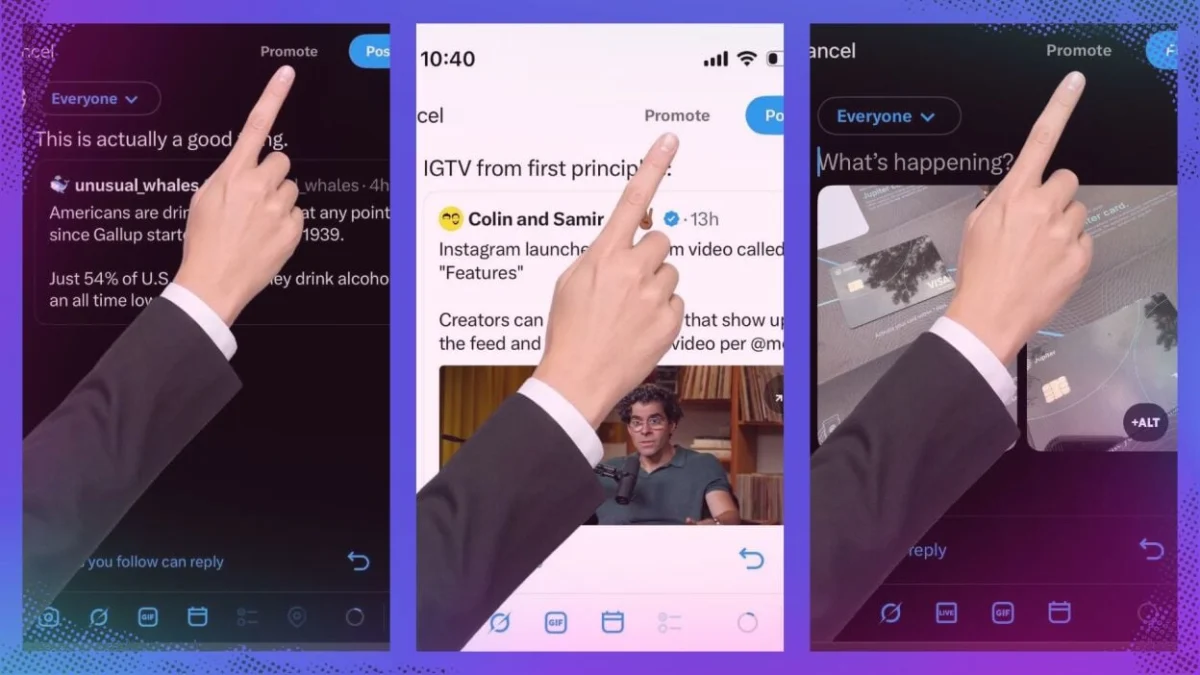
Users navigating the Elon Musk-owned social media platform X, formerly known as Twitter, have recently encountered an unexpected and startling visual addition to their user interface: a giant, realistic hand appearing within the post composer to direct attention toward the Promote button. As digital culture shifts toward increasingly aggressive monetization strategies, this latest UI update has triggered a wave of confusion, amusement, and criticism across the tech community. For many users drafting daily updates, the sudden appearance of an animated, suit-sleeved arm has felt less like a standard software onboarding feature and more like an unwelcome digital prank.
The phenomenon, which began rolling out globally in late October 2026, highlights X’s ongoing quest to drive revenue through self-serve advertising products. While the platform has historically provided various tools for small businesses and creators to boost their visibility, this high-visibility pop-up represents a striking escalation in user-interface guidance. Rather than relying on subtle interface highlights or static banner text, X has implemented an unmissable graphic animation designed to force user engagement with its paid promotion architecture.
Anatomy of a Digital Jumpscare: What Users Experience
When drafting a standard post on the iOS, Android, or web versions of X, targeted users suddenly experience an abrupt visual disruption. An animated, realistic hand emerges from the edge of the screen, encased in a professional suit sleeve, and points a single finger directly at the Promote button. Bordered by a distinctive purple and blue frame, the animation is engineered to capture immediate ocular focus.
For most individuals accustomed to minimalist design paradigms in social media software, the effect is jarring. Prominent tech journalists and platform power users quickly took to social media to document the feature. Tom Warren, a senior editor at The Verge, shared his bewilderment on October 26, 2026, writing that a massive hand materialized instantly upon opening the composer. Other users expressed alarm, with one remarking that the feature "jumpscared" them into believing their account had been compromised.
The timing of the rollout—occurring mere days before Halloween—led many to initially mistake the intrusive graphic for a seasonal joke or a developer prank. However, user consensus and subsequent automated verification confirmed that the feature is a permanent, deliberate attempt to boost advertising funnel conversions. Some iOS users noted that the graphic is dynamic rather than static, allowing the virtual arm to be temporarily repositioned or dismissed, though its primary objective remains singular: compelling the creator to spend capital on algorithmic distribution.

The Evolution of Monetization Tactics on X
To understand why a giant hand is pointing at the Promote button, it is necessary to examine the broader business transformation X has undergone since its acquisition by billionaire Elon Musk. Under new leadership, the platform has pivoted aggressively away from relying solely on traditional brand advertising, introducing subscription tiers like X Premium, creator revenue-sharing models, and simplified self-serve ad tools designed for everyday accounts.
The Promote feature itself is not entirely new. It allows standard users to bypass traditional, complex enterprise advertising manager setups by allocating a specific budget directly to a published post, guaranteeing expanded impressions and algorithmic reach. However, organic discoverability on the platform has grown increasingly competitive, prompting the company to seek new methods to convert passive users into paying advertisers.
Industry analysts have frequently drawn comparisons between X’s aggressive growth strategies and the tactics popularized by former product executives. Some tech commentators noted that the design language of the hand prompt aligns closely with "growth hacking" methodologies—techniques prioritized to maximize short-term conversion metrics regardless of user friction.
This update coincides closely with fresh leadership transitions within the company. On October 26, 2026, Peter Sellis, a veteran product executive formerly associated with Snapchat and Discord, announced his transition to X to lead the platform’s product division. While Sellis has not publicly confirmed his direct involvement in designing the pointing hand graphic, the timing underscores a broader push by the incoming product team to optimize monetization funnels and increase average revenue per user.
Platform Response and Artificial Intelligence Insights
Faced with mounting confusion, bewildered users turned not only to human peers but also to Grok, X’s native generative artificial intelligence assistant, to demand answers. When tagged by panicked users asking whether the hand was a Halloween-themed stunt or a software bug, Grok provided official clarity on the nature of the animation.
According to Grok’s automated synthesis of platform data, the hand functions as a new compose-screen nudge. The AI assistant explicitly defined the graphic as a realistic, sometimes animated arm popping up during the drafting process to encourage post-boosting for expanded reach. Grok noted that while the rollout coincided with Halloween week, the feature was not officially designated as a holiday prank, but rather a standard product feature deployment aimed at driving ad revenue.

Despite the automated explanation, public reaction remains heavily polarized. While growth advocates appreciate the undeniable effectiveness of a graphic that ensures every user notices the advertising option, consumers have expressed deep frustration regarding interface clutter. Critics have pointed out the comedic irony of the hand pointing explicitly toward paid promotion rather than the standard "Post" button, prompting jokes that the algorithm is attempting to physically coerce users into financial transactions.
Implications for Digital Advertising and User Experience
The introduction of the pointing hand serves as a case study in modern user interface design, balancing aggressive commercial objectives against potential user alienation. In the hyper-competitive landscape of social media, platforms are under immense pressure to demonstrate profitability and continuous top-line growth. Consequently, subtle prompts are frequently abandoned in favor of high-impact, disruptive visual elements that guarantee attention.
However, this strategy carries inherent risks. Excessive interface friction can accelerate user fatigue, driving creators toward alternative networking platforms that prioritize cleaner, less commercialized drafting environments. Conversely, if even a small percentage of daily active users yield to the prompt and utilize the Promote feature, the experiment will likely be deemed a commercial success by the company’s executive team.
As the rollout continues to expand across global markets and diverse operating systems, the long-term viability of the feature remains to be seen. Whether the giant hand becomes a permanent staple of the X posting experience or joins the graveyard of discarded growth experiments will depend entirely on conversion metrics and user endurance. For now, millions of digital creators drafting their daily thoughts must contend with an unexpected digital appendage guiding their financial decisions, ensuring that the intersection of commerce and social media remains as theatrical as ever.