As the global population approaches 8 billion, the demand for potable water has reached an unprecedented zenith. According to the United Nations, approximately 2.2 billion people—nearly one-quarter of the human population—lack access to safely managed drinking water services. This scarcity is exacerbated by shifting climate patterns, persistent droughts in regions ranging from the American West to the Middle East, and the rapid urbanization of water-stressed nations. In response, governments have turned toward industrial desalination as a panacea. However, conventional desalination infrastructure, which relies on energy-intensive reverse osmosis or thermal distillation, creates a circular problem: it generates vast quantities of toxic, concentrated brine that, when pumped back into marine ecosystems, disrupts local salinity levels and depletes dissolved oxygen, effectively poisoning the very oceans that sustain us.
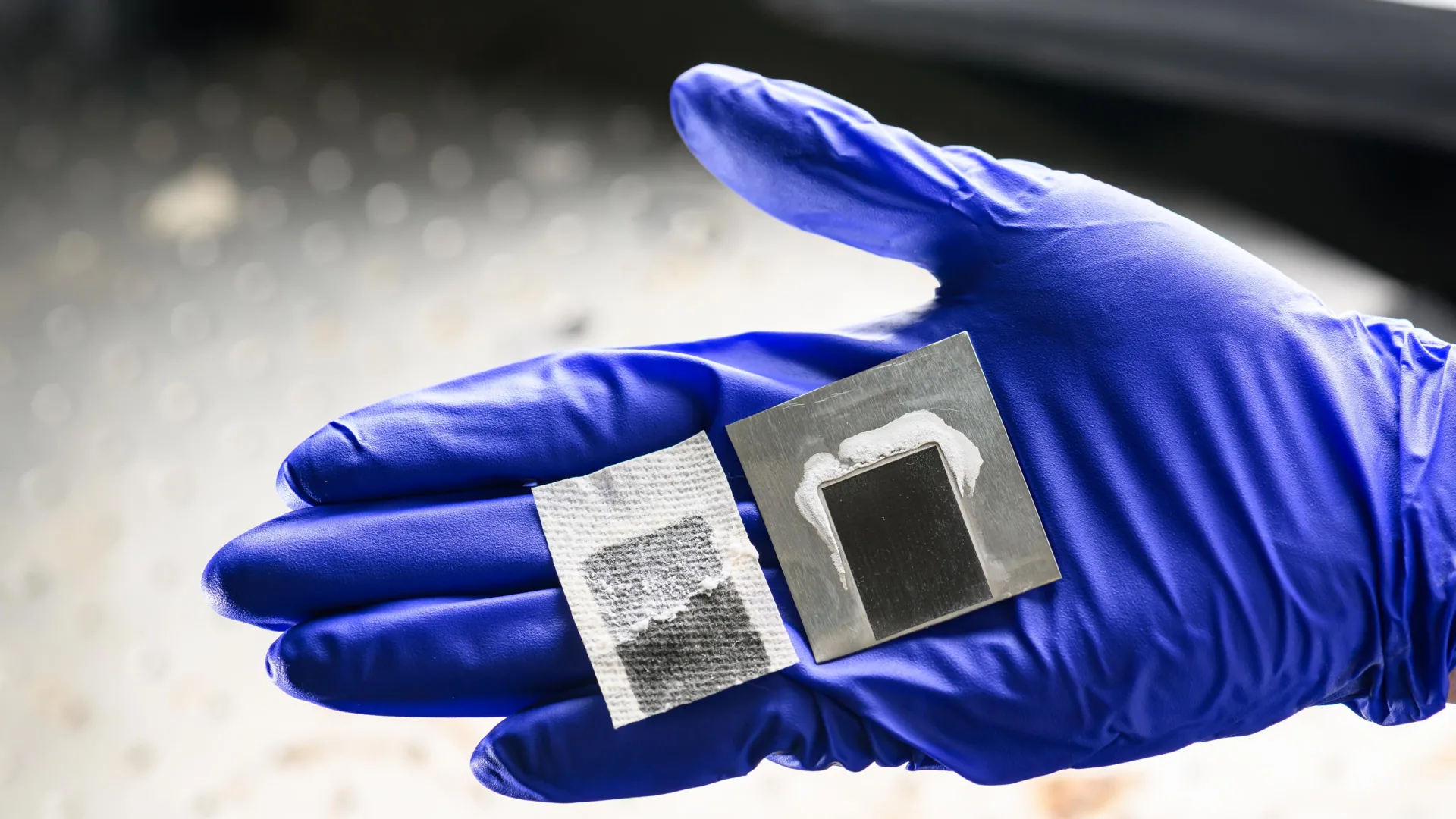
A paradigm shift in water treatment may now be on the horizon. Researchers at the University of Rochester’s Institute of Optics have unveiled a novel solar-thermal desalination system that operates without the need for chemical pre-treatment or the production of liquid waste. By harnessing the unique properties of laser-treated metals, the team has successfully demonstrated a method that not only produces clean water but also extracts solid minerals, potentially turning a hazardous waste stream into a lucrative source of essential resources like lithium.
The Evolution of Desalination: From Energy Guzzlers to Passive Systems
The history of large-scale desalination is largely a history of energy consumption. Since the mid-20th century, thermal distillation—boiling seawater to capture steam—has dominated the Middle East, while reverse osmosis (RO) has become the gold standard in the West. RO, which uses high-pressure pumps to force seawater through semi-permeable membranes, requires massive electrical input, often sourced from fossil fuels. Beyond the carbon footprint, the logistical burden of "brine management" has long plagued the industry. For every liter of fresh water produced, modern plants typically discharge 1.5 liters of highly concentrated brine back into the ocean.
In recent years, the scientific community has sought to move away from these centralized, grid-dependent systems toward decentralized, passive solar-thermal evaporation. However, these prototypes have historically struggled with the "fouling" problem. As water evaporates, the residual salts form hard, mineralized crusts—similar to the limescale found in a household kettle—that eventually coat the evaporative surfaces, blocking sunlight and halting water production. While artificial laboratory experiments using simple sodium chloride (table salt) have shown promise, these systems frequently fail when exposed to the complex, mineral-rich chemistry of genuine seawater, which includes magnesium and calcium that form dense, non-porous deposits.
The Rochester Innovation: Femtosecond Lasers and Surface Engineering
The breakthrough led by Professor Chunlei Guo at the University of Rochester’s Laboratory for Laser Energetics hinges on a technique known as femtosecond laser processing. A femtosecond is an infinitesimally small interval of time—one quadrillionth of a second. By firing these ultrafast pulses at metal surfaces, the researchers can etch intricate, microscopic structures directly into the material.
This structural modification achieves two vital objectives. First, it turns the metal pitch-black, significantly increasing its solar absorption efficiency to near-perfect levels. Second, it imparts "superwicking" properties to the metal. Unlike standard surfaces, where water might bead up or pool, the laser-treated panels cause a thin film of seawater to spread instantly and uniformly across the surface. This rapid dispersal is the key to the system’s longevity; by keeping the water layer thin and in constant motion, the system prevents the runaway crystallization that typically clogs desalination equipment.
Leveraging the Coffee Ring Effect
To manage the inevitable accumulation of salts, the Rochester team turned to a principle known as the "coffee ring effect." When a coffee spill dries, the particles of coffee concentrate at the edge of the puddle as the water evaporates. By carefully designing microscopic grooves on the panel, Guo’s team directs the saltwater flow so that, as evaporation occurs, the salts are physically pushed away from the active heating zone toward a "passive region" on the perimeter of the panel.
In testing, this self-cleaning mechanism proved highly effective. When using real seawater harvested from the Pacific, Atlantic, and Indian Oceans, the panels successfully produced fresh water while effectively "harvesting" the leftover salt in a dry, solid form. This is a radical departure from the industry standard, as it entirely eliminates the production of liquid brine.
Turning Waste into a Resource: The Lithium Connection
The implications of this technology extend far beyond water security. Because the system produces solid salt residue rather than liquid brine, it offers a pathway to mineral extraction. In a secondary study published in the Journal of Materials Chemistry A, the researchers demonstrated that their panels could be modified to isolate lithium.
Lithium is the cornerstone of the global energy transition, serving as a critical component in the batteries that power electric vehicles (EVs) and grid-scale energy storage systems. Currently, lithium mining is an environmentally destructive process, often requiring massive evaporation ponds in the Andes that consume billions of gallons of water and devastate local aquifers.
By embedding hydrogen titanate nanoparticles into the microscopic grooves of their laser-treated panels, the Rochester team successfully recovered 50% of the lithium from salt samples taken from the Great Salt Lake. This dual-purpose utility—generating water while simultaneously harvesting high-value minerals—could fundamentally change the economic model of desalination. If scaled, a coastal desalination plant could potentially subsidize its water production costs by selling recovered lithium and other minerals, effectively turning a "waste" problem into a "revenue" stream.
Challenges and Future Scaling
Despite the optimism surrounding these proof-of-concept experiments, significant hurdles remain before this technology can be deployed at scale. Currently, the system has been tested on small-scale devices. Transitioning to large-scale, municipal-level water production requires addressing the mechanical durability of the laser-etched panels in harsh, corrosive marine environments over long-term exposure.
Furthermore, the infrastructure required to manage the collection of dry minerals on an industrial scale would require a redesign of how we conceive of water treatment plants. Instead of massive, pump-driven facilities, future plants might look more like sprawling, modular solar fields, requiring significant land use in coastal areas where property values are often high.
However, the potential to decentralize water production is immense. In remote or island communities where grid infrastructure is unreliable or non-existent, these self-cleaning, solar-powered panels could provide a lifeline. By removing the need for chemical additives and the environmental liability of brine disposal, the technology addresses the two most significant barriers to sustainable water production.
A Broader Impact on Global Policy
The work of Professor Guo and his colleagues, supported by institutions including the National Science Foundation and the Bill & Melinda Gates Foundation, arrives at a critical juncture in environmental policy. As international bodies look to meet the UN Sustainable Development Goal of universal access to clean water by 2030, the reliance on high-tech, energy-hungry solutions is increasingly viewed as unsustainable.
If this technology can successfully scale, it would offer a blueprint for "circular desalination." By mimicking natural evaporation processes but refining them with advanced surface physics, the Rochester system provides a scalable solution to a multi-billion-person problem. As the research team moves from the laboratory to potential field testing, the global water industry will be watching closely. The ability to extract fresh water while simultaneously securing the supply chains for the green energy transition could mark the most significant development in desalination since the invention of reverse osmosis.
For now, the focus remains on optimization and verification. The successful extraction of lithium from salt waste proves that the chemistry is sound, but the engineering challenge of building large-scale, durable, and affordable arrays remains the final gate to widespread adoption. Nevertheless, the research underscores a growing trend in engineering: the shift from "powering through" natural constraints to designing systems that work in harmony with physical phenomena to solve the most pressing challenges of our time.