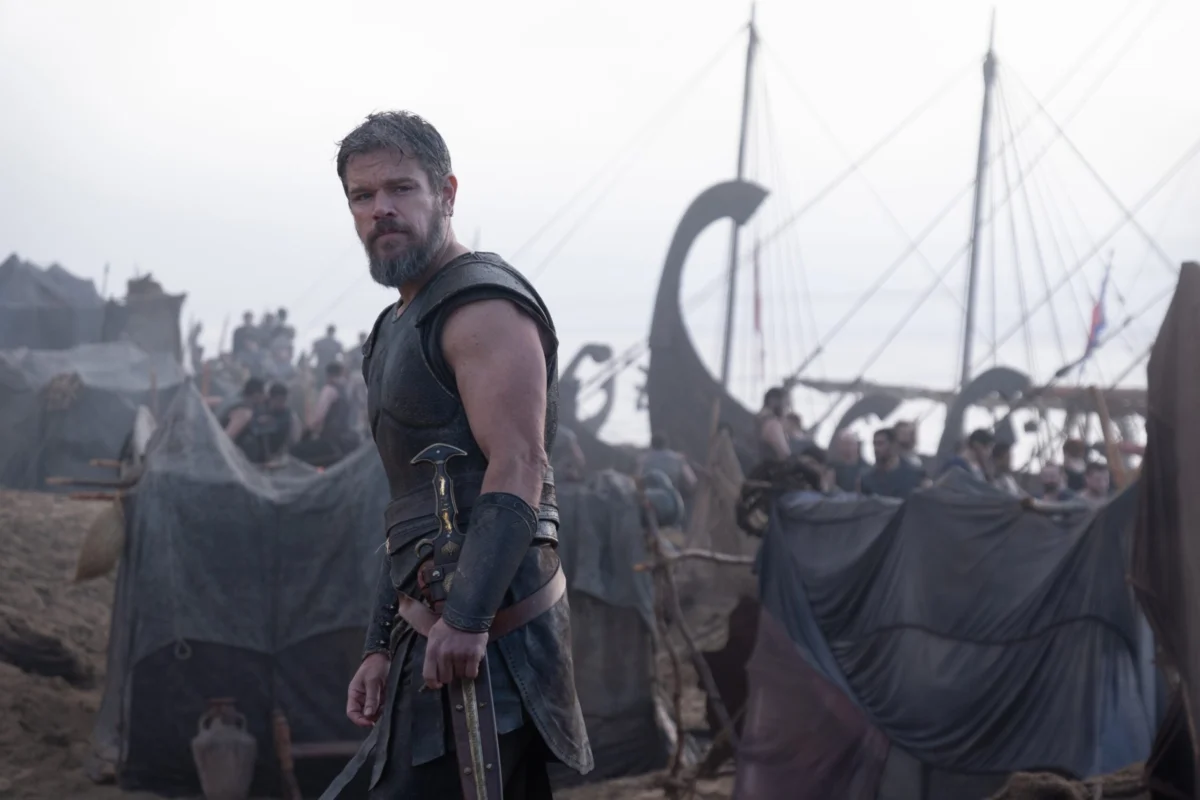
Universal Pictures and the global exhibition industry are celebrating a historic cinematic milestone as Christopher Nolan’s latest directorial effort, The Odyssey, secured a staggering $264 million worldwide debut during its opening weekend. The performance of the R-rated historical epic has exceeded the expectations of industry analysts and provided a significant boost to the theatrical landscape, particularly for premium large-format exhibitors. According to data analyzed by Variety’s Rebecca Rubin on the "Daily Variety" podcast, the film’s success represents a rare convergence of auteur-driven storytelling and massive commercial appeal, solidifying Nolan’s status as one of the few remaining directors capable of mobilizing global audiences on name recognition alone.
The $250 million production, which serves as Nolan’s ambitious follow-up to the Academy Award-winning 2023 film Oppenheimer, arrived in theaters amid immense anticipation. While high-budget historical epics often carry significant financial risk—particularly those carrying an R-rating—The Odyssey has defied traditional box office trends. The film’s ability to generate over a quarter of a billion dollars in its first three days underscores the strength of the "Nolan brand," which has become synonymous with "must-see" theatrical events.
The Imax Phenomenon and Technical Prowess
One of the most striking aspects of the opening weekend figures is the unprecedented contribution of Imax and other premium large-format (PLF) screens. Imax alone accounted for more than 50% of the total opening weekend receipts, a percentage that is virtually unheard of even for modern blockbusters. Typically, Imax contributes between 10% and 20% of a major film’s domestic opening. The 50% threshold indicates that audiences specifically sought out the highest quality viewing experience possible, viewing the film not just as a narrative but as a technical spectacle.
This trend is a direct result of Nolan’s long-standing advocacy for celluloid film and large-format cinematography. By filming The Odyssey using Imax 70mm cameras, Nolan has successfully marketed the format as the "native" way to consume his work. For Imax, this partnership has proven invaluable. The exhibitor has faced a fluctuating market in recent years, but the "Nolan Effect" continues to drive record-breaking per-screen averages. The demand for 70mm Imax screenings was so high that many theaters reported sold-out shows for weeks in advance, with some dedicated fans traveling across state lines or international borders to access specific venues equipped with the necessary projection technology.
Demographic Breakdown: Bridging the Generational Gap
Initial market research suggested that The Odyssey might skew toward an older, predominantly male demographic, often referred to in industry circles as the "quintessential dad movie." However, the actual data reveals a much broader appeal. While the audience was approximately 55% male, the age distribution showed a surprising level of engagement from younger viewers.
Approximately 50% of the opening weekend audience fell within the 18 to 34 age demographic. This is a significant achievement for a "sword and sandal" epic, a genre that has historically struggled to capture Gen Z and younger Millennial interest. Analysts attribute this cross-generational success to Nolan’s reputation rather than the genre itself. While the cast features established stars like Matt Damon—who is often associated with Gen X appeal—the film’s marketing and Nolan’s track record for mind-bending, high-stakes cinema resonated with younger audiences who prioritize "event" movies.
Rebecca Rubin noted during the "Daily Variety" analysis that if this project had been helmed by a different director, it likely would have skewed much older. The ability to incentivize all age groups to attend an R-rated, three-hour historical drama is what separates a "decent" opening from a "phenomenal" one. This broad base of support suggests that the film will have strong "legs" at the box office in the coming weeks, as word-of-mouth spreads across different social circles.
Historical Context and the Sword and Sandal Genre
The success of The Odyssey is particularly noteworthy given the history of the "sword and sandal" genre in Hollywood. Following the massive success of Ridley Scott’s Gladiator in 2000, the industry saw a surge of ancient world epics, including Troy (2004), Alexander (2004), and Kingdom of Heaven (2005). While some were hits, many struggled to recoup their massive production budgets due to a lack of contemporary relevance or bloated runtimes.
Nolan’s entry into this space represents a modernization of the genre. By applying the same rigorous attention to historical detail and practical effects that he brought to Dunkirk and Oppenheimer, he has elevated the genre from mere action-spectacle to a prestige cinematic event. The Odyssey manages to balance the visceral requirements of an R-rated epic with the intellectual depth that audiences have come to expect from a Nolan production.
The film’s $250 million budget was considered a gamble by some, especially given the current volatility of the global box office. However, Universal Pictures’ decision to back Nolan’s vision appears to have paid off. This partnership began after Nolan’s high-profile departure from Warner Bros., and after the billion-dollar success of Oppenheimer, Universal has leaned heavily into the director’s unique ability to create "prestige blockbusters."
Chronology of a Global Launch
The road to the $264 million opening began years ago with the strategic scheduling of the film’s release. Universal and Nolan’s production company, Syncopy, meticulously planned the rollout to ensure maximum saturation in international markets.
- Project Announcement (Late 2024): Following the awards sweep for Oppenheimer, Nolan’s next project was shrouded in secrecy, eventually revealed to be an adaptation of the Homeric tradition through a gritty, realistic lens.
- Production (2025): Filming took place across multiple international locations, utilizing practical sets and thousands of extras to minimize reliance on CGI, a hallmark of Nolan’s filmmaking philosophy.
- Marketing Blitz (Early 2026): The campaign focused heavily on the "Imax Experience," with trailers emphasizing the scale of the battles and the intimacy of the character arcs.
- Global Premiere: The film opened simultaneously in North America and major international territories, including the UK, France, South Korea, and Australia.
- Opening Weekend (Current): The film secured $105 million domestically and $159 million from international markets, totaling the $264 million global start.
In international territories, the film performed exceptionally well in markets with a strong appreciation for historical dramas and technical filmmaking. The United Kingdom and France reported record-breaking numbers for a non-franchise R-rated film, while emerging markets in Southeast Asia showed significant growth in Imax attendance.
Industry Reactions and Economic Implications
The film’s performance has sent ripples through the entertainment industry. Studio executives from rival companies are reportedly analyzing the "Nolan model" to see if it can be replicated. However, the consensus among analysts is that Nolan is a "singular brand."
"He is one of the very, very rare directors today who can get people to go out to the movies just because he is putting out a new film," Rubin stated. "It doesn’t even matter what the genre is… People just want to see whatever he is making next."
For theater owners, The Odyssey is a much-needed lifeline. The exhibition sector has faced challenges ranging from the rise of streaming to the aftermath of industry-wide strikes. A film that demands to be seen on the big screen—and specifically on premium screens—drives higher ticket prices and increased concessions revenue. The fact that 50% of the audience chose Imax suggests that consumers are willing to pay a premium for an experience they cannot replicate at home.
Future Projections and Awards Potential
Looking ahead, The Odyssey is well-positioned for a lucrative theatrical run. With little direct competition in the "prestige epic" category over the next month, the film is expected to maintain a strong presence in the top five at the box office. If it follows the trajectory of Oppenheimer, which showed remarkable endurance, it could potentially cross the $800 million or even $1 billion mark by the end of its run.
Furthermore, the film is already being discussed as a frontrunner for the upcoming awards season. Critics have praised the performances, particularly Matt Damon’s nuanced portrayal of a battle-weary lead, as well as the film’s technical achievements in cinematography, sound design, and editing.
The success of The Odyssey serves as a powerful reminder that original, director-driven cinema is not only viable but can compete with established franchises and superhero properties. In an era dominated by sequels and reboots, Christopher Nolan has proven once again that a compelling story, told on the grandest possible scale, remains the ultimate draw for moviegoers worldwide. As the film continues its global rollout, the industry will be watching closely to see just how high this epic can climb.