Museums serve as more than mere repositories for historical artifacts; they are conduits for cultural evolution, sources of creative inspiration, and essential touchstones for the modern artistic imagination. For filmmaker Denis Villeneuve, these institutions act as what he describes as "super food" for his creative process. "Every time I walk into one, I feel like a vampire sucking the energy from the walls," the visionary director noted while addressing the crowd at the Los Angeles County Museum of Art (LACMA) this past Saturday. "And, one way or another, it ends up in one of my films."

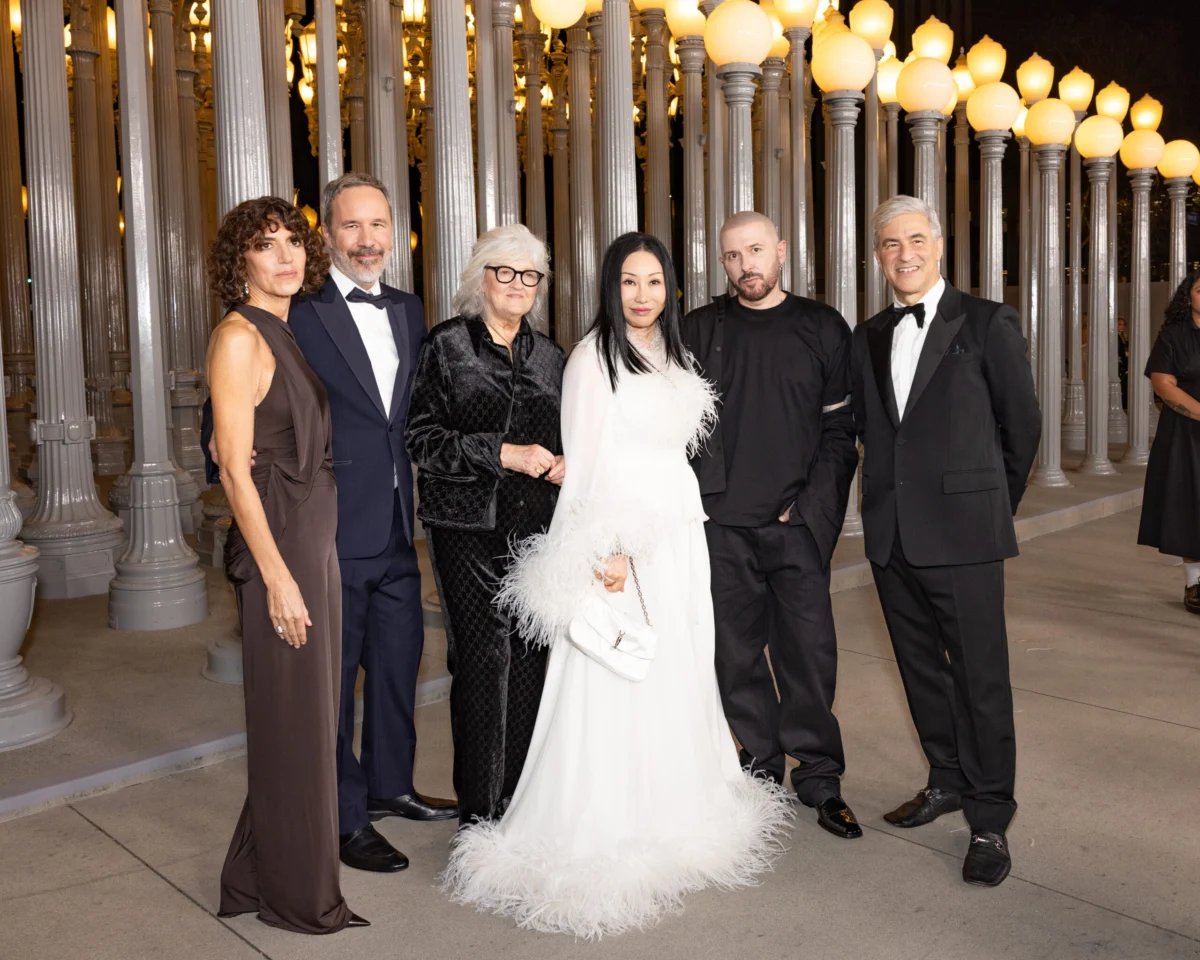
This year’s iteration of the LACMA Art+Film Gala, a high-profile annual event that blends the worlds of fine art and cinema, served as both a celebration of Villeneuve’s distinguished career and a significant turning point for the museum itself. Held under a massive tented pavilion on the LACMA grounds, the gala hosted over 600 of the world’s most influential figures in media, fashion, and philanthropy. The evening concluded with a record-breaking fundraising total of nearly $7 million, the highest in the event’s history, following the successful opening of the museum’s landmark David Geffen Galleries.

A Legacy of Cinematic Visionaries
The gala, which consistently draws an A-list crowd including industry moguls, actors, and high-fashion luminaries, honored Villeneuve for his profound contributions to global cinema. The director is currently preparing for the highly anticipated December 18 release of Dune: Part Three. His acceptance of the honor was preceded by a heartfelt tribute from Nicole Kidman, who made a dedicated trip from Australia to present the award.

Villeneuve’s relationship with LACMA is deeply rooted in his creative methodology. During his speech, he reflected on the production of his 2016 sci-fi epic, Arrival. He candidly admitted that during the film’s pre-production, he struggled to find the visual and tonal language necessary to convey the film’s core themes. A visit to a 2013-2014 James Turrell exhibition at LACMA provided the breakthrough he needed. Observing museum-goers standing in awe before light-filled installations, Villeneuve realized the power of silence and visual simplicity. "I know how to direct Arrival now," he recalled thinking. "And Arrival, in many ways, is an homage to the afternoon spent at LACMA."

Contextualizing the Honoree’s Influence
The choice of Villeneuve as the cinema honoree reflects his stature as a director who balances massive, big-budget spectacle with intimate human storytelling. Kidman, who noted she and Villeneuve have never formally worked together, spoke to the universal resonance of his filmography. "What I admire the most perhaps is that you have never allowed the scope of your ambition to overshadow the sensitivity of your humanity and your storytelling," Kidman remarked. She cited works such as Incendies, Prisoners, Sicario, Blade Runner 2049, and the Dune series as evidence of his ability to explore "the great mysteries of our existence."

Villeneuve used his time at the podium to acknowledge his own influences, specifically the "titans" of his youth, Steven Spielberg and James Cameron. He also highlighted the work of his contemporaries, including Alfonso Cuarón, Alejandro González Iñárritu, and Chloé Zhao, characterizing them as artists who continuously push the boundaries of cinematic expression.

Artificial Intelligence and the Future of Art
Moving beyond accolades, Villeneuve addressed the growing tension between human artistry and the emergence of generative artificial intelligence. For the director, the current technological landscape represents a critical crossroads for the creative industry.

"At the heart of every one of my films, there’s a question I need to answer," Villeneuve explained. "We are at a crossroads, asking what defines a human being and what human expression is worth? Every parent on Earth is a little worried about the world our children will inherit."

He contrasted the efficiency of AI-driven creative prompts with the arduous, transformative process of filmmaking. "I can create something with a prompt or I can go into the desert with actors, with a crew and go on a real adventure where I learn about life and become better at my craft," he stated. Villeneuve emphasized that the value of art lies in the process of human collaboration and the shared experience, arguing that as the world becomes increasingly automated, the commitment to human-centric storytelling becomes an essential heritage to preserve for future generations.

Transitions and Institutional Change
The evening was marked by a significant organizational shift. Long-time gala co-chair Eva Chow, who has been instrumental in the event’s success since its inception alongside Leonardo DiCaprio, announced that she would be stepping down. Her departure coincides with the gala’s 15th anniversary, a milestone that has seen the event evolve from a local fundraiser into one of the most prestigious social gatherings in the global art and film calendar.

LACMA director Michael Govan lauded Chow for her role as a "super connector," noting her unique ability to bridge the disparate worlds of high fashion, international art, and Hollywood. Under her guidance, the gala has secured the participation of iconic figures ranging from Stevie Wonder to a host of world-class actors and visual artists. Govan remarked on Chow’s background as a fashion designer and her status as a LACMA trustee, stating that her work embodies the museum’s "local and global reach."

Reflecting on her tenure, Chow expressed a mixture of pride and nostalgia. "It is difficult to put 15 years of memories, friendship, and experiences into a few words," she said. "To have started with an idea and to see it grow into one of Los Angeles’ most celebrated traditions has been one of the great privileges of my life."

The Art World and Evening Highlights
While Villeneuve represented the pinnacle of cinematic achievement, the event also honored the esteemed visual artist Vija Celmins. Known for her meticulous renderings of natural phenomena, Celmins offered a brief and endearing acceptance, jokingly observing the high-energy nature of the gala’s attendees.

The entertainment for the evening featured a performance by global pop superstar Rosé, who captivated the audience with a four-song set, including her viral hit "APT." The performance punctuated the evening’s transition from formal ceremonies to a more relaxed atmosphere, with many guests departing for private after-parties.

Broader Implications and Industry Sentiment
The success of the 2025 Art+Film Gala, evidenced by its record-breaking $7 million haul, underscores the continued resilience and necessity of cultural institutions in the modern era. Despite the challenges posed by economic shifts and the changing landscape of media consumption, the intersection of art and film continues to attract significant philanthropic support.

The presence of high-profile attendees—ranging from industry veterans like Al Pacino and Jerry Bruckheimer to contemporary stars like Timothée Chalamet, Anya Taylor-Joy, and Emma Watson—demonstrates the enduring appeal of LACMA as a nexus for cultural discourse. Furthermore, the partnership with luxury house Gucci, which served as the event’s presenting sponsor, highlights the symbiotic relationship between high fashion and the arts, a hallmark of the gala’s identity.

As the museum looks toward a future under new leadership and within the expanded physical space of the David Geffen Galleries, the themes discussed during the gala—the preservation of human expression, the importance of artistic process, and the value of community—will likely continue to shape the institution’s strategic direction. Villeneuve’s closing quip regarding the next James Bond—a lighthearted fake-out that drew significant laughter—served as a reminder that even in the face of serious existential and artistic questions, the industry retains its capacity for joy, spectacle, and the celebration of the medium that defines our collective cultural memory.