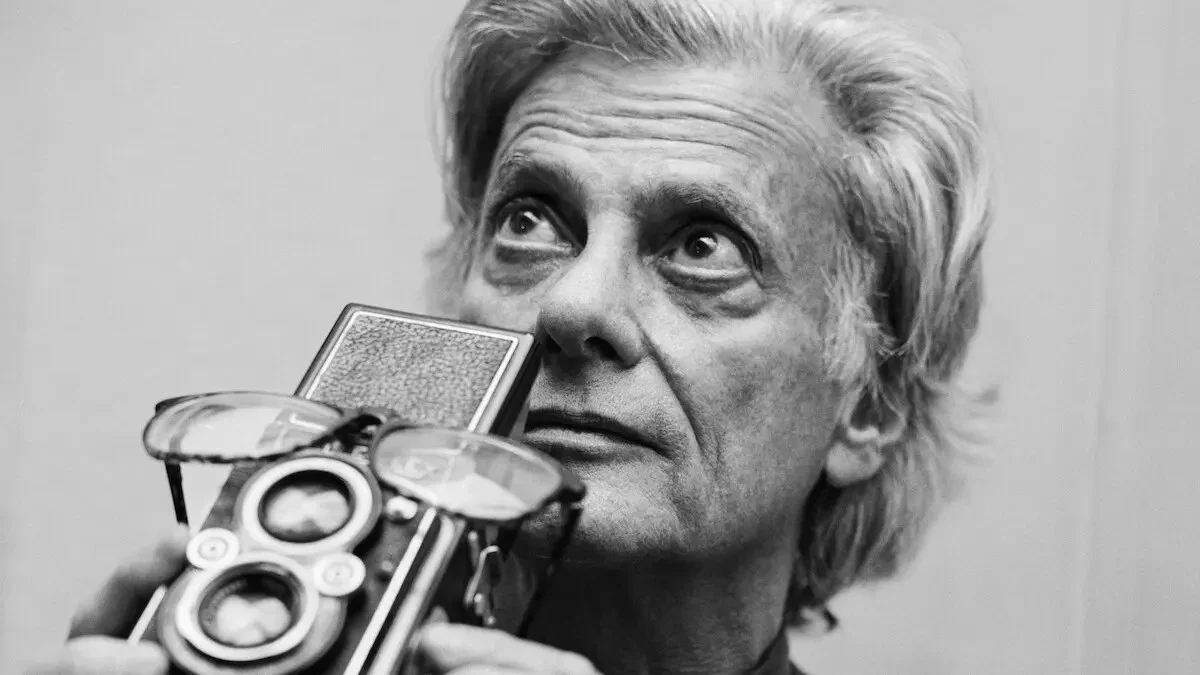
Ron Howard’s documentary feature simply titled Avedon stands as a towering achievement in biographical non-fiction, marking a career high for the director previously acclaimed for projects like The Beatles: Eight Days a Week. The film is constructed with a level of supple, artful editing—spearheaded by editor Andrew Morreale—that positions the picture as a vital study piece for modern filmmaking curricula. Woven seamlessly throughout the production are hundreds of iconic photographs captured by Richard Avedon. While the intrinsic value of these images is undeniable, the film’s true triumph lies in its musical cadence and finesse, layering the photographs into the viewer’s consciousness to tell a sweeping narrative: how Richard Avedon fundamentally altered the metaphysics of photography and shifted humanity’s collective visual perspective.
The Paradox of Glamour and Humanism
At the heart of Avedon’s legacy is a profound paradox that mirrors the complexities of the 20th century. On one hand, he reigned as an undisputed paragon of high fashion, capturing a realm defined by glamour and impossible beauty. On the other hand, his body of work cements his status as the ultimate democratic humanist.
The documentary unpacks this duality through an extensive lineup of archival footage, interviews, and commentary from a panoply of cultural and artistic luminaries. Contributors include Tina Brown, Larry Gagosian, John Lahr, Twiggy, Adam Gopnik, Hilton Als, Calvin Klein, and the photographer’s son, John Avedon. Furthermore, James Martin, executive director of the Richard Avedon Foundation, grants viewers unprecedented access to the labyrinthine archives preserving the output of roughly 16,000 sittings conducted between 1944 and 2004. Averaging out to roughly one sitting per working day across six decades, this monumental output forms the bedrock of the cinematic exploration.
A Chronology of Vision: From Merchant Marines to Global Icon
To understand Avedon’s revolutionary approach, one must look at his formative years and the chronological evolution of his craft. Born in New York in 1923, Avedon cultivated his visual sensibility early in life, recalling how he would momentarily blink and keep his eyes closed while walking down city streets to preserve mental snapshots before he ever held a camera.
At age 19, he enlisted in the U.S. Merchant Marines, securing a placement in their photographic department. There, he captured an estimated 100,000 identification portraits of enlisted men and laborers. Far from a glamorous assignment, this compulsory service served as his artistic crucible. By photographing thousands of baffled faces against a stark, flat white background for standard ID cards, Avedon made a startling discovery. He observed that the neutral backdrop stripped away external signifiers, forcing each subject’s individuality to the forefront.
This technical constraint became his signature style. The white background transformed him into a head-on existential classicist, echoing the psychological acuity later seen in contemporaries like Diane Arbus. He leveraged this technique to capture both the famous and the everyday worker, applying the exact same formal rigor to Oklahoma oil field workers in 1980 as he did to Hollywood royalty.
Defying Rules and Redefining Technique
The documentary opens with archival footage of Avedon declaring his artistic philosophy with piercing directness: "I can say very little about photography. I follow no rules, no laws, and no advice."
This ethos translated into a complete disregard for traditional technical fetishes. While other photographers obsessed over f-stops and equipment specifications, Avedon prioritized the psychological dynamic of the session. As actress Isabella Rossellini notes in the film, unlike peers who shot endlessly, Avedon might capture only a handful of frames during an entire hour, using conversation, pauses, and moments of introspection to elicit genuine human responses.
His approach to iconic subjects was similarly spontaneous. Whether capturing a mid-air leap from fashion model Lauren Hutton, a playful Charlie Chaplin brandishing devil horns in 1953, or an exhausted Marilyn Monroe letting down her guard at the tail end of a grueling 1957 promotional shoot for The Prince and the Showgirl, Avedon routinely bypassed polished public personas to reveal the complex person underneath. His famous portrait of Monroe did not capture her at the height of her glittering publicity stride, but rather in a fleeting ten-second moment of vulnerability—revealing the mature woman behind the Norma Jeane mythos.
Commercial Mastery and Cultural Reach
Avedon’s influence extended far beyond editorial spreads and fine art galleries. He successfully financed his artistic lifestyle and expansive vision through high-end commercial advertising, crafting surrealist, mini-film television spots such as the iconic campaigns for Calvin Klein’s Obsession fragrance. Rather than representing a compromise of his artistic integrity, his commercial work maintained a breathtaking continuity with his portraiture and fashion photography over a 60-year span.
His uncompromising eye occasionally outpaced institutional acceptance. When he documented the inhabitants of the American West in a sweeping series during the late 20th century, the raw, unvarnished authenticity of the work was initially met with hesitation by major New York museums. Yet, his commitment never wavered.
Broader Impact and Industry Implications
Ron Howard’s Avedon arrives at a time when the visual landscape is saturated with hyper-processed digital imagery and instantaneous content creation. By re-examining Avedon’s deliberate, human-centric methodology, the documentary serves as both a historical anchor and a contemporary critique of visual culture.
The film underscores that Avedon’s true innovation was never about cameras, lenses, or lighting setups; it was about the radical act of truly seeing another human being. Through meticulous archival research, expert testimony, and an innovative editing structure, Howard ensures that the enduring metaphysics of Richard Avedon’s work continue to challenge and expand how contemporary audiences perceive the world around them.