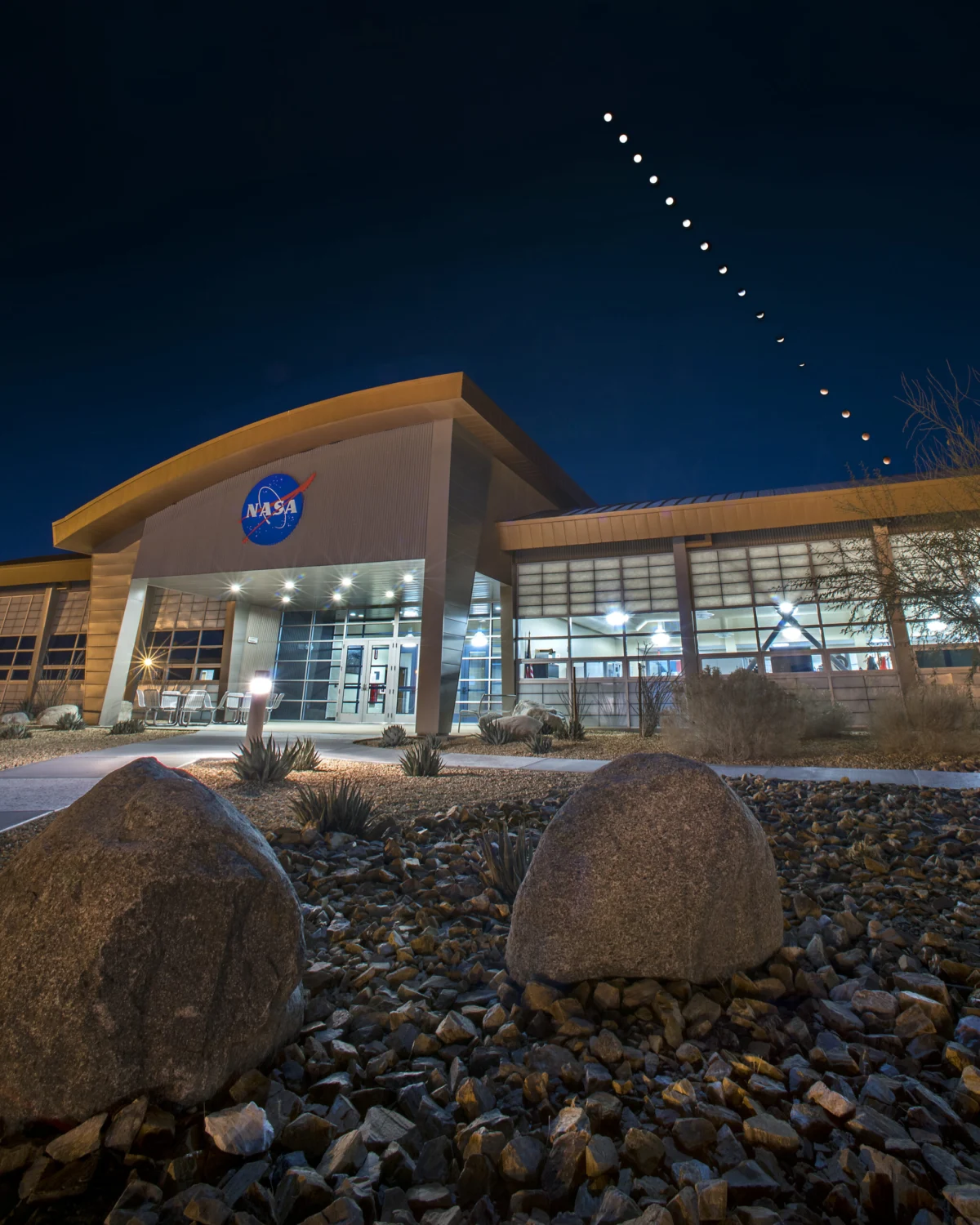
Long before they were tasked with shaping the future of aerospace breakthroughs, Derek Abramson, Justin Hall, and Justin Link were honing their craft in garages and local airfields, building radio-controlled aircraft and testing aerodynamic theories. Today, that lifelong obsession with flight has become a critical asset for NASA’s Dale Reed Subscale Flight Research Laboratory at the Armstrong Flight Research Center in Edwards, California. By leveraging the same inquisitive spirit that once drove their weekend hobbyist projects, this trio of engineers and pilots is now accelerating the development of technologies destined for the Moon, Mars, and the next generation of civilian aeronautics.
The Role of Subscale Research in Modern Aerospace
At the heart of NASA Armstrong’s subscale flight lab lies a mission-critical philosophy: fail fast, learn faster, and keep costs manageable. Traditional full-scale aerospace testing is notoriously expensive and carries significant risk. By utilizing remotely piloted and autonomous subscale aircraft, the team can evaluate emerging aeronautics concepts—ranging from advanced navigation systems for lunar landings to novel wing designs—without the prohibitive cost of building a full-sized prototype.
These subscale vehicles serve as "flying laboratories." They provide a sandbox where engineers can test the viability of flight control software, sensor integration, and structural integrity. When a design concept is still in its infancy, the ability to rapidly iterate—designing, building, and flight-testing a prototype within weeks rather than years—is the difference between a stalled project and a breakthrough.
A Legacy of Flight: The Professional Backgrounds
The synergy within the laboratory is not merely the result of professional placement; it is the culmination of decades of individual dedication to aviation. The three key figures—Chief Engineer Derek Abramson, Chief Pilot Justin Hall, and Drone Pilot Justin Link—each bring a unique technical heritage to the table.
Derek Abramson’s path to the agency was forged through rigorous military and industrial experience. Having served in the U.S. Navy as an avionics technician on platforms such as the EA-6B and the F-18, he developed a deep understanding of complex electronic systems. His career transition into engineering saw him contributing to high-stakes programs, including the B-1 Lancer and the CV-22 Osprey. For Abramson, the leap from military aircraft to NASA’s subscale fleet was a natural progression, allowing him to apply his expertise in systems engineering to the more agile world of autonomous research.
Justin Hall represents the intersection of operational excellence and intuitive problem-solving. His journey began with a childhood shaped by the sights and sounds of the Cold War aerospace era—watching the SR-71 Blackbird streak across the sky and witnessing the historic landings of the Space Shuttle. His reputation as a pilot of radio-controlled aircraft eventually transcended the hobbyist circuit, catching the attention of NASA recruiters who recognized that the precision required for high-end RC competition is highly transferable to the flight-testing of research platforms.
Justin Link’s technical foundation is rooted in a multi-generational devotion to aviation. With family members who served in the Army Air Corps and the Air Force, Link grew up surrounded by the mechanics of flight. His expertise extends beyond the cockpit; he is a specialist in composite materials and specialized fabrication methods. Having spent over 11 years working with large-scale drones, Link possesses the rare ability to bridge the gap between a CAD drawing on a computer screen and a flight-ready, airworthy vehicle.
Chronology of Innovation: From Hangar to Flight Deck
The integration of these three individuals into the NASA Armstrong workforce occurred over the span of the last decade, but their professional collaboration is the result of years of shared history in the hobbyist community.
- Early Development (1990s–2000s): Abramson, Hall, and Link independently spend their formative years mastering flight dynamics through radio-controlled modeling.
- Professional Foundation (2000s–2014): The trio gains professional experience in the Navy, aerospace manufacturing, and drone R&D, respectively.
- NASA Integration (2014–2020): One by one, the engineers are recruited by NASA Armstrong to revitalize the subscale flight program.
- Mission Expansion (2020–Present): The team scales their operations, incorporating advanced autonomous navigation and artificial intelligence to support Artemis and future aeronautics initiatives.
Technical Implications: Why Subscale Matters
The importance of the Dale Reed Subscale Flight Research Laboratory cannot be overstated. According to agency data, the use of subscale testbeds can reduce flight test costs by as much as 90% compared to full-scale testing. This allows NASA to explore high-risk, high-reward technologies that might otherwise be deemed too volatile for primary flight test assets.
For instance, when evaluating new landing gear geometries for Martian landers or testing the efficacy of distributed electric propulsion for aircraft, the subscale lab provides an empirical data set. This data serves as the "ground truth" that validates computational fluid dynamics (CFD) models. If the subscale model performs as predicted, engineers can move toward full-scale production with a significantly higher degree of confidence.
Official Perspective and Agency Strategy
While the team members operate with the focused intensity of a research unit, their approach remains grounded in the practicalities of the hangar. NASA Armstrong officials have frequently highlighted that the lab’s success is a direct result of hiring individuals who possess both theoretical academic knowledge and "grease-under-the-fingernails" practical experience.
"We aren’t just looking for people who can run a simulation," a source close to the lab noted. "We need people who understand the physics of flight when a gust of wind hits a wing at 50 miles per hour, or who can troubleshoot a wiring issue in a remote field at dawn. That is exactly what Derek, Justin, and Justin bring to the table."
The Future: Shaping the Next Frontier
As NASA pushes further into the deep-space exploration era, the requirements for autonomous and remotely piloted systems will only increase. Whether it is preparing for robotic missions on the Moon or developing eVTOL (electric vertical takeoff and landing) vehicles for urban air mobility, the work performed at the Dale Reed laboratory acts as the tip of the spear.
The team continues to explore new horizons, integrating machine learning into flight control systems and experimenting with lightweight, ultra-durable composite materials. Their ability to synthesize hobbyist creativity with institutional engineering standards ensures that NASA remains at the forefront of global aerospace innovation.
Conclusion: A Culture of Curiosity
The story of Abramson, Hall, and Link is a testament to the power of sustained interest and the importance of experiential learning. By maintaining their hobbyist roots—often seen tinkering in their own garages on weekends—they retain a perspective that is often lost in more bureaucratic environments. They do not just manage a laboratory; they curate a culture of experimentation.
As the agency continues to look toward the horizon, the work performed by these three professionals serves as a reminder that the most sophisticated aerospace solutions often begin with a simple, burning question: "What happens if we try this?" For the team at NASA Armstrong, the answer to that question is almost always a successful, subscale flight, paving the way for the next great leap in human achievement.