The Genesis and Production Context of Manhunter
The mid-1980s was a transformative period for Michael Mann. Having achieved significant cultural influence as the executive producer of the hit television series Miami Vice, Mann was often associated with a specific "cool" aesthetic characterized by neon palettes, synth-heavy soundtracks, and high-fashion costuming. This association initially proved to be a double-edged sword for Manhunter. While it brought a high degree of technical sophistication to the project, some contemporary critics dismissed the film as an extension of the "MTV style" over substance.
The film is an adaptation of Thomas Harris’s 1981 novel Red Dragon. At the time of its production, Harris was not yet the household name he would become following the massive success of The Silence of the Lambs. Mann’s approach to the material was to strip away the gothic overtones often found in crime fiction and replace them with a clinical, modern, and deeply psychological atmosphere. To achieve this, he collaborated with cinematographer Dante Spinotti, marking the beginning of a long-standing creative partnership. Spinotti utilized a unique lighting scheme that blended the "magic hour" of natural light with harsh, fluorescent pulses, creating a world that felt simultaneously sensual and sterile.
A Chronology of the Hannibal Lecter Cinematic Universe
To understand the impact of Manhunter, it is necessary to view it within the broader timeline of the Thomas Harris adaptations. The film’s journey from a commercial disappointment to a cult masterpiece is a rare trajectory in Hollywood.
- 1981: Thomas Harris publishes Red Dragon, introducing FBI profiler Will Graham and Dr. Hannibal Lecter.
- 1986: Manhunter is released by De Laurentiis Entertainment Group. Despite critical acclaim from select circles, it earns only $8.6 million against a $15 million budget.
- 1988: Harris publishes The Silence of the Lambs, a sequel to Red Dragon.
- 1991: Jonathan Demme’s adaptation of The Silence of the Lambs is released, becoming a massive box office hit and winning the "Big Five" Academy Awards.
- 2001: Hannibal, directed by Ridley Scott, continues the franchise.
- 2002: Red Dragon is re-adapted by Brett Ratner, starring Edward Norton and Anthony Hopkins, offering a more traditional take on the source material compared to Mann’s 1986 version.
- 2013-2015: The NBC series Hannibal brings the characters back to the screen, drawing significant stylistic inspiration from Mann’s original aesthetic.
- 2024: The 40th-anniversary 4K restoration of Manhunter is released, cementing its status as the "original" and, for many, the definitive version of the story.
Technical Innovation and the Birth of Forensic Noir
Manhunter is frequently cited by film historians as the first true forensic thriller. Before the ubiquity of franchises like CSI: Crime Scene Investigation—which, notably, starred Manhunter lead William Petersen—the concept of a "profiler" was largely foreign to the general public. Mann’s film treated the act of investigation as a poetic and psychological endeavor.
The film’s use of technology was cutting-edge for 1986. Scenes involving the use of infrared light to reveal hidden markings or the meticulous analysis of fingerprints and paper stock were presented with a level of realism that felt revolutionary. However, Mann used these technical details not just for plot progression, but as a metaphor for the enmeshment of humanity and technology. The sterile, white-on-white environments of the FBI labs and high-end residences served as a stark contrast to the animalistic savagery of the killer, Francis Dolarhyde.
Critical Analysis of Casting and Characterization
The legacy of Manhunter is inextricably linked to its central performances, which offered a different tonal frequency than the 1991 successor.
William Petersen as Will Graham
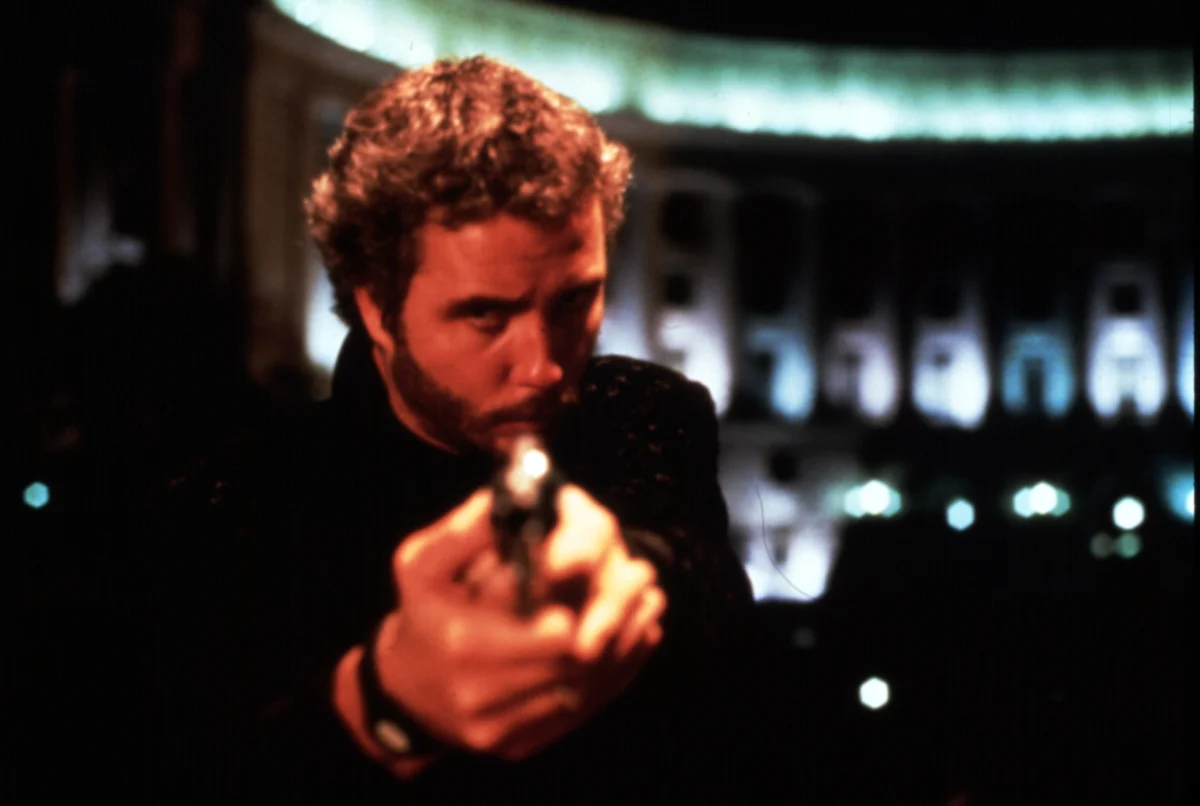
William Petersen’s portrayal of Will Graham is often described as "implosive." Unlike the more traditional "hard-boiled" detectives of the era, Graham is depicted as a man on the edge of a psychological breakdown. His ability to catch killers is rooted in his capacity for empathy—a trait that nearly destroyed him during his initial capture of Dr. Lecktor. Petersen’s performance is characterized by a "rock-steady aggression" and a quietude that conveys a deep-seated dread.
Brian Cox as Hannibal Lecktor
Before Anthony Hopkins redefined the role with theatrical flair, Brian Cox delivered a chillingly understated performance as Dr. Lecktor. Cox’s Lecktor is not a gothic monster but a brilliant, bored sociopath. Confined to a stark, brightly lit cell rather than a dark dungeon, Cox uses his voice and subtle facial contortions to project a sense of diabolical intelligence. His portrayal emphasizes the "ghoulish intimacy" of the character, suggesting that for Lecktor, murder is merely an intellectual exercise.
Tom Noonan as Francis Dolarhyde
The late Tom Noonan’s performance as the "Tooth Fairy" killer, Francis Dolarhyde, remains one of the most haunting portrayals of a serial killer in cinema. Noonan used his imposing physical stature and a soft, halting voice to create a character driven by profound internal damage. The film’s exploration of Dolarhyde’s loneliness and his tragic relationship with a blind co-worker, Reba (played by Joan Allen), adds a layer of pathos rarely seen in the genre.
The Role of Music and Sound Design
One of the most distinctive elements of Manhunter is its soundtrack, which functions as an emotional barometer for the film’s narrative. Michael Mann originally sought the rights to Pink Floyd’s "Comfortably Numb" to underscore the film’s climax. When the rights proved unattainable, the final synth score incorporated similar chord sequences to maintain that specific "transcendent" and "numbing" atmosphere.
The film features a curated selection of post-punk and ambient tracks that elevate key scenes. Shriekback’s "This Big Hush" is used to capture the interiority of Dolarhyde’s desire, while the Prime Movers’ "Strong as I Am" provides an ominous backdrop to his descent into paranoia. The inclusion of Iron Butterfly’s "In-A-Gadda-Da-Vida" during the final confrontation remains one of the most famous "needle drops" in thriller history, symbolizing the film’s final break into sensory chaos.
The Final Cut: A Comparative Evaluation
The 40th-anniversary release features "The Final Cut," a version that has sparked debate among film purists. This version is largely identical to the "Restored Director’s Cut" released on DVD in 2003. Key changes include:
- Extended Dialogue: Additional lines in the initial meeting between Graham and Lecktor.
- Narrative Pacing: An extended scene at the Atlanta police station where Graham provides more explicit explanations of the killer’s motives.
- The Ending: The addition of a scene following the climax where a bruised Will Graham visits the family that was intended to be the killer’s next target.
While some viewers appreciate the additional context, many critics argue that the original theatrical cut was superior due to its leaner pacing and more enigmatic ending. The consensus among many Mann aficionados is that the film’s original identity—a taut, visual fever dream—is best preserved in its initial form, though the 4K restoration of the "Final Cut" is praised for its visual clarity and color grading.
Broader Impact and Implications for the Genre
The influence of Manhunter can be seen in nearly every police procedural produced over the last thirty years. It shifted the focus of the crime genre from "whodunit" to "how" and "why," prioritizing the psychological toll of investigation. The "Mann aesthetic"—the intersection of high-end architecture, stylized lighting, and a brooding protagonist—has become a standard trope in modern neo-noir.
Furthermore, Manhunter challenged the audience to empathize with the investigator’s descent into darkness. It suggested that to catch a monster, one must be willing to look through the monster’s eyes, a theme that would be explored further in films like Se7en and series like Mindhunter.
As Manhunter: The Final Cut returns to theaters, it stands as a testament to Michael Mann’s vision. While it may have been "stylishness trapped in an 80s bubble" to contemporary observers in 1986, it is viewed today as a timeless piece of art. It remains a definitive exploration of the thin line between the hunter and the hunted, making the "darkness visible" through its unique neon lens. For both long-time fans and new viewers, this restoration offers a definitive look at a film that was decades ahead of its time.