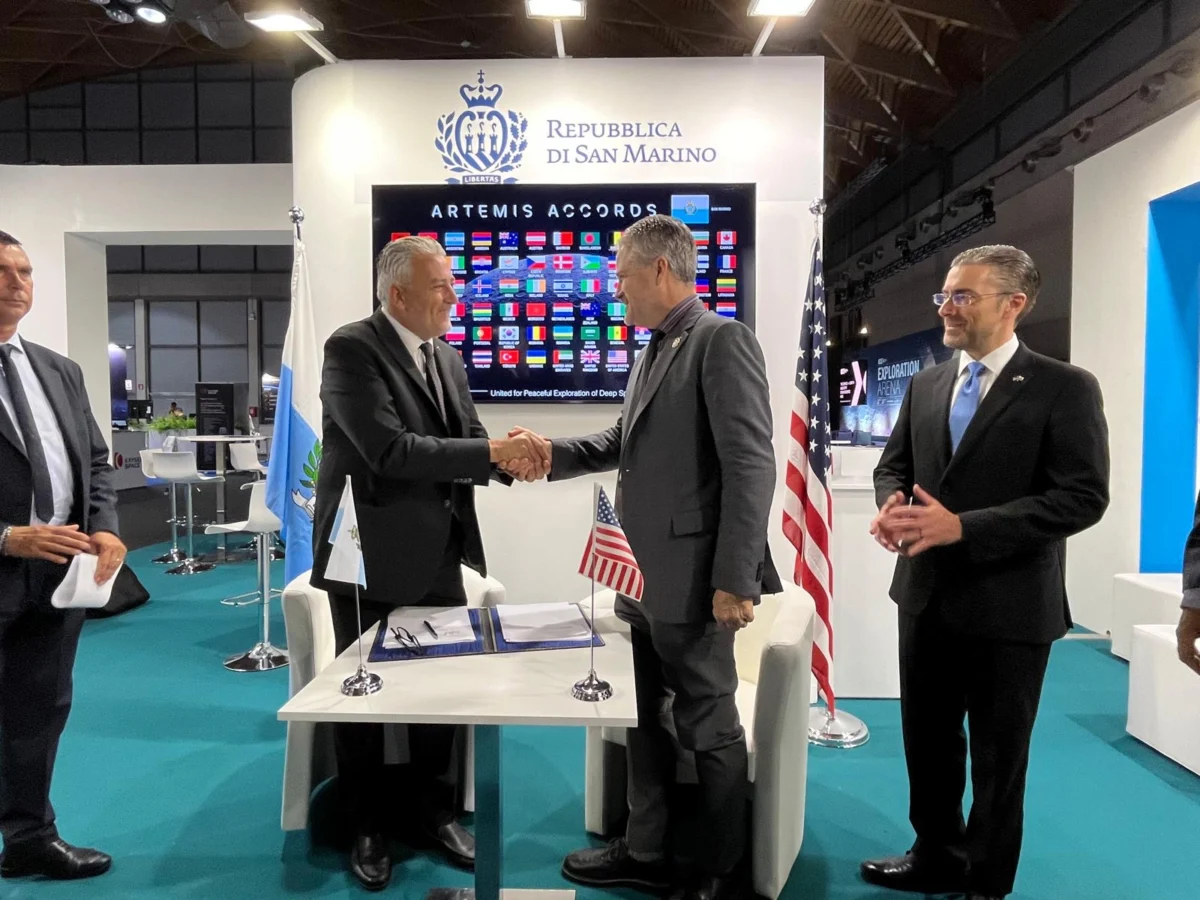
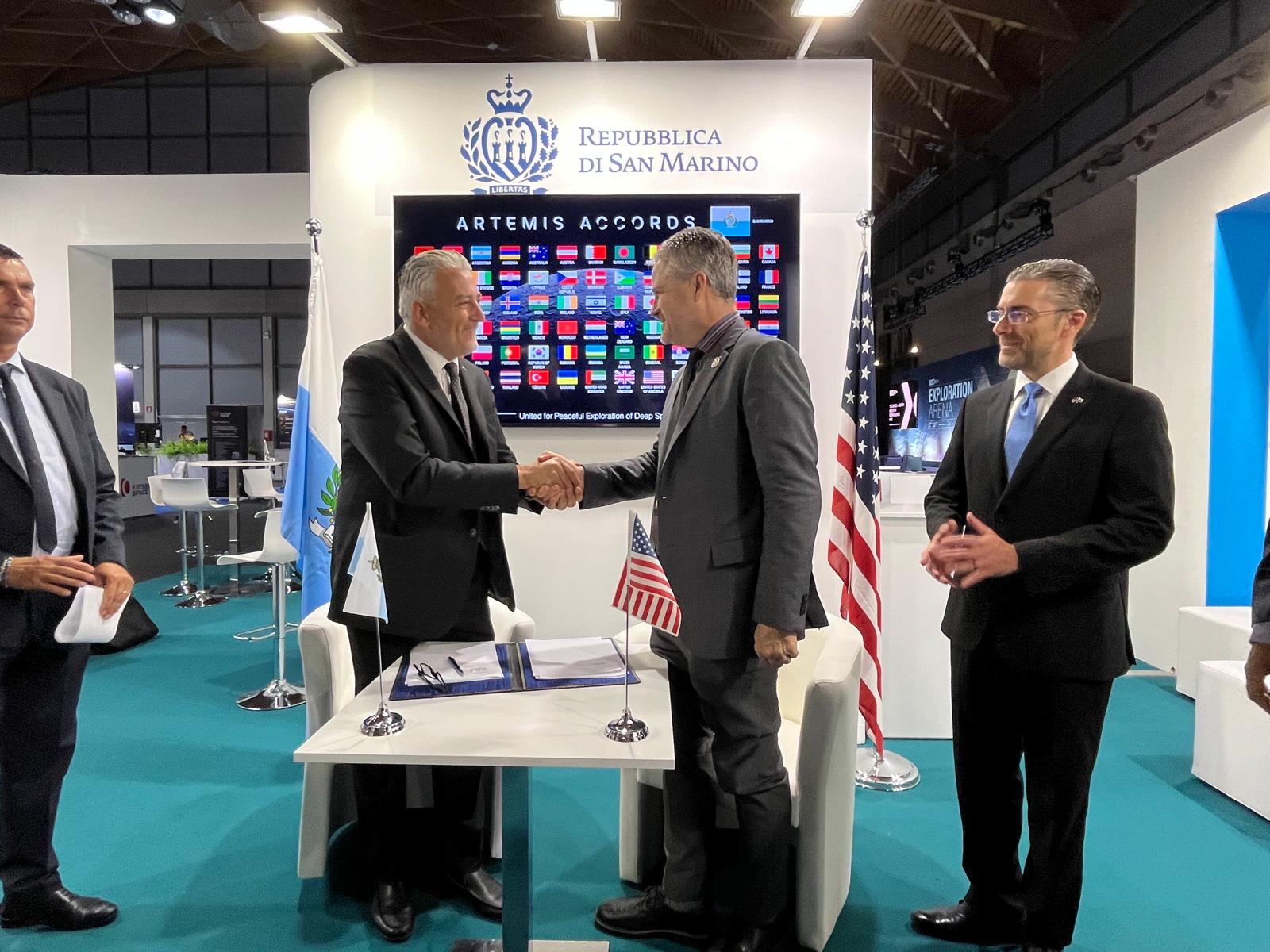
The Republic of San Marino officially entered the global stage of space exploration on Friday, September 25, 2026, by becoming the 76th signatory to the Artemis Accords. The signing ceremony, held in the historic city of Rimini, Italy, signals a formal commitment by the microstate to adhere to a set of non-binding principles designed to guide civil space exploration and use in the 21st century. The event was attended by high-ranking officials from NASA and the United States Department of State, underscoring the growing geopolitical significance of the Artemis framework as humanity prepares for long-term lunar habitation.
A Strategic Alignment for the Republic
Minister of Industry and Technological Research Rossano Fabbri represented San Marino during the proceedings. By formalizing this partnership, San Marino joins a diverse coalition of nations—ranging from major spacefaring powers to emerging economies—that have pledged to uphold the values of transparency, interoperability, and the peaceful utilization of space resources.
"We are pleased and honored that the Republic of San Marino has been welcomed as the 76th signatory state of the Artemis Accords," Minister Fabbri stated following the signing. "We fully share the principles and values expressed in the Accords, and we are convinced that the signatory states united under this framework will make a tangible contribution to promoting international cooperation in space and ensuring the use of space for peaceful purposes."
The participation of U.S. officials, including NASA Europe representative Gregory Mann and U.S. Consul General in Florence Joseph Tordella, highlighted the diplomatic importance of the event. For San Marino, the move is seen as a strategic pivot toward participating in the burgeoning "space economy," allowing the nation to foster international scientific ties and potentially contribute specialized research or technological expertise to future missions.
The Evolution of the Artemis Accords: A Chronology
To understand the significance of San Marino’s accession, one must look at the rapid evolution of the Artemis Accords since their inception. The Accords were established in 2020 by NASA and the U.S. Department of State in conjunction with seven founding partner nations. The primary goal was to provide a practical interpretation of the 1967 Outer Space Treaty, specifically tailored to the realities of the modern era, which includes an increase in private sector involvement and the technological capability to maintain a sustained human presence on the Moon.
- October 2020: The Artemis Accords are signed by the first eight founding nations: Australia, Canada, Italy, Japan, Luxembourg, the United Arab Emirates, the United Kingdom, and the United States.
- 2021–2023: A period of rapid expansion sees nations across Europe, South America, and Africa join the coalition, creating a broad consensus on space norms.
- 2024–2025: The Accords evolve to incorporate more robust frameworks regarding space debris mitigation and the preservation of historic lunar heritage sites.
- September 2026: San Marino signs as the 76th member, illustrating the continued global momentum and the desire of smaller nations to have a voice in shaping lunar policy.
Defining the Principles of Exploration
The Artemis Accords are built upon a foundation of core principles that signatory nations must embrace. These principles are intended to reduce the risk of conflict and maximize the scientific return of space missions. Key tenets include:
- Peaceful Purposes: All activities must be conducted for peaceful purposes, in accordance with international law.
- Transparency: Signatories commit to publicly releasing their scientific data, allowing the global community to benefit from discoveries made during lunar exploration.
- Interoperability: To ensure safety and efficiency, nations agree to use open standards for hardware and systems, enabling spacecraft from different countries to communicate and provide mutual assistance.
- Emergency Assistance: Nations pledge to provide all possible assistance to astronauts in distress, reaffirming the humanitarian obligations established in existing space treaties.
- Debris Mitigation: A commitment to the responsible disposal of spacecraft and the mitigation of orbital debris to ensure that the space environment remains sustainable for future generations.
The Economic and Scientific Implications
NASA Deputy Administrator Matt Anderson emphasized that the Accords are more than just a diplomatic document; they are a roadmap for action. "President Trump has directed NASA to build a Moon Base and establish an enduring presence on the lunar surface," Anderson noted during the Rimini ceremony. "As we do, we are putting the principles of the Accords into practice. NASA has invited every Artemis Accords signatory to participate in our return to the Moon through scientific payloads, technology demonstrations, CubeSats, and other capabilities."
For a nation like San Marino, the implication is that the "Golden Age of Exploration" is no longer restricted to the world’s largest superpowers. Through the Accords, smaller nations can contribute specific scientific instruments or software modules that integrate into larger, NASA-led missions. This democratization of space exploration allows for a more distributed technological base, which is critical when considering the logistical challenges of maintaining a permanent lunar colony.
Geopolitical Considerations and Future Challenges
The rapid growth of the Artemis Accords to 76 signatories presents both opportunities and challenges. While the Accords are non-binding, they serve as a powerful "soft power" instrument for the United States, effectively setting the "rules of the road" for lunar exploration. By bringing such a large number of nations into a single framework, the U.S. is effectively creating a norm-based environment that discourages unilateral actions, such as the unauthorized appropriation of lunar territory or the interference with other nations’ scientific equipment.
However, the expansion of the coalition also necessitates more complex coordination. As more nations contribute hardware and personnel to lunar operations, the complexity of mission control and orbital traffic management increases. NASA has indicated that future meetings of the Artemis Accords signatories will focus on the technical implementation of these principles, including the establishment of "safety zones" around lunar landing sites to prevent operational interference.
A New Era of Collaboration
The signing in Rimini serves as a reminder that space exploration is increasingly viewed as a global collective effort. As NASA moves closer to the Artemis III mission—the first human landing on the lunar south pole in over half a century—the support of a broad coalition becomes essential.
San Marino’s involvement, while modest in terms of raw fiscal investment compared to global superpowers, contributes to the legitimacy and breadth of the coalition. When 76 nations agree on the fundamental tenets of how to behave on the Moon, it creates a powerful precedent that is difficult for any non-signatory to ignore.
The integration of these 76 states suggests that the upcoming era of lunar exploration will be characterized by a focus on multilateralism. For the Republic of San Marino, the journey toward the Moon has officially begun, marking a transition from a spectator of global progress to an active participant in the next great chapter of human discovery. As the agency continues its work to finalize the infrastructure for the lunar base, the inclusion of diverse perspectives and scientific contributions from new partners will be the defining metric of success in the years ahead. The commitment made in Rimini is not merely a diplomatic formality, but a recognition that the future of humanity lies beyond Earth’s atmosphere, and that the success of that future depends on the strength of our shared values.