The Epicenter of a Global Tradition
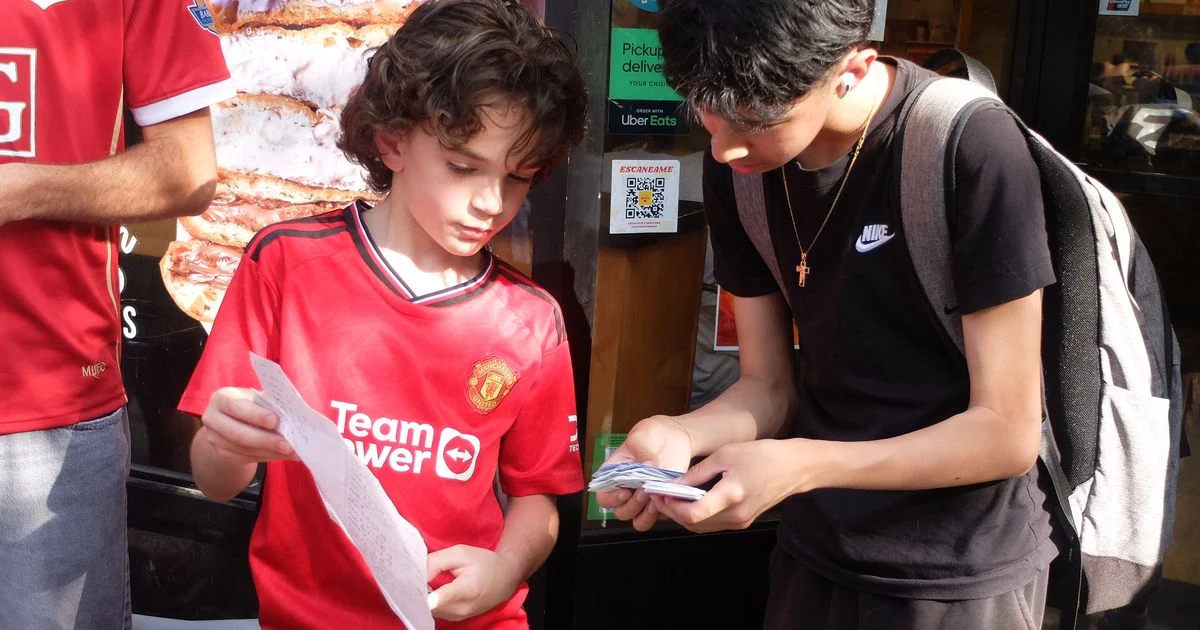
For many residents of "Little Colombia" and the surrounding neighborhoods of Queens, the corner of 84th and 37th has become the unofficial headquarters for Panini sticker trading. What began as a modest gathering during the 2010 World Cup has blossomed into a daily summit involving dozens of participants. From 10 a.m. until the sun sets behind the elevated train tracks, the sidewalk is occupied by a diverse cross-section of New Yorkers: elementary school children, white-collar professionals on their lunch breaks, and retirees who have been following the sport for over half a century.
The primary objective is the completion of the official Panini World Cup album. For the 2026 tournament, the task is more formidable than ever. The current album requires 980 unique stickers, encompassing every player from the expanded 48-team roster, as well as specialized stickers for stadiums, team logos, and legendary players. While these stickers are available at major retailers like Target and CVS for approximately $2 per pack, the "blind pack" nature of the product makes completing an album through solo purchases statistically improbable and prohibitively expensive.
The Mechanics of the Market
The trading floor at Jackson Heights operates on a system of mutual necessity. As collectors purchase packs, they inevitably accumulate "repeats"—identical stickers of players they already possess. In the absence of a structured trading environment, these duplicates are worthless; however, on 37th Avenue, they are the keys to a completed collection.
The scene is defined by two phrases that echo across the crowd: "Qué te falta?" (What are you missing?) and "Whatchu got?" These inquiries bridge the gap between generations and cultures. For 23-year-old Spanish teacher Sophia Ballinas, the quest is personal. A resident of Forest Hills, Ballinas has returned to the corner three times this season with a singular focus: securing the elusive Lionel Messi sticker. Her journey as a collector began in her youth, spurred by her father, a Mexican immigrant. "Growing up, I never had enough money to finish an album," Ballinas noted. Now, as an adult, the hobby serves as a nostalgic link to her childhood and her heritage.
The economic landscape of the corner is anchored by "professional" traders—devoted enthusiasts who source stickers in bulk directly from Panini or through secondary wholesale markets. These veterans, some of whom have maintained a presence on this corner for four consecutive World Cup cycles, provide a steady supply of specific duplicates for those looking to fill the final gaps in their albums. While these professionals sell individual stickers for a small profit, many claim their presence is motivated less by financial gain and more by community service.
A Chronology of the Panini Phenomenon
The tradition of the Panini World Cup sticker album dates back to the 1970 tournament in Mexico. Founded by the Panini brothers in Modena, Italy, the company revolutionized sports memorabilia by creating a standardized, collectible format that coincided with the world’s most-watched sporting event.
Over the decades, the phenomenon evolved as follows:
- 1970: The first international Panini World Cup album is released.
- 1980s-1990s: The hobby gains "fever" status in Latin America and Europe, becoming a staple of schoolyard culture.
- 2010: The Jackson Heights meetup begins to take shape during the South Africa World Cup, reflecting the growing immigrant population in Queens.
- 2014-2018: The gathering expands as social media allows collectors from outside the neighborhood to locate the trading hub.
- 2022: Despite the winter schedule of the Qatar World Cup, local interest remains high, though the outdoor gathering is hampered by weather.
- 2026: With the World Cup hosted in the United States, Canada, and Mexico, and the final match scheduled for nearby MetLife Stadium in New Jersey, the Jackson Heights meetup has reached unprecedented scale.
Statistical Analysis and the "Coupon Collector’s Problem"
The challenge of completing the 980-sticker album is a classic example of the "Coupon Collector’s Problem," a mathematical theorem used to calculate the number of trials required to collect all items in a set. Mathematically, if a collector were to rely solely on purchasing packs without trading, they would likely need to buy thousands of stickers to account for the increasing probability of receiving duplicates as the album nears completion.
Current market data suggests that a single pack of five stickers costs $2.00, meaning each sticker has a base value of $0.40. However, the secondary market in Jackson Heights assigns "weighted values" to stickers based on player popularity and rarity. "Shiny" stickers (logos and trophies) or stickers of global icons like Messi, Mbappé, or Pulisic can command higher trade-in ratios—sometimes requiring five or ten "common" players in exchange for one star. By trading at the Jackson Heights hub, collectors can reduce the total cost of completing an album by an estimated 60% to 70%.
Intergenerational Bonding and Cultural Identity
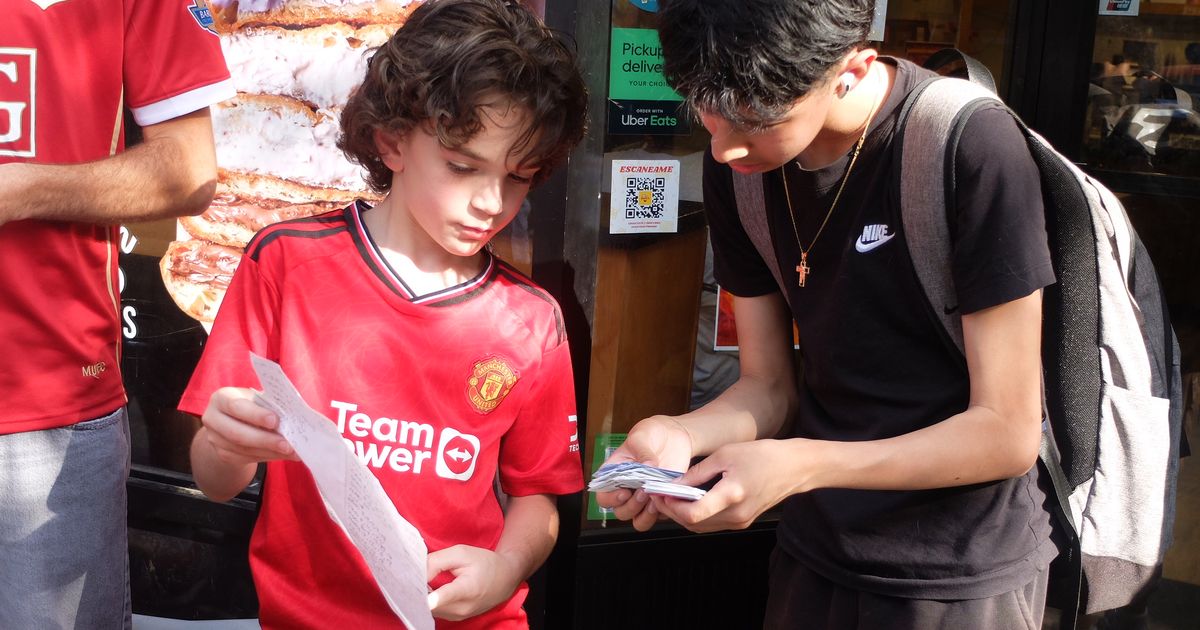
For the Latino community in Queens, the stickers are more than just collectibles; they are a medium for cultural transmission. Diana Peralta, 42, and her son, David Orellana, 24, immigrated to Jackson Heights from Quito, Ecuador, six years ago. For them, the 2026 tournament represents a return to a tradition they feared they had lost. During the 2022 World Cup, they were unable to find a local trading community and failed to finish their album. This year, the family has made the trading corner a weekly destination.
"It’s a different dynamic now," Peralta said, as she carefully placed stickers into the album while her son negotiated trades nearby. "In Ecuador, everyone does this. Here, we had to find our people."
This sentiment is echoed by 32-year-old Kevin Julia, who brought his entire family to the corner. Originally a baseball enthusiast—a sport that has historically dominated the American collectibles market—Julia was drawn into soccer culture by his Latino friends in high school. The 2026 tournament being held on U.S. soil has amplified his interest. "I think these are certainly memories that I’m gonna have, opening these packs with my father," Julia remarked, highlighting how the hobby has bridged the gap between his American upbringing and the soccer-centric traditions of his peers.
The Professionalization of the Sidewalk
The presence of veteran traders like 20-year-old Julian Cruhigger adds a layer of expertise to the chaos. Cruhigger, who has been trading since the 2014 World Cup, noted the dramatic shift in the neighborhood’s atmosphere. "I remember it being maybe two stands in 2014. Now, every block has at least three stands selling stickers," he said.
Cruhigger’s journey reflects the broader geographical reach of the Jackson Heights hub. Though he now lives in Long Island—where he admits he would usually be playing baseball—he finds himself drawn back to Queens every weekend. "It definitely did tie me closer to my Colombian roots," he added.
The "pro" traders often utilize analog methods to manage their inventory. Many carry "want lists" or grids of numbers where they cross off stickers as they acquire them. This low-tech approach stands in stark contrast to the digital age, providing a tactile and social experience that many participants find refreshing.
Broader Impact and Implications for U.S. Soccer Culture
The explosion of interest in Panini stickers in Jackson Heights is a microcosm of a larger shift in American sports culture. As the 2026 World Cup progresses, soccer is increasingly challenging the traditional dominance of the "Big Four" American sports (football, baseball, basketball, and hockey).
The success of the sticker trading hub suggests several key trends:
- Mainstream Integration: Soccer collectibles are moving beyond immigrant enclaves and into the broader American consciousness, as evidenced by the mix of participants in Queens.
- Economic Vitality: The ad-hoc economy created by sticker stands and local restaurant traffic provides a temporary but significant boost to neighborhood businesses.
- Physical Social Networking: In an era dominated by digital interactions, the Jackson Heights corner proves that physical "third places" remain vital for community building.
As the tournament moves toward its final stages, the crowds at 84th and 37th show no signs of thinning. For the children like 9-year-old Mason, who was seen expertly navigating trades under the watchful eye of his older brother Marco, the stickers are a rite of passage. "He’s ready. He knows how to do it," Marco said of his younger brother.
The World Cup of Stickers is, ultimately, a tournament where everyone can win. While only one nation will lift the trophy at MetLife Stadium, hundreds of collectors in Jackson Heights will walk away with completed albums, satisfied that they have captured a piece of global history in the palm of their hands. The sidewalk outside El Chivito D’Oro remains a testament to the power of sport to turn a simple street corner into a world-class arena of community and tradition.