A groundbreaking experiment conducted by a PhD student at the University of Sydney has successfully synthesized cosmic dust from raw materials in a laboratory setting, mimicking the extreme conditions found in the universe. This pioneering work, led by Linda Losurdo from the School of Physics, not only provides tangible samples of interstellar material but also offers profound insights into the chemical genesis of life’s essential building blocks before the formation of Earth. The research, published in the prestigious The Astrophysical Journal of the American Astronomical Society, has the potential to revolutionize our understanding of astrobiology and the evolution of the cosmos.
The Laboratory Genesis of Stardust
The core of this scientific achievement lies in a meticulously controlled laboratory simulation. Losurdo, a candidate in materials and plasma physics, combined three fundamental gases: nitrogen (N₂), carbon dioxide (CO₂), and acetylene (C₂H₂). These molecules were chosen to represent the chemical composition and energetic environments characteristic of regions near stars, including the explosive remnants of supernovae. The crucial step involved exposing this gaseous mixture to a powerful electrical charge, a process that generates a plasma. This intense energy bombardment effectively fractured the original molecules, prompting their atoms to rearrange and form new, more complex chemical structures.
The result was the creation of carbon-rich dust particles, visually and chemically akin to the enigmatic material that permeates interstellar space and is subsequently found embedded within comets, asteroids, and meteorites that occasionally reach Earth. This laboratory-produced dust is not merely a visual replica; it possesses a complex arrangement of carbon, hydrogen, oxygen, and nitrogen atoms. These elements, collectively known as CHON molecules, are the fundamental components of organic matter and are considered indispensable for life as we know it.
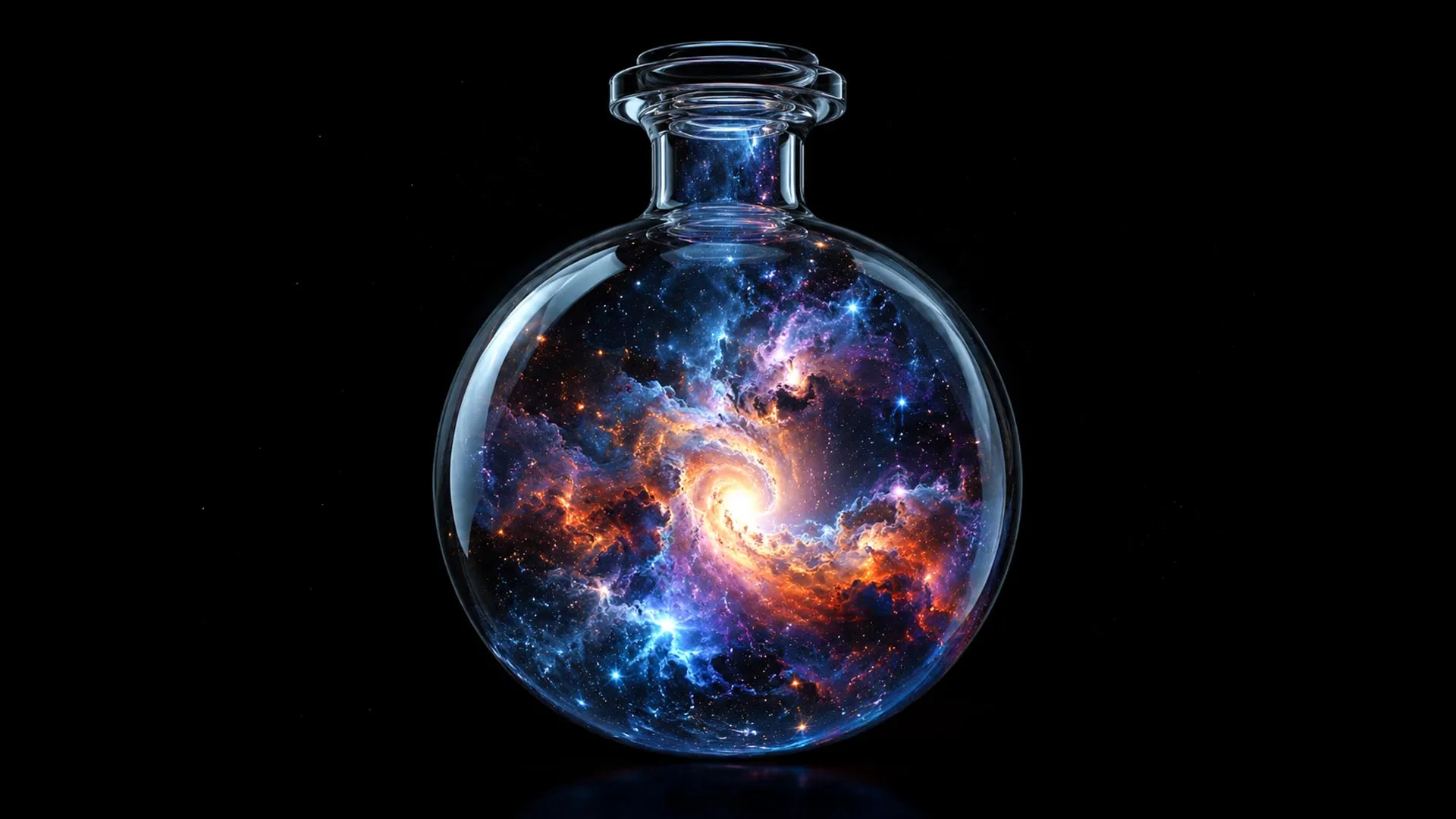
"We no longer have to wait for an asteroid or comet to come to Earth to understand their histories," Ms. Losurdo stated, highlighting the transformative potential of her research. "You can build analogue environments in the laboratory and reverse engineer their structure using the infrared fingerprints. This can give us huge insight into how ‘carbonaceous cosmic dust’ can form in the plasma puffed out by giant, old stars or in cosmic nurseries where stars are being born and distribute these fascinating molecules that could be vital for life. It’s like we have recreated a little bit of the Universe in a bottle in our lab."
Unlocking the Secrets of Interstellar Chemistry
Cosmic dust, the ethereal material suspended in the vastness of space, plays a pivotal role in stellar evolution and the formation of planets. It is under these extreme conditions – characterized by constant bombardment of ions and electrons – that complex molecules can form and evolve. Astronomers have long relied on analyzing the infrared light emitted by cosmic dust to decipher its composition and origin. These emitted wavelengths act as unique molecular "fingerprints," providing invaluable data about the chemical makeup of distant celestial objects.
Remarkably, the dust synthesized in Losurdo’s laboratory exhibited the same distinctive infrared signatures observed in natural cosmic dust. This precise match is a powerful validation of the experiment, indicating that the laboratory conditions closely replicate the physical and chemical processes that occur in actual cosmic environments. This successful replication allows scientists to study the formation of these vital compounds in a controlled setting, bypassing the immense challenges and costs associated with directly sampling interstellar material.
Tracing the Origins of Life’s Building Blocks: A Timeline of Discovery
The question of how life originated on Earth remains one of science’s most profound mysteries. Current theories suggest a multitude of possibilities: the first organic molecules may have formed on the nascent Earth, been delivered by comets and meteorites, or a combination of both scenarios. The period between approximately 4.56 billion and 3.5 billion years ago was particularly active, with Earth experiencing a continuous barrage of meteorites, micrometeorites, and interplanetary dust particles originating from asteroids and comets. These celestial visitors are believed to have delivered vast quantities of organic material to our planet’s surface.
However, the precise origin and the specific processes that created this early organic material have remained elusive. Losurdo’s research directly addresses this uncertainty by investigating the chemical pathways that lead to the incorporation of CHON elements into complex organic structures.
"Covalently bonded carbon and hydrogen in comet and asteroid material are believed to have formed in the outer envelopes of stars, in high-energy events like supernovae, and in interstellar environments," Ms. Losurdo elaborated. "What we’re trying to understand are the specific chemical pathways and conditions that incorporate all of the CHON elements into the complex organic structures we see in cosmic dust and meteorites."
Recreating the Cosmos Within Glass Tubes: The Experimental Process
The experimental setup, conceived and executed by Losurdo under the supervision of Professor David McKenzie, a coauthor of the study, was designed to mimic the vacuum of space. Glass tubes were first evacuated using a vacuum pump to eliminate atmospheric air, thereby approximating the near-emptiness of the interstellar medium.
Subsequently, the tubes were filled with the carefully selected gases: nitrogen, carbon dioxide, and acetylene. For approximately one hour, this gaseous mixture was subjected to a high voltage of around 10,000 volts. This electrical potential ionized the gases, creating a plasma state known as a glow discharge. The intense energy within this plasma served to break down the initial gas molecules into their constituent atoms and smaller molecular fragments. These highly reactive species then recombined, forming larger and more complex chemical structures – the laboratory-generated cosmic dust.
Over the course of the experiment, these newly formed particles gradually settled onto silicon chips strategically placed within the glass tubes. The result was a thin, delicate coating of dust, with some samples appearing as glittering fragments reminiscent of actual cosmic material.
Professor McKenzie emphasized the significance of this in-situ creation of cosmic dust. "By making cosmic dust in the lab, we can explore the intensity of ion impacts and temperatures involved when dust forms in space," he explained. "That’s important if you want to understand the environments inside cosmic dust clouds, where life-relevant chemistry is thought to be happening. This also helps us interpret what a meteorite or asteroid fragment has been through over its lifetime. Its chemical signature holds a record of its journey, and experiments like this help us learn how to read that record."
Building a Universal Fingerprint Library for Astronomers
The implications of Losurdo’s research extend far beyond simply understanding the formation of organic molecules. The team plans to develop a comprehensive database of infrared "fingerprints" corresponding to various types of laboratory-created cosmic dust. This library will serve as an invaluable tool for astronomers.
By comparing observational data from star-forming regions and the remnants of deceased stars with this database, scientists could potentially identify specific types of dust being produced in these distant cosmic locales. This would enable them to reconstruct the physical and chemical processes at play in these environments with unprecedented accuracy. Furthermore, such a database would significantly enhance the ability of scientists to interpret the historical records preserved within meteorites and asteroid fragments. The chemical composition of these extraterrestrial samples can encode a wealth of information about the temperatures, radiation levels, and particle impacts they endured throughout their long journeys across the solar system.
Broader Impact and Future Directions
The ability to reproduce cosmic chemistry in a laboratory setting opens up new avenues for investigating processes occurring deep within stellar environments. This research offers a tangible method for probing the ancient chemical steps that ultimately contributed to the emergence of life on Earth. It provides a crucial bridge between theoretical models and empirical observation, allowing for rigorous testing and refinement of our understanding of cosmic evolution.
Losurdo’s exceptional work was recognized with an award for best presentation at the international Annual Meeting of the Meteoritical Society late last year, underscoring the significance and impact of her research within the scientific community.
The University of Sydney node of Microscopy Australia provided crucial support for this research, with the Australian Research Council providing essential funding. The authors have reported no competing interests, indicating a pure pursuit of scientific knowledge.
This groundbreaking experiment not only demystifies the creation of cosmic dust but also provides a powerful new tool for unraveling the complex tapestry of the universe, from the birth of stars to the very origins of life itself. The "little bit of the Universe in a bottle" created by Losurdo promises to yield a wealth of knowledge for years to come, advancing our understanding of our place in the cosmos and the potential for life beyond Earth.