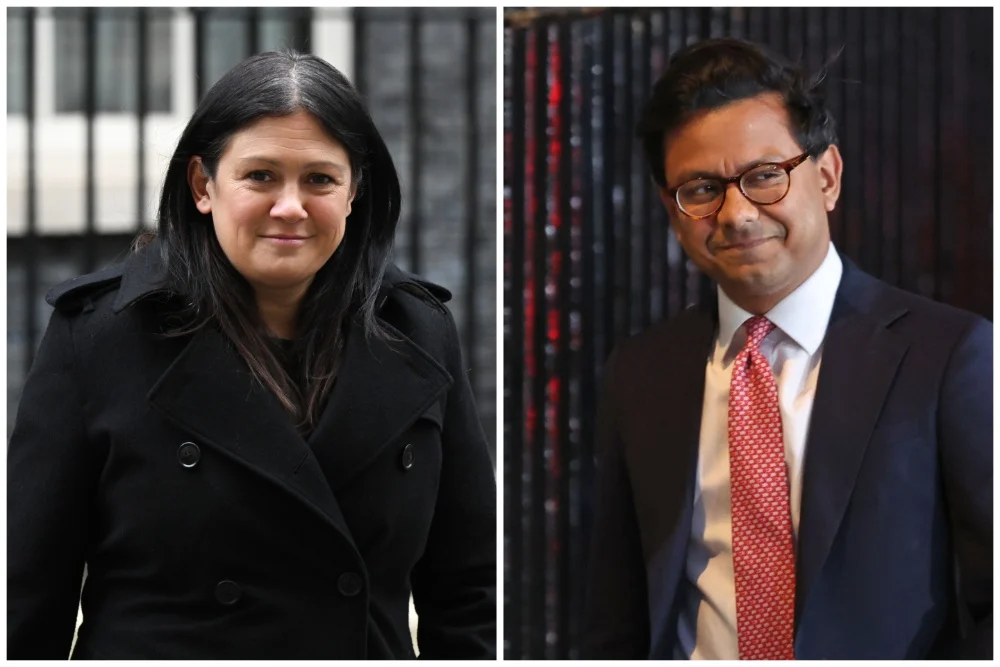
In a move signaling a desire for policy continuity within the United Kingdom’s vital creative and digital sectors, Prime Minister Andy Burnham has confirmed that Lisa Nandy will remain in her post as Secretary of State for Culture, Media and Sport. The decision comes as part of an extensive cabinet reshuffle initiated by the new Prime Minister, who took office following a period of internal transition within the Labour government. Nandy’s retention is seen by industry analysts as a strategic effort to stabilize a department that has historically been characterized by rapid turnover, with Nandy being the 12th person to hold the office in nearly as many years.
Lisa Nandy, who has served as the Member of Parliament for Wigan since 2010, was originally appointed to the role by former Prime Minister Keir Starmer in July 2024. Her continuation under the Burnham administration marks a significant moment of institutional memory for the Department for Culture, Media and Sport (DCMS). Having now surpassed the two-year mark in her tenure, Nandy has become one of the longest-serving culture secretaries in recent memory, providing a rare sense of permanence to a sector often buffeted by shifting political priorities.
A Career Defined by Consistency and Local Advocacy
Nandy’s political trajectory has been marked by a focus on regional inequality and community resilience, themes she has carried into her leadership of the DCMS. Before taking the helm of the culture department, she held high-profile roles within the shadow cabinet, including shadow minister for international development and shadow housing minister. Her background as a representative for a Northern constituency has informed her approach to the "levelling up" agenda within the arts, frequently advocating for the decentralization of cultural funding away from London and the Southeast.
Since taking office in the summer of 2024, Nandy has navigated a series of complex industrial and economic challenges. Her appointment coincided with a period of profound volatility for the British screen sector. The industry was then grappling with the cumulative effects of the Hollywood writers’ and actors’ strikes, which halted international co-productions and depleted the pipeline of content for UK-based studios. When coupled with post-pandemic inflationary pressures and a sharp downturn in the global advertising market, the UK’s creative economy faced its most significant headwinds in a generation.
Navigating the Screen Sector’s Economic Turbulence
The UK creative industries are a powerhouse of the national economy, contributing approximately £126 billion in Gross Value Added (GVA) annually and supporting more than two million jobs. However, the stability of this sector has been threatened by slashed budgets from major streamers and traditional broadcasters alike. As Secretary of State, Nandy has been tasked with ensuring the UK remains a premier destination for inward investment despite these global contractions.
The "Screen Sector" specifically—comprising film, high-end television (HETV), and video games—has been a focal point of Nandy’s policy agenda. Data from the British Film Institute (BFI) suggests that while production spend in the UK remains high, the composition of that spend has shifted. Nandy has been vocal about the need to protect independent British filmmaking, which often struggles to compete with the massive budgets of US-backed "tentpole" productions. Her administration has overseen the implementation of various tax credits designed to incentivize domestic production and maintain the UK’s competitive edge against rival hubs in Europe and North America.
Regulatory Interventions: Paramount, Warner Bros., and Sky
One of the most critical aspects of Nandy’s current portfolio involves the oversight of massive corporate consolidations within the media landscape. The Secretary of State recently signaled her intent to intervene in the UK arm of the proposed merger between Paramount and Warner Bros. Discovery. This "minded to intervene" status suggests that the government is concerned about the implications for media plurality and competition within the domestic market.
Furthermore, the industry is closely watching the regulatory progress of Comcast-owned Sky’s acquisition of the public service broadcaster ITV. This deal, which represents a seismic shift in the UK’s broadcasting hierarchy, has yet to receive formal regulatory approval. The acquisition raises difficult questions regarding the future of public service broadcasting (PSB) obligations, which ensure that UK audiences have access to high-quality, impartial news and culturally relevant programming.
Adding to the complexity is the potential spin-off of ITV Studios, the broadcaster’s highly successful production arm. As ITV looks to streamline its operations, several international private equity firms and rival media conglomerates have emerged as potential bidders. Nandy’s role involves balancing the benefits of foreign investment with the need to protect the intellectual property and creative autonomy of one of the UK’s most successful cultural exports.
The BBC Royal Charter and the Future of Funding
Perhaps the most significant long-term challenge on Nandy’s desk is the upcoming renewal of the BBC’s Royal Charter. The current charter is set to expire in 2027, and the debate over the BBC’s funding mechanism—the television license fee—has become increasingly polarized.
Nandy has been overseeing a comprehensive review of the BBC’s funding, exploring alternatives such as a household levy, a subscription model, or partial privatization. While she has expressed support for the BBC’s role as a cornerstone of British soft power and national identity, she has also emphasized the need for the corporation to modernize in the face of rising competition from digital platforms like Netflix, Disney+, and YouTube. The outcome of this charter renewal will define the landscape of British media for the next decade, making Nandy’s role in the negotiations pivotal.
The Rise of Artificial Intelligence: A New Ministerial Frontier
In a parallel development within the Burnham cabinet, the government has announced the appointment of Kanishka Narayan as the UK’s first dedicated Minister for AI. This newly created role will be held jointly across the Cabinet Office and the Department for Business, Innovation, Science and Trade. Narayan, who was elected in July 2024 as the MP for Vale of Glamorgan, previously served as the parliamentary under-secretary of state in the science, innovation, and technology department.
The creation of an AI-specific ministerial post reflects the government’s recognition of artificial intelligence as a transformative force across all sectors of the economy, including culture and media. Narayan’s brief is expected to involve the development of a national AI strategy that balances the drive for innovation with the necessity of ethical regulation.
For Lisa Nandy and the DCMS, the appointment of an AI minister creates a new avenue for collaboration. The creative industries are currently at the forefront of the AI debate, with concerns ranging from copyright infringement and the use of "deepfakes" to the potential for AI to streamline production workflows. Narayan and Nandy are expected to work closely on establishing a framework that protects the rights of creators while allowing the UK to lead in AI-driven media technologies.
Industry Reactions and the Path Forward
While formal statements from the major guilds and trade bodies are still being processed following the reshuffle, the general sentiment within the industry is one of relief. Continuity in the DCMS is often preferred by stakeholders who require long-term regulatory certainty to greenlight multi-million-pound projects.
"The retention of Lisa Nandy provides a much-needed sense of stability at a time when the media landscape is undergoing fundamental structural changes," said one senior industry analyst. "Her familiarity with the Paramount/WBD merger and the ITV acquisition means there will be no ‘onboarding’ delay, which is crucial given the fast-moving nature of these deals."
As Prime Minister Burnham moves forward with his legislative agenda, the DCMS will likely focus on the following key areas over the next 18 months:
- Legislative Frameworks for AI: Collaborating with Kanishka Narayan to ensure that the UK’s copyright laws are robust enough to handle AI-generated content without stifling technological progress.
- Broadcasting Reform: Finalizing the regulatory stance on the Sky-ITV merger and ensuring that the public service mandate remains intact.
- Regional Growth: Expanding the "Creative Clusters" initiative to ensure that the economic benefits of the film and TV boom are felt in regions like the North West and South Wales.
- The BBC Transition: Navigating the final stages of the funding review to present a sustainable model for the BBC post-2027.
Chronology of Leadership in the DCMS (2014–Present)
To understand the significance of Nandy’s two-year tenure, one must look at the rapid succession of ministers who preceded her. Between 2014 and 2024, the department saw a "revolving door" of leadership that many industry leaders argued hindered long-term strategic planning.
- 2014–2016: Sajid Javid / John Whittingdale
- 2016–2018: Karen Bradley / Matt Hancock
- 2018–2019: Jeremy Wright
- 2019–2020: Nicky Morgan
- 2020–2021: Oliver Dowden
- 2021–2022: Nadine Dorries
- 2022–2023: Michelle Donelan / Lucy Frazer
- 2024–Present: Lisa Nandy
Nandy’s ability to survive a change in Prime Ministers—from Starmer to Burnham—suggests that she has successfully positioned herself as an indispensable figure within the Labour party’s executive branch. Her deep roots in the party and her reputation for pragmatic governance have made her a "safe pair of hands" for a department that oversees sectors contributing nearly 6% of the UK’s total GVA.
Conclusion: A Season of Consolidation
The decision by Prime Minister Andy Burnham to retain Lisa Nandy as Culture Secretary, while simultaneously introducing Kanishka Narayan as the Minister for AI, represents a dual-track strategy of consolidation and innovation. By keeping Nandy in place, the government ensures that the complex, high-stakes negotiations surrounding the BBC and major media mergers remain in the hands of an experienced minister. By introducing Narayan, the government signals its intent to modernize the UK’s economic infrastructure for the digital age.
As the UK navigates the "post-strike" era of content production and the "pre-AI" era of digital transformation, the stability of the DCMS will be tested. However, with Nandy’s continued leadership, the department appears prepared to tackle the regulatory and economic hurdles that lie ahead, ensuring that the UK’s cultural and media sectors remain a global benchmark for excellence.