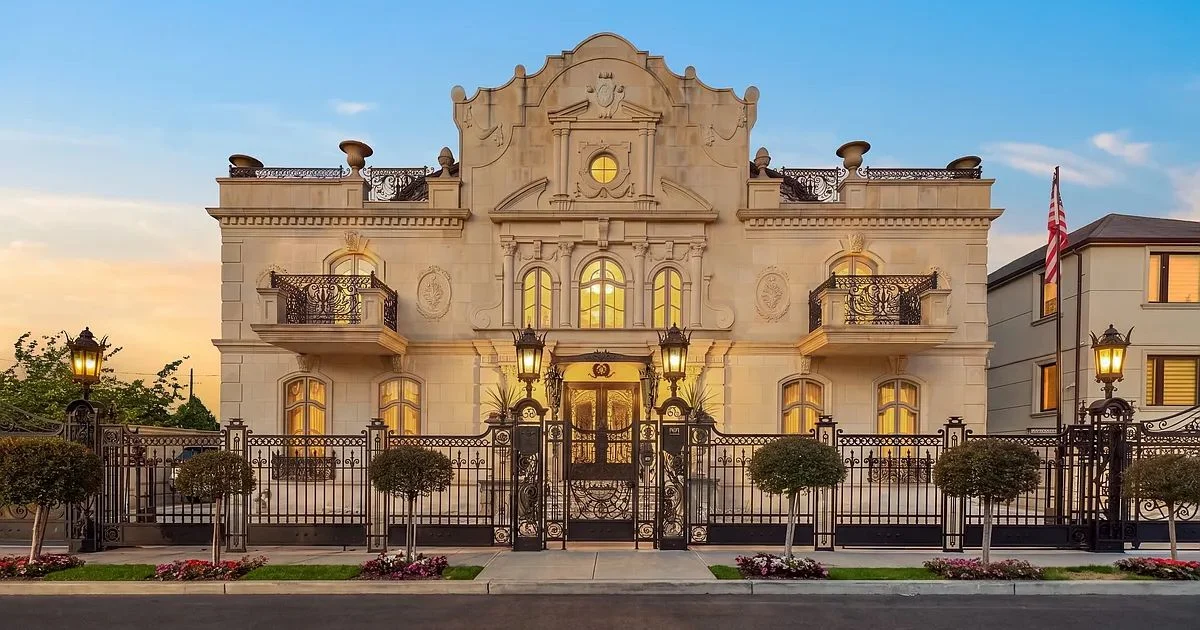
The New York City real estate market has long been a theater for the extraordinary, where towering skyscrapers vie for billionaire tenants and historic brownstones command astronomical sums. Yet, even within a city desensitized to architectural excess, the arrival of a property on Exeter Street in South Brooklyn has turned heads. Spanning an astonishing 11,300 square feet, a Spanish Revival-style mansion has officially hit the market for $13.5 million. Listed by Alen Moshkovich of Serhant, this monumental dwelling not only claims the title of the largest single-family home in the waterfront enclave of Manhattan Beach, but it also shatters local pricing ceilings, positioning itself as the most expensive property ever offered in the neighborhood.
This lavish residence, located just a block away from the crashing waves of the Atlantic Ocean, represents the absolute zenith of opulent, suburban-style luxury living tucked inside the outer boroughs of New York City. Complete with an eclectic blend of imported European finishes, high-end recreational amenities, and bunker-grade infrastructure, the estate offers a window into a hidden tier of wealth in South Brooklyn—one that rivals the famous compounds of Mill Basin and the glitziest enclaves of Miami or Los Angeles.
An Architectural and Material Masterpiece
To understand the sheer scale and extravagance of 215 Exeter Street, one must examine its intricate detailing. The mansion boasts six principal bedrooms—each with direct access to a private terrace featuring heated pavers designed to instantly melt away falling snow—alongside a dedicated seventh bedroom designated for staff. The interior spaces are heavily curated, featuring walls wrapped in pure silk and illuminated by magnificent Baccarat chandeliers, pieces that can command up to $250,000 individually.
The main level serves as a grand stage for entertaining. A sweeping entryway displays custom iron railings and balustrades, polished marble flooring with intricate custom inlays, and a soaring ceiling height that emphasizes the home’s vast volume. The formal dining room can comfortably seat up to 20 guests, framed by furnishings imported directly from Europe. Meanwhile, the gourmet kitchen is finished in rare yellow onyx and marble, featuring handcrafted cabinetry with inlaid marquetry that cleverly conceals dual refrigerators and a freezer, alongside a professional-grade La Cornue stove.
Living spaces are equally dramatic. The main living room features custom millwork, marble flooring, and a striking, six-foot-long saltwater fish tank built directly into the wall. According to listing broker Alen Moshkovich, the exotic marine life housed within the tank—with individual specimens valued upwards of $600—can be negotiated into the sale for the prospective buyer.
Beyond its primary living quarters, the mansion functions as an all-encompassing resort. The subterranean level has been transformed into an elite wellness and entertainment hub, housing a home theater, a spacious recreation room with a wet bar, a dedicated massage parlor, a private sauna, a fully equipped gym, and a temperature-controlled wine cellar. Outdoors, the property continues to impress with a 38-foot-long heated saltwater swimming pool flanked by a fully functional cabana kitchen and bathroom, all shielded from the outside world by high stone walls and motorized security gates.
The Controversial Genesis on Exeter Street
While the estate currently stands as a monument to luxury, its creation was anything but peaceful. The property’s evolution tells a story of urban transformation, zoning battles, and community friction that dates back more than a decade.
For much of its recent history, the sprawling lot at 215 Exeter Street bore a much more modest footprint. Until 2010, the site held a two-story, 2,599-square-foot brick rectory building that served local priests. When the church ultimately decided to divest the property, it fetched $1.85 million. The transaction came bundled with quirky, historical deed restrictions explicitly prohibiting the buyer from hosting "obscene performances," "euthanasia," or "abortions." However, the deed notably lacked any prohibitions against massive architectural construction.
When the new buyers moved to demolish the rectory and construct a supersized single-family home, local pushback was swift and severe. Manhattan Beach, a quiet peninsula known for its suburban feel, wide streets, and affluent homeowners, had long prided itself on grandiose houses, but the proposed footprint of the new mansion pushed the envelope to an unprecedented degree.
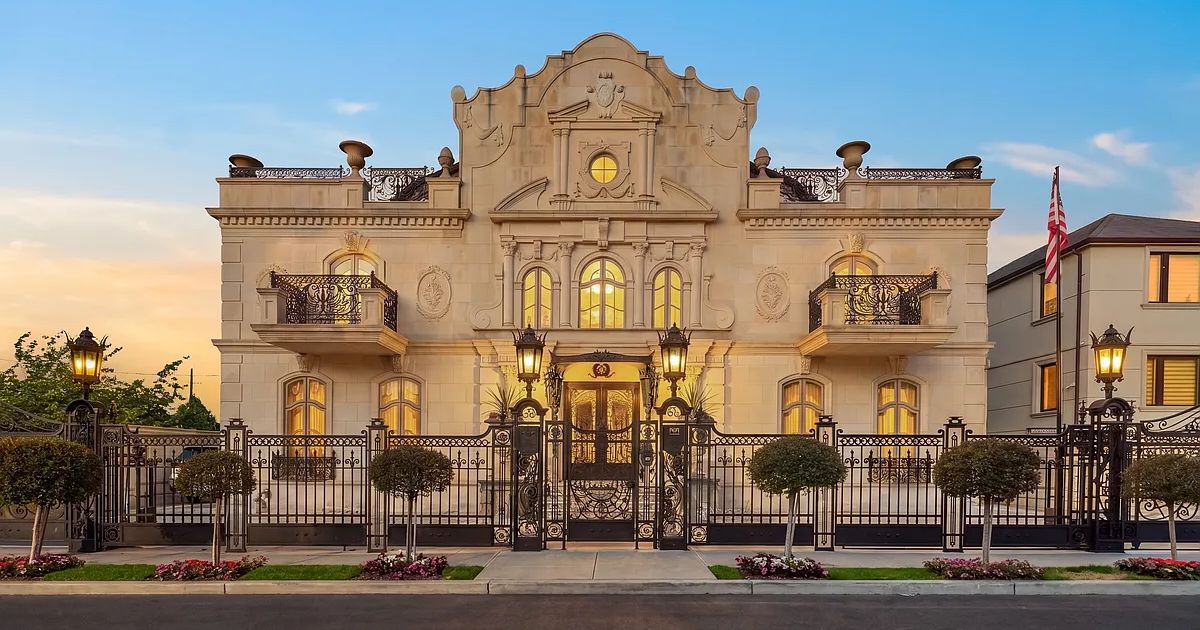
During community board hearings in the early 2010s, local residents vocally opposed the project. Neighbors argued that the approvals were granted based on flawed data provided by the city regarding the scale of neighboring structures. Despite the neighborhood outcry, the community board ultimately approved plans for a 7,848-square-foot home.
Intriguingly, the home that stands today dwarfs even those contentious initial approvals. City records indicate an interior footprint of 11,300 square feet, a discrepancy that Moshkovich attributes to standard recording practices within outer-borough real estate. "It’s a larger house than you see in the city record," Moshkovich explains. "A lot of houses in Manhattan Beach and other neighborhoods are bigger than they are recorded to be. It’s nothing unusual. It’s a recording thing." Representatives from the Department of City Planning were not immediately available to clarify the square-footage variance. Given the strict zoning pushback and community sensitivities of the past, real estate analysts suggest that obtaining approvals for a residential footprint of this magnitude in Manhattan Beach would be virtually impossible today, effectively making 215 Exeter Street an irreplaceable unicorn of the Brooklyn housing market.
Fortress-Like Engineering and Off-Grid Capabilities
Beneath the silk wall coverings, sparkling crystal chandeliers, and lavish marble surfaces lies a structure built with the resilience of a military bunker. The owners spared no expense in engineering a dwelling designed to withstand external disruptions while maintaining absolute internal comfort.
The exterior walls are built to double-thickness and engineered for maximum soundproofing, ensuring complete acoustic isolation from the street. Underneath the poured concrete floors runs an advanced radiant heating system. To ensure optimal utility independence, the estate is equipped with an elite water filtration system that purifies municipal water before it reaches the taps.
Power redundancy is another hallmark of the property. The mansion features a dual-generator system: a primary unit running on natural gas paired with a heavy-duty diesel backup. "It’s solid enough to go off-grid," Moshkovich notes, emphasizing the pragmatic engineering that complements the home’s aesthetic grandeur.
The Sellers and Market Implications
The masterminds behind this South Brooklyn palace are Aleksandr and Svetlana Falikman. Aleksandr Falikman serves as the chief financial officer of a prominent senior-care staffing agency founded in Flatbush in 2008, which connects families with in-home care providers. Beyond his healthcare ventures, Falikman is known in South Brooklyn as a part-owner of an upscale local restaurant and social club that similarly showcases a penchant for crystal chandeliers, dramatic lighting, and high-end interior finishes.
According to the listing brokerage, the decision to sell stems from changing family dynamics. With several of their children having grown up and moved away, the Falikmans no longer require the expansive square footage or a primary residence in South Brooklyn, prompting them to pass the torch to a new buyer.
The listing of 215 Exeter Street arrives at a fascinating juncture for New York City’s luxury real estate sector. While Manhattan remains the traditional epicenter for nine-figure transactions, outer-borough luxury markets—particularly in prime pockets of Brooklyn like Manhattan Beach, Dumbo, and Park Slope—have steadily carved out their own distinct identities. Properties that offer sprawling acreage, privacy, and resort-style amenities within city limits appeal heavily to high-net-worth individuals who want the economic security and cultural access of New York without sacrificing square footage or outdoor space.
At an asking price of $13.5 million, the property tests the absolute ceiling of what the South Brooklyn market can command. Monthly property taxes hover around $3,579—a modest figure for an asset of this scale, though trivial for the ultra-wealthy demographic targeted by the campaign.
As prospective buyers tour the gated estate, walking on heated pathways, admiring imported Tuscan doors, and contemplating the exotic marine life in the living room wall, 215 Exeter Street stands as a testament to uncompromising ambition. Whether it achieves its record-setting asking price remains to be seen, but its place in the architectural lore of Brooklyn is already firmly cemented. In a city of constant reinvention, this Spanish Revival titan represents a rare, monumental chapter of residential design that will likely never be repeated.