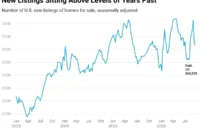
The landscape of the American residential real estate market has undergone a significant shift, placing unprecedented leverage in the hands of prospective buyers. Data covering the three-month period ending August 31, 2026, reveals that home sellers provided concessions—such as funds for repairs, closing costs, or mortgage-rate buydowns—in 44.7% of all U.S. home sales. This figure represents a marked increase from the 42.6% recorded during the same period in 2025 and stands as the highest share for the month of August since the onset of the pandemic in 2020. As the housing market navigates a period of sustained inventory growth and tempered demand, the reliance on financial incentives has become a standard tactical maneuver for sellers looking to finalize transactions.
Defining the New Normal in Transactional Incentives
To understand the current state of the market, it is essential to distinguish between price adjustments and concessions. In this analysis, a concession is strictly defined as an additional financial bridge provided by the seller to reduce the buyer’s total cost of ownership. This excludes simple reductions in the list price. Common examples include seller-funded mortgage-rate buydowns, which lower monthly payments for the buyer, or credits directed toward necessary home repairs and standard closing costs.
This trend is not merely an anecdotal observation but a direct byproduct of the "buyer’s market" conditions that defined the summer of 2026. According to market records dating back to 2013, August 2026 stands out as one of the most buyer-friendly environments in over a decade. The influx of housing inventory, paired with a cooling of buyer competition, has forced sellers to move beyond passive listing strategies and toward active deal-sweetening.
A Chronology of Market Shifts (2020–2026)
The current climate is the result of a multi-year trajectory that began with the pandemic-era housing frenzy. Between 2020 and 2022, the U.S. housing market was characterized by extreme supply shortages and intense bidding wars. During that period, concessions were rare, as sellers held almost total control over transaction terms.
However, the post-2023 environment signaled a reversal. As interest rates remained elevated and the cost of capital impacted buyer sentiment, the Sun Belt regions—which saw an explosion of new construction—began to experience a surplus of inventory. By 2025, the market began to normalize toward a more balanced, if not buyer-leaning, state. By mid-2026, the cumulative effect of increased construction and reduced buyer urgency resulted in the current peak of concession-heavy transactions.
The Sun Belt: The Epicenter of Buyer Leverage
The geography of these concessions highlights a distinct divide between high-growth regions and established, supply-constrained coastal markets. Eight of the 10 metropolitan areas where concessions are most frequent are located within the Sun Belt. Atlanta, Georgia, currently leads the nation, with 72.8% of sellers providing concessions to facilitate sales.
The prevalence of these incentives in cities like Charlotte (67.9%), Phoenix (67.4%), Las Vegas (66.7%), and Raleigh (66.3%) is largely attributable to the rapid expansion of housing stock in these areas during the 2020–2022 boom. Developers responded to pandemic-era migration patterns by initiating massive building projects. Today, those same markets are facing a surplus of homes, forcing sellers to compete for a smaller pool of active buyers.
Amanda Peterson, a veteran real estate professional based in Dallas, noted that buyers have become increasingly discerning, often requiring significant incentives to overlook even minor flaws. "Buyers know they can be picky," Peterson stated. "They’re asking for every concession under the sun, particularly regarding newly built homes. We are seeing builders offer $10,000 to $20,000 in incentives, including mortgage-rate buydowns and appliance packages. Even when sellers are willing to modify floor plans or address maintenance issues, the sheer volume of available options means buyers are holding out for the ‘perfect’ property."
Coastal Resilience and the "Seller’s Market" Exception
Conversely, major coastal hubs continue to defy the national trend. In the San Francisco Bay Area, the dynamics of the market remain vastly different. San Jose recorded a concession rate of just 4.2%, while San Francisco saw 18.6%. These figures reflect a structural imbalance in favor of sellers.
The artificial intelligence boom has concentrated an influx of high-income professionals in the Bay Area, creating a sustained demand that outpaces the region’s notoriously limited housing supply. In these markets, the lack of competition among sellers means that buyers generally lack the leverage to request, let alone receive, concessions. New York and Chicago follow a similar pattern, existing as "balanced" markets where the supply of homes aligns closely with the volume of qualified buyers, resulting in fewer instances of price or cost negotiation through concessions.
Market Heating and Cooling: A Comparative Analysis
While the national trend points toward increased concessions, some markets are seeing a reversal. Seattle, for example, experienced a sharp decline in the share of homes sold with concessions, dropping to 48.5% from 70% a year earlier. This drop is partially attributed to a "base effect," as the 2025 market in Seattle was exceptionally saturated with concessions. Furthermore, many buyers in the Pacific Northwest are opting for direct price reductions rather than seller concessions, reflecting a shift in how buyers prefer to realize savings.
Similarly, San Diego and San Jose have seen the frequency of concessions wane as their local markets have begun to heat up. In San Diego, increased demand for single-family, turnkey properties has shortened the days-on-market, signaling that seller power is reasserting itself in specific segments of the city.
The Dual-Incentive Strategy
A growing segment of the market involves sellers who are offering both concessions and price cuts simultaneously. In August 2026, approximately 15.8% of all U.S. home sales involved both a reduction in the asking price and a subsequent concession. This is the highest level on record for an August, underscoring the urgency felt by sellers who may have initially overvalued their properties or are under pressure to exit the market quickly.
This dual-incentive approach is often observed in markets where sellers have waited several months for an offer and have finally decided to align their expectations with the current, more modest buyer demand.
Economic Implications and Future Outlook
The rise in concessions carries significant implications for the broader housing economy. Firstly, it indicates a "hidden" price correction. While official home price indices may show values remaining stable, the reality is that the net price paid by buyers—after adjusting for closing cost credits and rate buydowns—is effectively lower.
Secondly, the prevalence of mortgage-rate buydowns suggests that buyers are highly sensitive to the monthly cost of financing. Even as inflation and interest rates fluctuate, the reliance on these instruments shows that the current cost of borrowing remains the primary barrier to entry for many Americans.
Finally, the trend toward buyer-led negotiations is likely to persist as long as housing inventory remains elevated in key growth metros. As long as developers continue to deliver new units in the Sun Belt, the competitive pressure on existing homeowners will likely remain.
Conclusion
The current housing cycle demonstrates the cyclical nature of real estate, moving from the seller-dominated environment of the early 2020s to the current buyer-centric landscape. While the national average of 44.7% suggests a widespread trend, the reality is highly localized. Buyers in markets with significant inventory surpluses have the leverage to demand substantial concessions, while those in supply-constrained, high-demand coastal hubs face a very different, more rigid environment. For both buyers and sellers, the data serves as a reminder that the "market" is a collection of diverse, regional economies, each responding differently to the macroeconomic pressures of the present day. As the year progresses, industry observers will continue to monitor whether these concession rates stabilize or if they serve as a precursor to more significant structural shifts in the housing market.