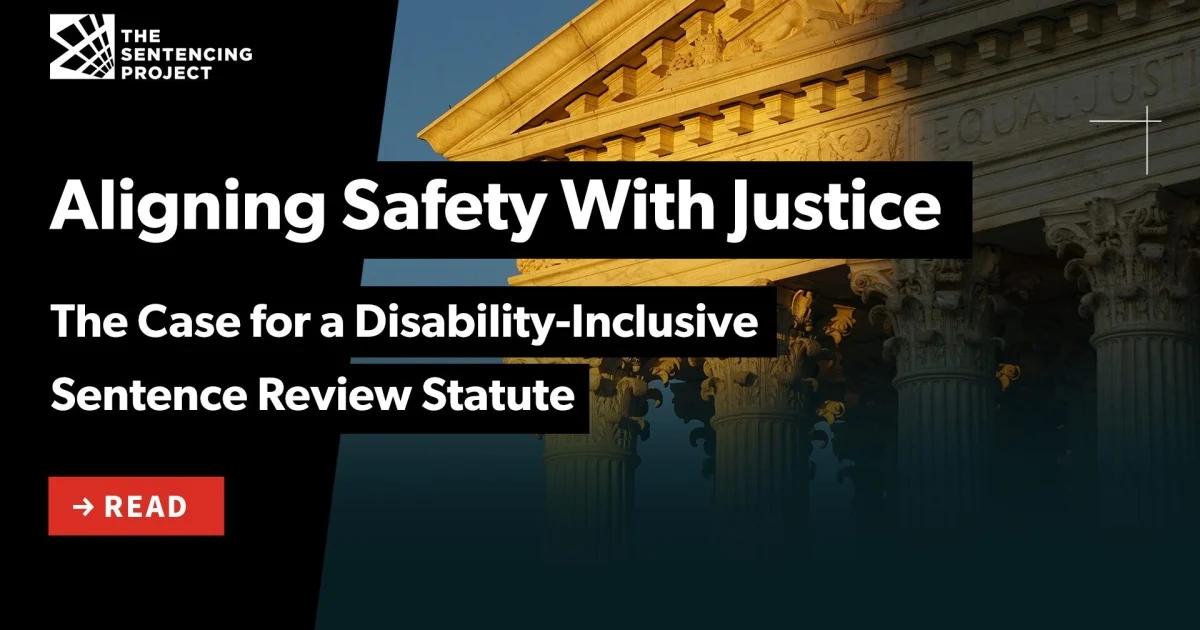
The Sentencing Project has officially unveiled a comprehensive proposal calling for the implementation of “disability second look” statutes across state and federal jurisdictions. This legislative initiative seeks to provide individuals with physical, cognitive, and social disabilities currently serving long-term prison sentences with a structured pathway for judicial sentence review. By introducing these measures, advocates hope to correct a significant oversight in existing criminal justice reform, which has largely neglected the disproportionate impact of incarceration on vulnerable populations living with impairments.
Current data highlights a stark disparity in the composition of the American prison population. According to research cited by The Sentencing Project, individuals in state and federal correctional facilities are approximately two and a half times as likely to report one or more disabilities compared to the general U.S. adult population. While roughly 15% of the general public identifies as having a disability, that figure jumps to 38% within the incarcerated population. This systemic overrepresentation suggests that the criminal legal system is failing to accommodate, and in many cases, is actively exacerbating the struggles of those with specific functional needs.
The Cycle of Systemic Disadvantage
The rationale behind the proposed model statute is rooted in the recognition that disabilities often create a cascading series of disadvantages that begin long before a formal conviction. For many, a disability influences behavior, sensory perception, and cognitive processing. When these factors are not understood by law enforcement, they can lead to aggressive interactions, false assumptions of non-compliance, and the unfair targeting of individuals who may not understand or respond to police commands in the standard, expected manner.
Once an individual with a disability enters the court system, the barriers to due process often intensify. Defendants with cognitive or developmental disabilities may struggle to communicate effectively with legal counsel, leading to an inability to fully participate in their own defense. This creates an uneven playing field where the constitutional right to a fair trial is structurally compromised. Furthermore, once incarcerated, these individuals are frequently excluded from essential rehabilitative programming. Prisons, which are often designed for an able-bodied population, may lack the specialized resources required for those with sensory or mobility impairments. This exclusion creates a secondary punishment: an inability to earn "good time" credits or demonstrate rehabilitation, which effectively results in longer sentences than those served by their non-disabled counterparts.
The Mechanics of the Model Statute
The proposed model statute is designed to grant judges the authority to revisit sentences if a disability was a contributing factor in five distinct areas of an individual’s life within the legal system. First, the statute examines whether the disability influenced the nature of the offense itself. Second, it considers whether the disability impacted the person’s behavior or misperceptions during the time of arrest. Third, it assesses if the disability prevented the individual from accessing their due process rights during legal proceedings.
Fourth, the statute allows for a review of the individual’s time in prison, acknowledging that many people with disabilities are disproportionately disciplined for infractions related to their condition or are denied access to programming that could have aided their reform. Finally, the statute addresses the obstacles these individuals face in developing realistic reentry plans, which are often hindered by a lack of accessible support services upon release.
This framework is not entirely without precedent; it mirrors existing "second look" laws that have been successfully adopted in fifteen states and the District of Columbia. These laws typically provide sentence review opportunities for young people, veterans, and survivors of domestic violence. However, despite the clear need, individuals with disabilities have been systematically omitted from these progressive legislative efforts.
Chronology of Advocacy and Legal Precedent
The movement for sentence review is not new, but its application to disability rights represents a shift in focus for criminal justice reform organizations. Historically, the focus has been on mitigating the impacts of mandatory minimums and the effects of mass incarceration on minority communities. While those remains central tenets, the push for disability-inclusive reform gained momentum as researchers began to identify the "disability pipeline" into prison.
In the past decade, legal challenges have increasingly cited the Americans with Disabilities Act (ADA) in the context of prison conditions. However, these cases have largely focused on the environment of incarceration—such as the lack of wheelchair ramps or sign language interpreters—rather than the sentencing process itself. The Sentencing Project’s proposal marks a strategic pivot toward addressing the judicial outcome rather than just the physical environment.
By 2026, the urgency of this issue has been heightened by broader judicial movements, such as the ongoing litigation in Pennsylvania regarding felony murder sentences. The Commonwealth vs. Lee ruling, which declared mandatory life-without-parole sentences for felony murder unconstitutional, has left over 1,100 cases in legal limbo. This has sparked a national conversation about the necessity of retroactive sentence reviews, creating a fertile, if contentious, environment for the proposal of disability-focused legislation.
The Role of Mandatory Training
A critical component of the proposed model statute is the requirement for mandatory, ongoing training for all stakeholders in the criminal legal system. This includes law enforcement officers, prosecutors, defense attorneys, and judges. The objective is to ensure that those in positions of power possess the baseline knowledge required to identify a disability and understand the legal obligations imposed by federal and state law regarding accommodations.
Currently, a lack of training often leads to the criminalization of disability-related behavior. A person experiencing a mental health crisis or a neurological episode may be treated as a combative suspect rather than a person in need of medical or social support. By institutionalizing training, The Sentencing Project argues that jurisdictions can prevent the initial missteps that lead to unnecessary arrests and overly punitive sentencing.
Supporting Data and Long-Term Implications
Research consistently shows that the risk of re-offending declines significantly with age, a phenomenon known as the "aging out" of crime. Data indicates that for individuals with criminal records, the risk of recidivism becomes statistically indistinguishable from that of the general population after seven years without a new arrest. This suggests that the current trend of keeping individuals with disabilities incarcerated for decades—often without access to the very tools they need to improve their lives—is not only unjust but also a poor use of public resources.
The implications of adopting these statutes would be far-reaching. Beyond the immediate relief for thousands of incarcerated individuals, such laws would force the state to acknowledge that culpability is not always a binary construct. When a person’s cognitive or physical state limits their agency, the legal system’s insistence on rigid, uniform sentencing often undermines the foundational principle of justice.
Critics of such measures often cite concerns regarding public safety or the finality of court judgments. However, proponents argue that the second look process is not an automatic release. Rather, it is a judicial review that requires the court to evaluate the current status of the individual, their behavior while incarcerated, and their readiness for reintegration. By allowing for a holistic view of the person—including the challenges posed by their disability—the system can make more informed decisions about public safety and individual rehabilitation.
Broader Context and Future Outlook
The proposal comes at a time when the American public is increasingly skeptical of "tough on crime" policies that result in extreme sentencing without regard for individual circumstances. As state legislatures look for ways to reduce prison populations and address the rising costs of geriatric incarceration, the disability second look model offers a targeted, evidence-based solution.
Whether these proposals will gain traction in statehouses remains to be seen. The success of similar legislation for veterans and youth suggests that there is a bipartisan appetite for targeted reform, provided it is framed through the lens of fairness and judicial discretion. As the legal community continues to grapple with the fallout of historic sentencing trends, the integration of disability rights into the criminal reform agenda appears not only inevitable but necessary for the pursuit of a more equitable society. By addressing the intersection of disability and the law, jurisdictions can take a meaningful step toward ensuring that the justice system treats all citizens with the dignity and individual consideration that the constitution demands.